Amusing, PoliticalComments Off on American History: Sergeant Stubby
Jan272016
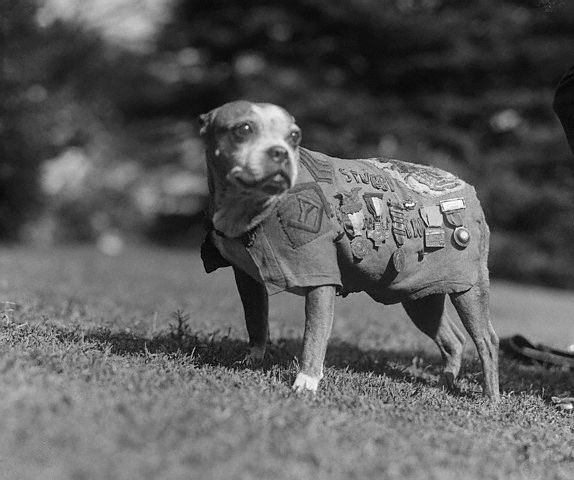
“Sergeant Stubby” by Stubby: Terrier Hero of Georgetown. Licensed under Public Domain via Commons.
While training for combat on the fields of Yale University in 1917, Private J. Robert Conroy found a brindle puppy with a short tail. He named him “Stubby”, and soon the dog became the mascot of the 102nd Infantry, 26th Yankee Division. He learned the bugle calls, the drills, and even a modified dog salute as he put his right paw on his right eyebrow when a salute was executed by his fellow soldiers. Stubby had a positive effect on morale, and was allowed to remain in the camp, even though animals were forbidden. When the division shipped out for France aboard the SS Minnesota, Private Conroy smuggled Stubby aboard. Hidden in the coal bin until the ship was far at sea, Stubby was brought out on deck where the sailors were soon won over by the canine soldier. Stubby was once again smuggled off the ship and was soon discovered by Pvt. Conroy’s commanding officer. The CO allowed Stubby to remain after Stubby gave him a salute. When the Yankee Division headed for the front lines in France, Stubby was given special orders allowing him to accompany the Division to the front lines as their official mascot. The 102nd Infantry reached the front lines on the 5 February 1918. Stubby soon became accustomed to the loud rifles and heavy artillery fire. His first battle injury occurred from gas exposure; he was taken to a nearby field hospital and nursed back to health. The injury left him sensitive to the tiniest trace of gas. When the Division was attacked in an early morning gas launch, most of the troops were asleep. Stubby recognized the gas and ran through the trench barking and biting at the soldiers, rousing them to sound the gas alarm, saving many from injury. Stubby also had a talent for locating wounded men between the trenches of the opposing armies; he would listen for the sound of English and then go to the location, barking until paramedics arrived or leading the lost soldiers back to the safety of the trenches. He even caught a German soldier mapping out the layout of the Allied trenches. The soldier called to Stubby, but he put his ears back and began to bark. As the German ran, Stubby bit him on the legs, causing the soldier to trip and fall. He continued to attack the man until the United States soldiers arrived. For capturing an enemy spy, Stubby was put in for a promotion to the rank of Sergeant by the commander of the 102nd Infantry. He became the first dog to be given rank in the United States Armed Forces. Later, Stubby was injured during a grenade attack, receiving a large amount of shrapnel in his chest and leg. He was rushed to a field hospital and later transferred to a Red Cross Recovery Hospital for additional surgery. When Stubby became well enough to move around at the hospital, he visited wounded soldiers, boosting their morale. By the end of the war, Stubby had served in 17 battles. He led the American troops in a pass and review parade and later visited with President Woodrow Wilson. He visited the White House twice and met Presidents Harding and Coolidge. Stubby was awarded many medals for his heroism, including a medal from the Humane Society which was presented by General John Pershing, the Commanding General of the United States Armies. He was awarded a membership in the American Legion and the Y.M.C.A. When his master, J. Robert Conroy, began studying law at Georgetown University, Stubby became the mascot of the Georgetown Hoyas. He died in 1926.
JokesComments Off on Joke Of The Day: That’s Not It
Jan262016
A general noticed one of his soldiers behaving oddly. The soldier would pick up any piece of paper he found, frown and say: “That’s not it” and put it down again.
This went on for some time, until the general arranged to have the soldier psychologically tested. The psychologist concluded that the soldier was deranged, and wrote out his discharge from the army.
The soldier picked it up, smiled and said: “That’s it.”
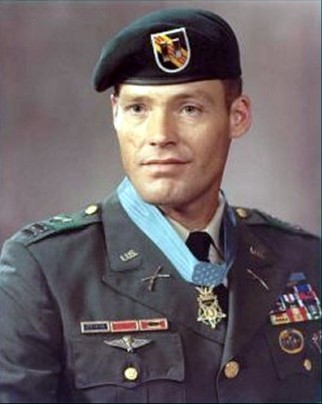
Col. Robert L. Howard (aka The Real Rambo) was the most decorated soldier / veteran in American history. It’s people like him who make this country GREAT!
This guy was a serious war fighter that played no games with the Vietcong. He racked and stacked bodies during The Vietnam War and was about black ops as it gets.
Col. Robert L. Howard
A Staff Sergeant in MACV-SOG which is a highly classified unit. This man was wounded 14 times during his 54 months of combat. He was actually put in for the Medal of Honor three separate times, but he did not receive either of the first 2 Medal of Honors because the actions that he performed took place in countries where the United States was fighting covertly and The President could not award him the Medal of Honor for actions in Cambodia since we were not supposed to be there to begin with. However he was award the Medal of Honor, 8 Purple Hearts, 1 Distinguished Service Cross, 1 Silver Star, and 4 Bronze Stars.
Actual citation for his actions.
FIRST LIEUTENANT ROBERT L. HOWARD
UNITED STATES ARMY
for service as set forth in the following CITATION:
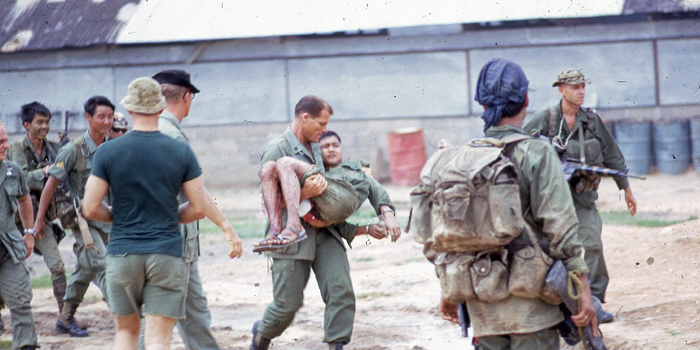
For conspicuous gallantry and intrepidity in action at the risk of his life above and beyond the call of duty. 1st Lt. Howard (then SFC .), distinguished himself while serving as platoon sergeant of an American-Vietnamese platoon which was on a mission to rescue a missing American soldier in enemy controlled territory in the Republic of Vietnam. The platoon had left its helicopter landing zone and was moving out on its mission when it was attacked by an estimated 2-company force. During the initial engagement, 1st Lt. Howard was wounded and his weapon destroyed by a grenade explosion. 1st Lt. Howard saw his platoon leader had been wounded seriously and was exposed to fire. Although unable to walk, and weaponless, 1st Lt. Howard unhesitatingly crawled through a hail of fire to retrieve his wounded leader. As 1st Lt. Howard was administering first aid and removing the officer’s equipment, an enemy bullet struck 1 of the ammunition pouches on the lieutenant’s belt, detonating several magazines of ammunition. 1st Lt. Howard momentarily sought cover and then realizing that he must rejoin the platoon, which had been disorganized by the enemy attack, he again began dragging the seriously wounded officer toward the platoon area. Through his outstanding example of indomitable courage and bravery, 1st Lt. Howard was able to rally the platoon into an organized defense force. With complete disregard for his safety, 1st Lt. Howard crawled from position to position, administering first aid to the wounded, giving encouragement to the defenders and directing their fire on the encircling enemy. For 31⁄2 hours 1st Lt. Howard’s small force and supporting aircraft successfully repulsed enemy attacks and finally were in sufficient control to permit the landing of rescue helicopters. 1st Lt. Howard personally supervised the loading of his men and did not leave the bullet-swept landing zone until all were aboard safely. 1st Lt. Howard’s gallantry in action, his complete devotion to the welfare of his men at the risk of his life were in keeping with the highest traditions of the military service and reflect great credit on himself, his unit, and the U.S. Army.
Col. Robert Howard died on Dec 23,2009 of pancreatic cancer in Waco, Texas.
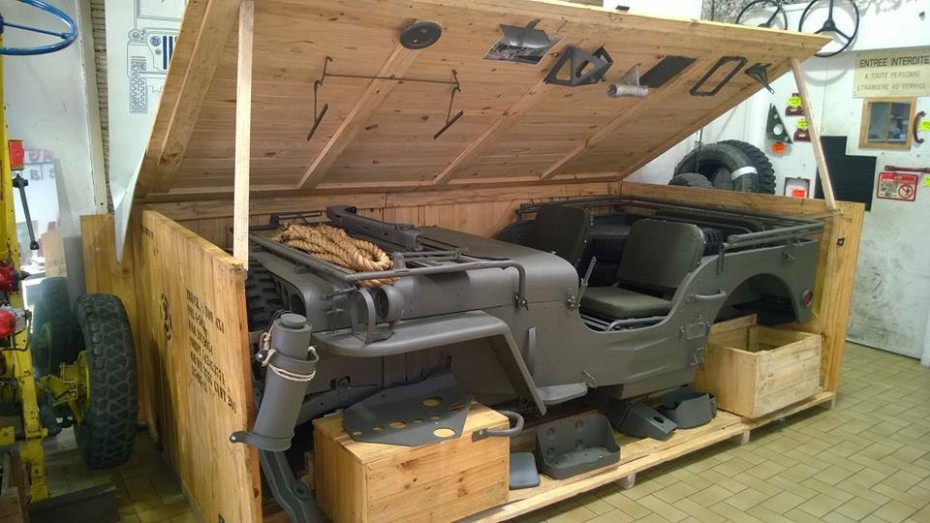
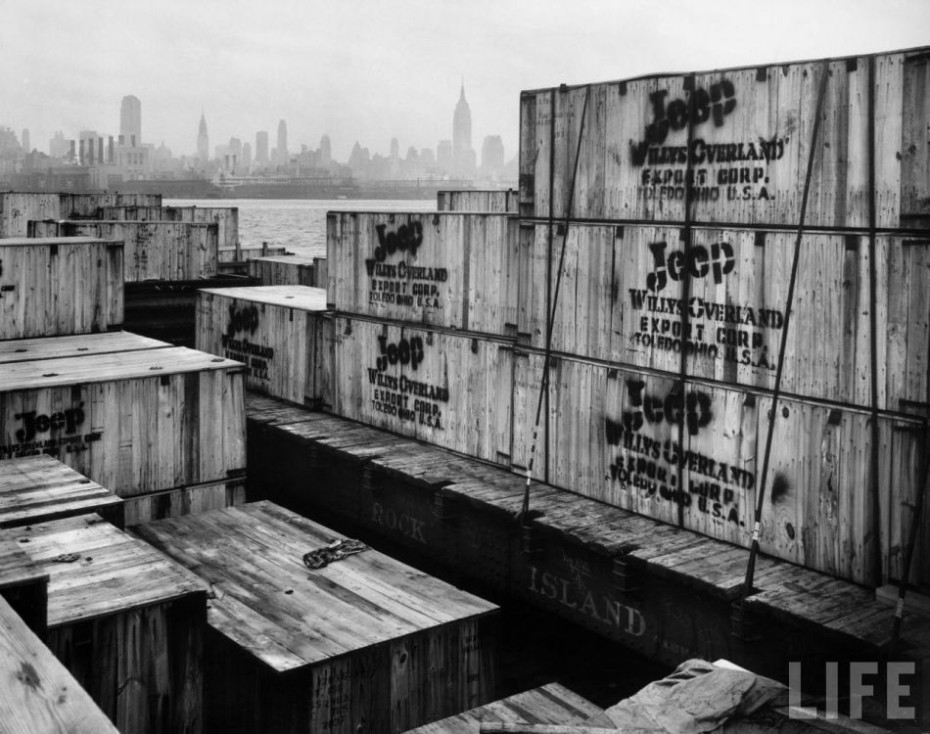
The American capacity for mass production, shipping, and distribution was one of the major reasons why the Allies won World War II. Among the wonders to move quickly from American factories to the front lines were hundreds of thousands of jeeps. These trucks were simple to use and maintain. They could go anywhere and be adapted for multiple roles.
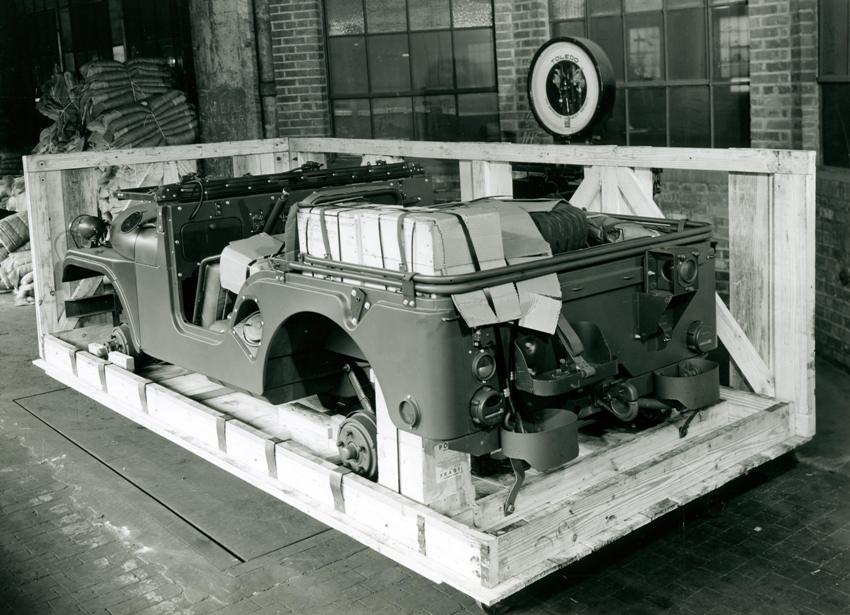
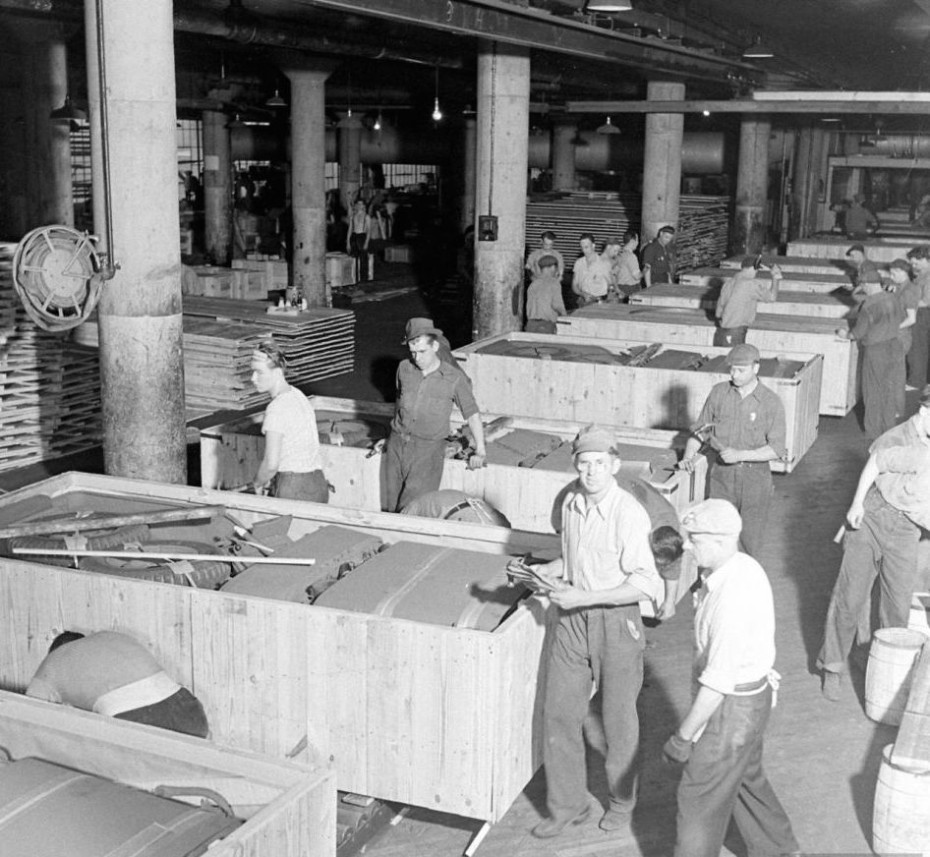
Stateside factories shipped jeeps in enormous crates—one per jeep. When an assembly line of trained US Army mechanics was ready, it could assemble a jeep in 3 minutes. You can read a copy of the instructions used by soldiers in 1943 at the Military Vehicle Preservation Association.