What kind of government warns us not to enter very dangerous countries, yet lets people from those same countries just walk into ours without a passport?
Let’s stop pretending. The future we’re being sold is not freedom. It’s a leash—digitally polished, branded with your favorite eco-friendly buzzwords, and tightened around your neck by unelected elites who want to control everything.
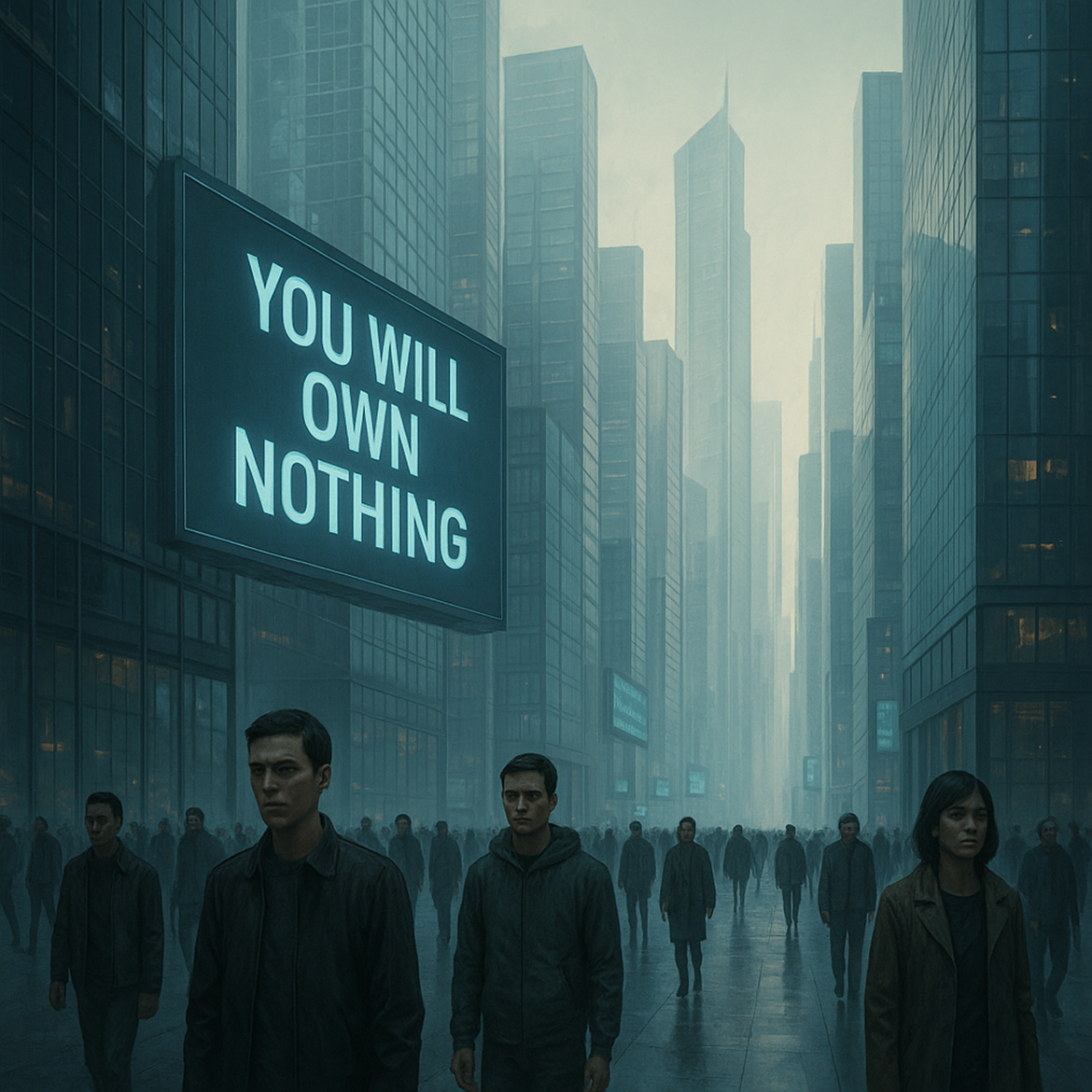
They’re not even hiding it anymore. Klaus Schwab, founder of the World Economic Forum, famously said: “You will own nothing, and you will be happy.” Translation? You will rent everything, from your home to your transportation to your access to basic services. And if you step out of line, access denied.
This isn’t some far-off nightmare. It’s already being built around you, brick by digital brick. And if you don’t take a hard look at what’s happening, by the time you realize you’re trapped, there won’t be a door left to escape through.
For generations, owning a home was the backbone of freedom. It meant independence. Stability. Legacy. But today, more and more people are stuck renting—homes, cars, even furniture. And not because they want to. Because they can’t afford not to.
Look around. Corporations backed by global finance giants are buying up entire neighborhoods. They’re not flipping houses. They’re hoarding them—then renting them back to you. Forever. The dream of homeownership is being crushed by design.
And this isn’t just about property. It’s about everything. Why buy a car when you can “subscribe” to a ride-sharing service? Why own tools when you can rent them through an app? Why have money in your hand when your digital wallet can be turned off with the press of a button?
The goal is simple: central control. If you don’t own anything, then someone else does. And that someone else wants to control you.
Step back and look at the pattern. Global institutions and so-called “partnerships” between governments and tech companies are pushing for a future where everything is connected, monitored, and managed. Your house? Smart. Your car? Tracked. Your money? Programmable.
If a single authority can decide what you can buy, how far you can travel, and whether you can access your bank account, what does that make you?
Not a customer. Not a citizen.
A tenant in your own life.
They’ll tell you it’s for your safety. They’ll tell you it’s efficient. They’ll tell you it’s the future.
Here’s what they won’t tell you: Once everything is digital, it’s no longer yours.
You don’t have to look far to see it. Digital driver’s licenses. Central bank digital currencies. Smart home devices that listen more than they help. Subscription services for everyday needs that used to be one-time purchases.
Each new “feature” quietly removes one more piece of control from your hands and transfers it to someone else. You’re not buying a product—you’re buying time in their system. And when that time’s up, or you break the terms? You’re out.
They don’t have to knock down your door. They just lock you out of your own account.
Your grandparents could buy a house on one income. Your parents could afford a car without a monthly subscription. You? You’re being told that renting everything is “freedom.”
But let’s call it what it really is: dependence.
Without ownership, you can’t build wealth. Without assets, you can’t pass anything down. The next generation will be born into a system where everything is leased, monitored, and tracked.
And that’s exactly what global planners want: a compliant, dependent population with no leverage, no legacy, and no way out.
“You will own nothing, and you will be happy.” That’s not a promise. It’s a threat.
They want to replace fulfillment with convenience. Replace responsibility with subscriptions. Replace freedom with access.
But access can be revoked. Always.
The tools being built today aren’t neutral. They’re loaded with intentions. Behind every “smart” product is a kill switch. Behind every “sustainable” option is a restriction. Behind every “universal” system is a gatekeeper.
And that gatekeeper doesn’t work for you.
There’s still time. But not much.
Start asking harder questions. Who profits from the subscription economy? Who benefits when you can’t own land? Who gets to decide what’s “allowed” in a fully digital world?
You do not have to buy what they’re selling. You do not have to accept that a future without ownership is “inevitable.” You can still choose a different path.
Start by reclaiming control over whatever you can—your money, your time, your property. Build real-world skills. Support local businesses. Save to own, not rent. Speak up before your voice is algorithmically filtered into silence.
Because if you don’t fight for ownership now, you may not have the right to fight for anything later.
Own something. Or be owned.
The choice is still yours—for now.
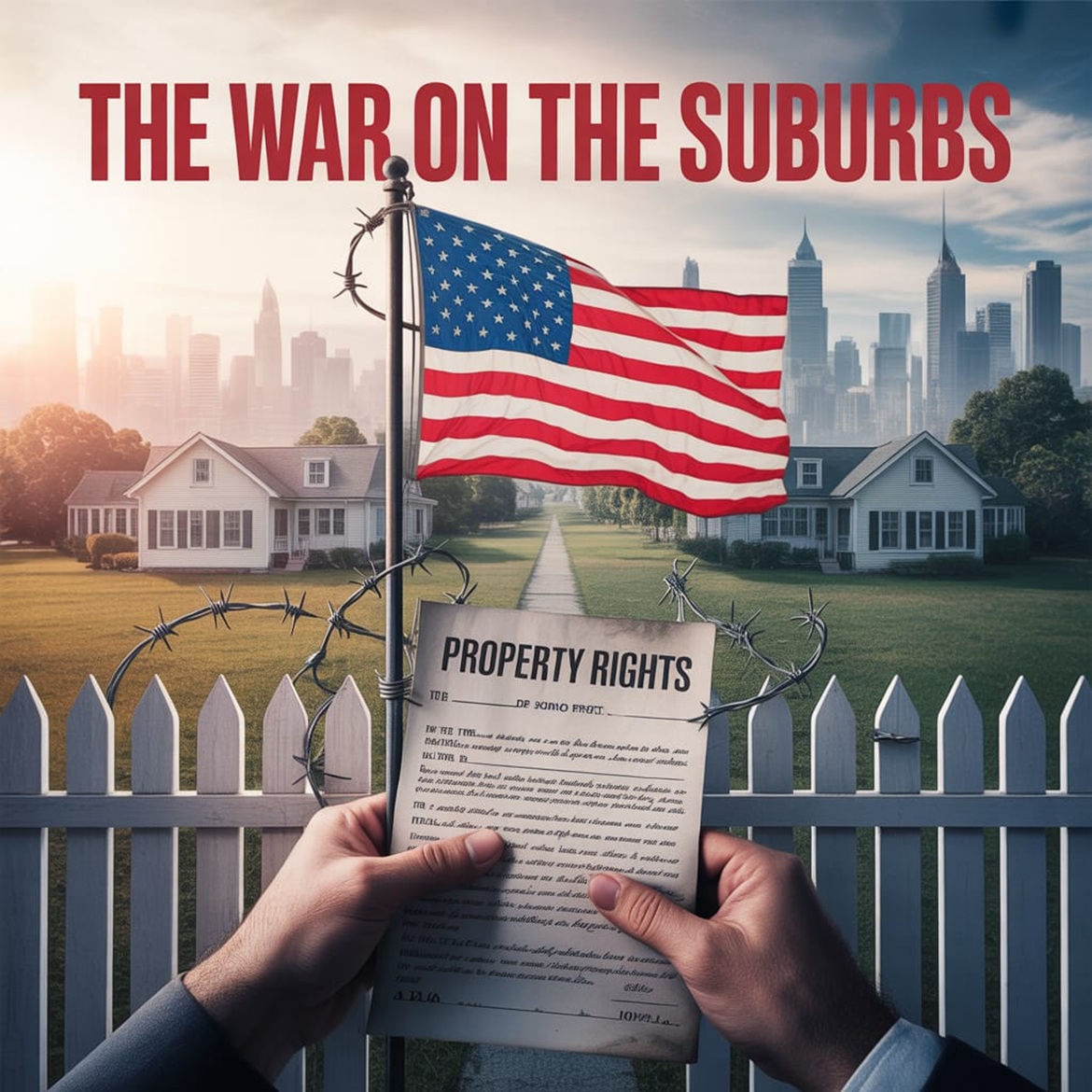
The quietest revolutions don’t happen with protests or headlines. They happen in boardrooms, zoning meetings, and policy documents. If you’ve noticed your property taxes creeping up, your local mom-and-pop stores closing, or new apartment complexes replacing parks, you’re seeing the edges of a battle most people don’t even realize is being fought. This isn’t about politics—it’s about your freedom to live how you choose.
Picture this: You bought a home in the suburbs for space, safety, and privacy. But suddenly, the rules change. Local officials push “high-density housing” plans, arguing it’s for “community growth” or “sustainability.” What they don’t say? These projects often come with strings attached. Tax hikes fund new infrastructure, but the benefits flow to developers and urban planners, not you. Property values might dip as crammed townhomes block sunlight and streets swell with traffic.
It’s not an accident. Think tanks and lobbyists have spent years promoting policies that funnel people into cities, claiming suburbs are “inefficient” or “harmful to the planet.” They call it “smart growth,” but the real goal seems clearer: Control. The more people cluster in cities, the easier it is to monitor behavior, restrict resources, and dictate lifestyles. Your backyard barbecue? A relic of “wasteful” independence.
Ever hear the phrase “15-minute cities”? The idea is you can walk to work, school, and groceries within 15 minutes. Sounds convenient, right? But dig deeper. This model requires surrendering cars, shrinking living spaces, and relying on government-managed services. It’s sold as “eco-friendly”, but it strips away your ability to choose where—and how—you live.
Meanwhile, suburban homes are labeled “environmental disasters” for their lawns and driveways. Never mind that many suburbs have more trees per acre than downtown areas. The push for “green” building codes forces costly renovations—solar panels, triple-pane windows, rainwater systems—that price middle-class families out of their own neighborhoods. The globalist message is clear: Stay in your apartment, don’t own land, and let experts manage your life.
Zoning laws used to protect homeowners. Now, they’re weaponized. In California, single-family zoning is being dismantled to allow multi-unit buildings on residential streets. Proponents say it’s about “affordable housing,” but it’s really a land grab. Developers partner with politicians to replace suburbs with rental units, creating a generation forever stuck leasing from corporate landlords.
Worse, “climate change” policies are invented to seize control. Imagine being told you can’t renovate your kitchen unless you install $20,000 in energy-efficient appliances. Or learning your neighborhood is now a “flood zone” due to revised federal maps, slashing your home’s value overnight. These aren’t hypotheticals—they’re happening now, with little media coverage.
Public transit is essential for cities. But suburbanites don’t hate buses or trains—they hate being forced to depend on them. Massive transit projects, like light-rail expansions, are pitched as “alternatives” to cars. Yet these systems often lose money, require endless tax subsidies, and serve urban commuters, not families in the suburbs.
The deeper agenda? To make car ownership unaffordable. Gas taxes, toll roads, and emissions fees punish those who drive. Electric vehicles (EVs) are pushed as the solution, but they’re pricier and rely on infrastructure controlled by utilities—and ultimately, the government. No car? No problem … as long as you’re okay with being tracked by transit cards and ride-share apps.
Suburbs didn’t just appear. They boomed after World War II, when veterans used government loans to buy modest homes. For decades, suburbs symbolized upward mobility and autonomy. But critics now call them “segregated” or “divisive,” ignoring that suburbs today are more diverse than ever.
The goalposts keep moving. First, suburbs were accused of causing pollution. Then racism. Now, climate change. Each crisis justifies more rules, more costs, and fewer choices. It’s a pattern: Invent a problem, blame the suburbs, then “solve” it by centralizing power.
This isn’t about left vs. right. It’s about grassroots vs. elites. Here’s what works:
Your backyard is more than grass and a grill. It’s a statement: You’ve earned a slice of the world to call your own. That terrifies anyone who thinks resources should be pooled, managed, and rationed by “experts.”
But here’s the truth: No policy can erase the human desire for freedom. The suburbs survived the rise of cities, the nuclear scare, and countless economic crashes. They’ll survive this, too—if enough people wake up and push back.
Stay curious. Ask questions. And remember: The best way to win a quiet war is to never let it stay quiet.

