The War on Masculinity Is a War on Civilization

 Conspiracy, Featured, Political  Comments Off on The War on Masculinity Is a War on Civilization
Jul 222025
 

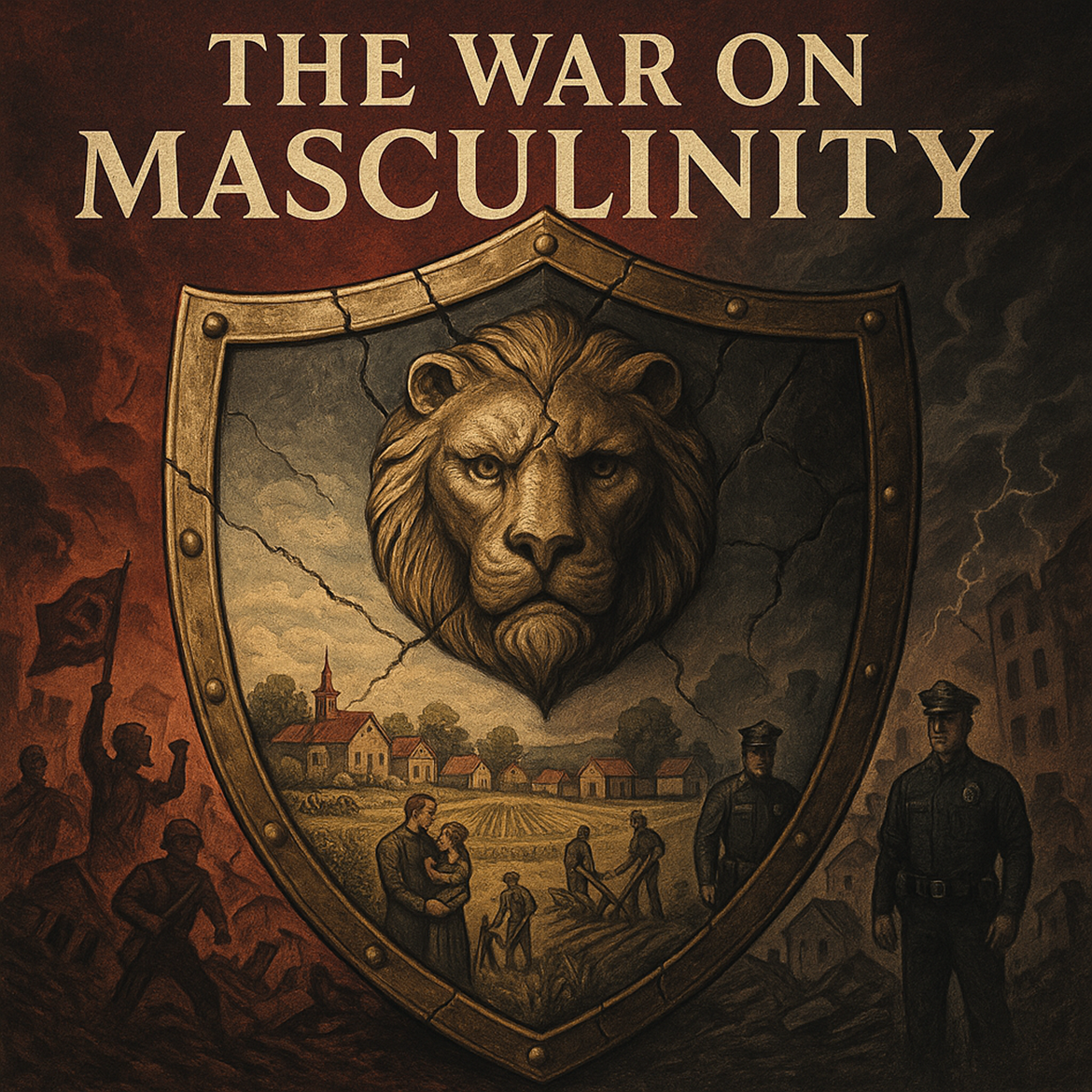
The War on Masculinity - Strength isn’t oppression. Why teaching boys to lead, protect, and provide safeguards communities—and why we’re failing them.

Let’s cut through the noise. For thousands of years, societies didn’t just tolerate traditional gender roles—they depended on them. Men built cities, defended borders, and forged systems of law. Women raised children, managed homes, and preserved cultural values. This wasn’t about one being “better” than the other. It was about balance. When you dismantle that balance, you don’t just erase roles—you destabilize the invisible glue that holds communities together.

Some argue that questioning these roles is progress. But think: When has uprooting a foundation ever left a structure standing? Masculinity isn’t toxic. The real toxicity comes from telling half the population their instincts—protecting, providing, leading—are archaic or dangerous. Strip away purpose, and you create a vacuum. And nature hates a vacuum.

History Shows What Happens When Roles Collapse

Take Sparta. Its warriors weren’t just soldiers—they were symbols of duty. Their strength protected the city-state, but their discipline also inspired Art, Philosophy, and Governance. When Spartan values faded, so did its influence. Rome followed a similar script.

The shift from Stoic Virtue to indulgence didn’t start with excesses; it started with men who stopped seeing themselves as pillars of something bigger.

Fast-forward to the 20th century. After World War II, men returned home to rebuild nations. Factories, highways, and suburbs didn’t materialize out of goodwill. They required directed ambition, risk-taking, and yes—traditional masculine traits. Today, those same traits are labeled “problematic.” But ask yourself: Who benefits when a generation of men grows up apologizing for their natural drive?

The Quiet Attack on Fatherhood

Here’s the elephant in the room: Fatherhood is under siege. Pop culture paints dads as bumbling sidekicks, while media glorifies single-parent households as “empowering.” But study after study shows kids thrive most with involved fathers. Boys learn resilience, respect, and responsibility. Girls learn self-worth and discernment. Without strong male role models, kids chase validation in darker places—gangs, social media, or worse.

This isn’t nostalgia. Look at crime rates in fatherless communities. Look at plummeting college enrollment for young men. When boys grow up without boundaries or purpose, they don’t magically become “enlightened.” They become adrift. And a society of adrift men is a society primed for chaos.

Redefining Strength Doesn’t Mean Erasing It

Critics say, “We’re not against masculinity—we’re redefining it!” But redefinition often looks like deletion. Modern “healthy masculinity” campaigns focus on vulnerability and empathy, which matter—but they skip the other half of the equation. Imagine training a soldier to cry but not to fight. You’d have sensitivity without the skill to defend what’s sensitive.

Real strength isn’t brute force. It’s mastery of self. A man who controls his temper, provides for his family, and stands by his word isn’t a relic. He’s a Swiss Army knife of stability. Teach boys to channel their aggression into discipline, their competitiveness into innovation, and you’ll get leaders—not victims.

The Bigger Picture: Civilization Needs Guardians

Civilization isn’t a smartphone app. You can’t upgrade it overnight or patch its bugs with hashtags. It’s fragile. It needs guardians—people willing to do hard, thankless jobs. Who fixes the roads at dawn? Who enforces laws in hostile neighborhoods? Who climbs cell towers to keep your Wi-Fi running? Mostly men. Always has been.

This isn’t exclusionary. Women can (and do) excel in these roles. But when society shames men for taking pride in demanding work, fewer sign up. The result? Crumbling infrastructure, understaffed police forces, and energy grids held together by duct tape. We’re already seeing it.

How to Push Back Without Being a Troll

First, reject guilt. Masculinity isn’t a sin. Second, mentor. If you’re a father, coach, teacher, or older brother, model integrity. Show young men that honor isn’t about dominating others—it’s about earning respect through action. Third, celebrate unsung heroes. The mechanic, the farmer, the dad coaching Little League after a 12-hour shift. These men aren’t “basic.” They’re the backup generators of society.

Finally, call out double standards. Why is a woman praised for ambition, but a man called “domineering”? Why are male flaws pathologized while female flaws get hashtags? Fairness goes both ways.

The Bottom Line

This isn’t about going backward. It’s about recognizing that some truths are timeless. Birds fly. Fish swim. Men protect, build, and lead. Force a bird to swim or a fish to fly, and you get confusion, not progress.

The war on masculinity isn’t a culture skirmish. It’s a reset—one that swaps order for experimentation, certainty for chaos. And once the dust settles, we’ll all ask: “Why did we volunteer for this?”

 

The Part of History

 Featured, Political, View Point  Comments Off on The Part of History
Jul 182025
 

This is the part of history that makes school kids ask, why didn't anyone do anything to stop them?


This is the part of history that makes school kids ask, why didn’t anyone do anything to stop them?

The Globalists Want You Powerless and Hungry

 Conspiracy, Featured, Political  Comments Off on The Globalists Want You Powerless and Hungry
Jul 152025
 

Globalists — From pandemics to economic crashes: Reveal the elites who profit and the historical patterns exposing their playbook.

Connecting the dots between energy policy, food control, and technocracy.

Have you ever noticed how major world events seem to follow a script? A sudden economic collapse here, a pandemic there, a war that “no one saw coming”—it’s almost too perfect. Coincidences pile up until they stop feeling random. Three different countries pass identical surveillance laws in the same week. A handful of media conglomerates push the same headline. Stock markets nosedive, then rebound just as mysteriously. Patterns like these hint at something deeper. It’s not paranoia to ask: Who benefits when chaos unfolds on cue?

Pay attention to the timing. Crises rarely happen in isolation. They’re often followed by sweeping policies that centralize power or wealth. Look at who profits, who gains influence, and who escapes blame. Answers emerge when you connect the dots.

Mysterious Networks of Power

Behind every public figure, there are unseen players. Think of them as shadow architects—groups that operate quietly, far from headlines. Some are international organizations you’ve vaguely heard of. Others are private clubs where deals are made over whiskey and handshakes. Their members? Wealthy heirs, tech moguls, old-money dynasties. They don’t need elected titles to shape laws or economies.

Take central banks, for example. A small group of unelected officials controls the flow of money worldwide. They set interest rates, print currency, and decide which industries thrive. When inflation spikes or jobs vanish, these decision-makers face no consequences. How convenient.

Patterns in History

History repeats, but not by accident. The same stories play out across centuries with uncanny precision. In 1913, the U.S. Federal Reserve was created during a secret meeting on Jekyll Island. A decade later, the Great Depression wiped out small farmers and cemented corporate monopolies. Fast-forward to 2008: Banks gambled recklessly, caused a global crash, and got bailed out by taxpayer money. The winners? Always the same crowd.

Or consider pandemics. The 2020 crisis led to lockdowns, supply chain breakdowns, and a surge in digital payments. Who profited? Billion-dollar tech firms and pharmaceutical giants. Centuries ago, the Black Death reshaped Europe’s feudal system, transferring land and power to a select few. The script hasn’t changed—only the actors.

Modern-Day Puppeteers

Today’s control mechanisms are subtler. Social media algorithms decide what you see, amplifying fear or division with surgical precision. News outlets parrot identical talking points, drowning out independent voices. Digital currencies threaten to replace cash, putting every transaction on a public ledger. Even food and energy systems are controlled by monopolies.

It’s not just about money. It’s about influence. A single tech CEO can silence a president overnight. A media empire can rebrand a war as a “peacekeeping mission.” When you zoom out, the game becomes clear: Concentrate power, erase dissent, and keep the masses too distracted to notice.

Cracks in the Facade

No system is flawless. Whistleblowers leak documents proving corruption. Grassroots movements reject corporate narratives. Unexpected events—like a lone retail trader crashing a hedge fund’s stock—expose the illusion of control. Even elites make mistakes. The 2008 crash revealed their greed. The pandemic revealed their reliance on public compliance.

Pay attention to the backlash. When banks tried to push digital currencies, millions turned to decentralized alternatives like Bitcoin. When censorship spiked, encrypted messaging apps exploded. The harder they grip, the more people slip through the cracks.

What You Can Do

You’re not powerless. Start by questioning everything. Who owns the media you consume? Who funds the politicians you vote for? Follow the money. Diversify your investments—cash, crypto, land, skills. Learn to grow food, fix your car, or hack basic tech. Dependence makes you vulnerable.

Build community. Share resources with neighbors. Support local farms and businesses. The less you rely on broken systems, the less they control you. Finally, think long-term. Teach your kids critical thinking. Document truths they won’t find in textbooks. History is written by those who show up—not just to protest, but to create alternatives.

The next time a “crisis” unfolds, ask yourself: Who wrote this script? And how do I rewrite it?

The Solutions and Problems

 Featured, Political, View Point  Comments Off on The Solutions and Problems
May 182025
 

Once you understand that the “Solutions” weren't created to solve the “Problems”, but that the “Problems” were created to implement the “Solutions”, then you'll begin to understand the true agenda.


Once you understand that the “Solutions” weren’t created to solve the “Problems”, but that the “Problems” were created to implement the “Solutions”, then you’ll begin to understand the true agenda.

They Don’t Work for Us

 Featured, Political, View Point  Comments Off on They Don’t Work for Us
Feb 272025
 

Isn’t it strange how every time the American people overwhelmingly want something—secure borders, lower taxes, fewer wars—Congressional Democrats vote the exact opposite way? Almost like they don’t work for us at all. Almost like their orders come from somewhere else. Almost.


Isn’t it strange how every time the American people overwhelmingly want something—secure borders, lower taxes, fewer wars—Congressional Democrats vote the exact opposite way? Almost like they don’t work for us at all. Almost like their orders come from somewhere else. Almost.