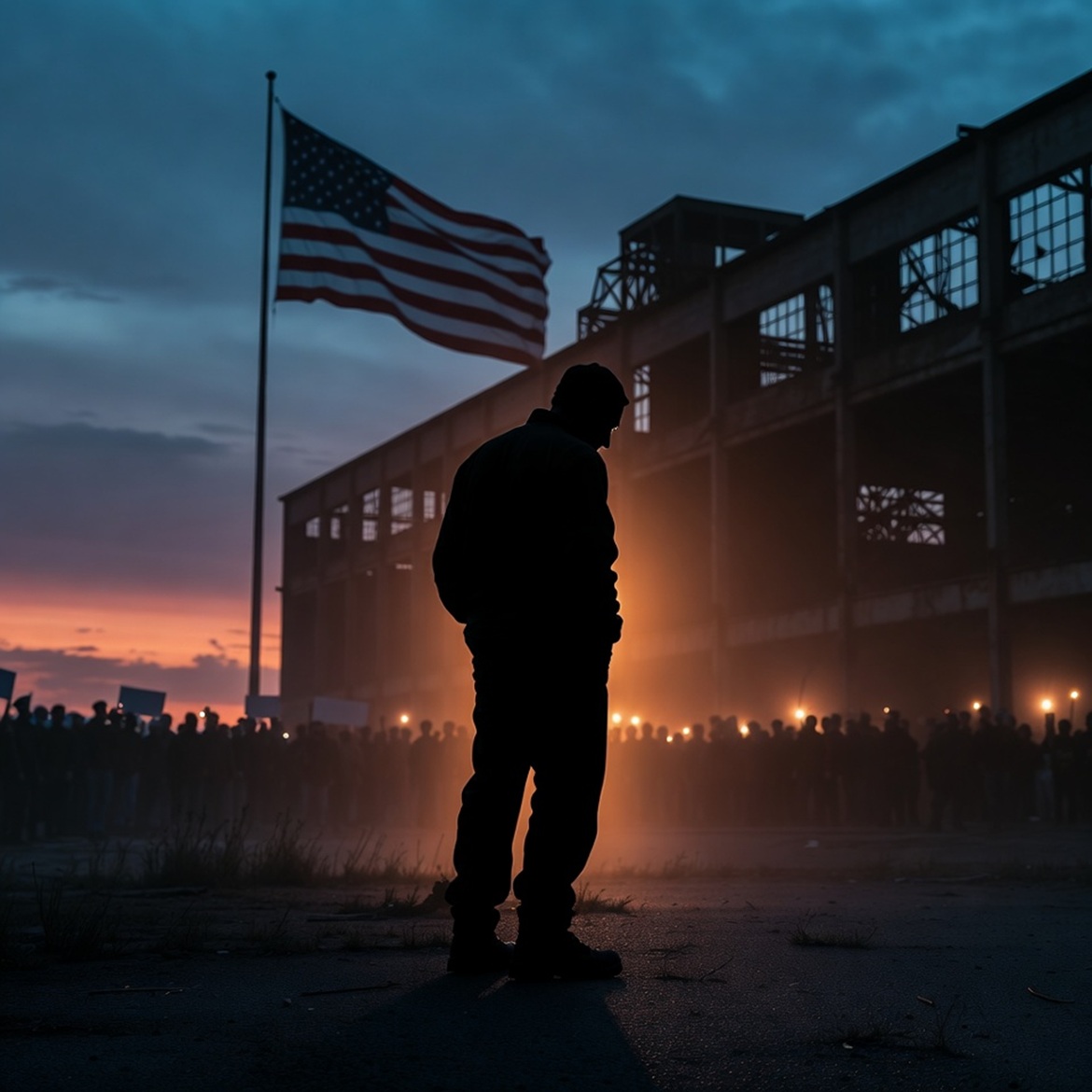
The Revolt of the Forgotten Voter: Why Everyday People Are Finally Standing Up

 Conspiracy, Featured, Political  Comments Off on The Revolt of the Forgotten Voter: Why Everyday People Are Finally Standing Up
Mar 242026
 

The forgotten voter is done staying silent. Discover why everyday people are rising up against broken promises and a system that no longer listens.

You know that slow-building frustration that settles in over time. You get up early, put in a full day’s work, pay your bills on time, and still watch the price of basic groceries climb higher while your take-home pay barely moves. You see officials on screen talking about how well things are going, yet your streets feel less safe, your children’s schools push ideas that don’t line up with what you teach at home, and the rules seem to keep changing in ways that never benefit you.

That feeling belongs to the forgotten voter. And right now, that voter is done staying quiet.

The system counted on your patience for decades. That patience has run out.

Who the Forgotten Voter Really Is

The forgotten voter is not some polling category dreamed up in a think tank. It is the single parent working double shifts so the family can eat. It is the small-business owner who opens early and closes late but keeps getting buried under new paperwork and fees from people who have never run a register. It is the skilled tradesperson who helped build the infrastructure everyone depends on, yet now watches entire industries move overseas while being told it is all part of “progress.”

These are not people looking for handouts. They simply expect the basic agreement they were raised to believe in: work hard, follow the rules, and your family should have a fair shot at a better life. Instead they have seen wages stagnate, communities change without their input, and legitimate questions brushed off as backward or divisive.

They live in the places the national conversation rarely visits—working-class neighborhoods, rural counties, towns where people still know their neighbors and show up for community events. They keep the economy running, pay the taxes that fund everything, yet the people in charge treat them like an inconvenience.

I have heard the same quiet question repeated in living rooms and coffee shops across the map: “We vote. We pay our share. We play by the rules. Why does it feel like the system is working against us?” That question is the spark.

The Broken Promises Fueling the Anger

For a long time, politicians from every party stood at podiums and made the same promises. Lower costs. Stronger schools. Safer communities. More jobs and opportunity.

Then the microphones went off and the real decisions got made. Everyday prices rose much faster than the official reports admitted. Rules multiplied for small operators while the biggest players got waivers and loopholes. Neighborhoods experienced rapid shifts in population and safety, but anyone who raised concerns was quickly labeled and silenced.

The national debt kept climbing. Endless conflicts dragged on. Borders remained open while the consequences landed squarely on the people who live closest to them. And every few years the same promises were recycled with fresh faces delivering them.

The forgotten voter started seeing the pattern clearly. The same experts who had been wrong before demanded trust again. The same news voices explained why rising struggles were actually proof of success. People stopped buying the explanation. They began trusting what they saw with their own eyes.

When your rent or mortgage jumps twenty percent in a single year and your elected official sends a glossy newsletter celebrating economic wins, belief collapses. When your child brings home lessons that clash with everything you have tried to instill, something feels fundamentally wrong.

That realization has turned into action.

How the Gatekeepers Tried to Maintain Control

The people running the major institutions never planned for real resistance. They created a protected world for themselves—private schools, secure neighborhoods, friendly media ecosystems, and networks of influence that rarely touch the daily reality most people face.

They branded disagreement as fringe or ignorant. They shifted the boundaries of acceptable conversation so certain topics became untouchable. They used regulation, legal pressure, and social consequences to discourage anyone from stepping outside the approved lines.

But the forgotten voter found other channels. Independent voices online. Local radio. Straight talk at the barbershop, the gym, the grocery store. Information spread without official approval.

The old containment methods began to fail. Polls missed the real mood. Commentators looked stunned on election nights. Highly paid strategists who had spent years telling leaders what “the people” wanted discovered they had lost touch with the actual people.

The moment regular people stopped following the approved script, the gatekeepers lost their grip.

Clear Evidence the Revolt Is Underway

The signs are impossible to miss. Turnout is climbing in elections that used to draw almost no one. School board meetings that once had empty chairs now overflow with parents asking direct, uncomfortable questions. Town halls that felt rehearsed are turning into real exchanges where officials face genuine scrutiny.

Small-business owners are organizing against rules that only seem to punish the little guy. Workers in industries long considered stable are speaking out plainly about what they see happening on the ground. People are no longer softening their language when they talk about wanting secure borders, reliable energy, or schools that prioritize core skills over passing fads.

This is not blind anger. It is the clarity that comes when people stop waiting for someone else to fix things and start acting on what they know to be true.

What This Means for Your Daily Life

If these words resonate, you are already part of this shift. You do not need to become an activist or chase headlines. Three straightforward steps make a real difference.

First, trust your own observation over official narratives. When your lived experience contradicts the polished statistics and expert opinions, side with reality.

Second, focus your energy where your voice carries weight—local school boards, city councils, county commissions. These are the decisions that land closest to your family, and one persistent person can still change outcomes here.

Third, have honest conversations with the people around you. Not debates. Just plain talk. Ask the mechanic, the nurse, the delivery driver what they are seeing. You will quickly realize the frustration is far more widespread than the dominant voices want you to believe.

The system only stays dominant when people stay quiet and divided. Every honest conversation chips away at that power.

The Future Belongs to Those Who Refuse to Be Forgotten

This is not about destruction or payback. It is about restoring the simple agreement that once held everything together: effort should be rewarded, families should feel safe, and leaders should answer to the people who sustain the country—not to distant donors or insulated experts.

The forgotten voter has stopped waiting for the next campaign to deliver real change. The shift is happening now—in everyday choices, in local races, in the decision to quit accepting explanations that never match reality.

You have more influence than you have been led to believe. Your questions, your refusal to stay silent, and your commitment to common sense are already moving the needle.

The revolt is not on the horizon. It is here.

And it began the day ordinary people decided they would no longer allow themselves to be treated as invisible.

America First

 Featured, Political, View Point  Comments Off on America First
Aug 142025
 

America First isn’t just a policy, it’s a rebellion. Reject the globalists, the sellouts, & the elites who put foreign interests ahead of OUR people. Patriots don’t apologize for wanting their country to WIN.


America First isn’t just a policy, it’s a rebellion. Reject the globalists, the sellouts, & the elites who put foreign interests ahead of OUR people. Patriots don’t apologize for wanting their country to WIN.

The Quiet Strength of Everyday Lives: Celebrating Family, Faith, and Community

 Conspiracy, Featured, Political  Comments Off on The Quiet Strength of Everyday Lives: Celebrating Family, Faith, and Community
Jul 082025
 

Celebrating Family, Faith, and Community - Celebrate the quiet heroes: Ordinary Americans building resilient communities through family, faith, and humble strength. Discover their stories.

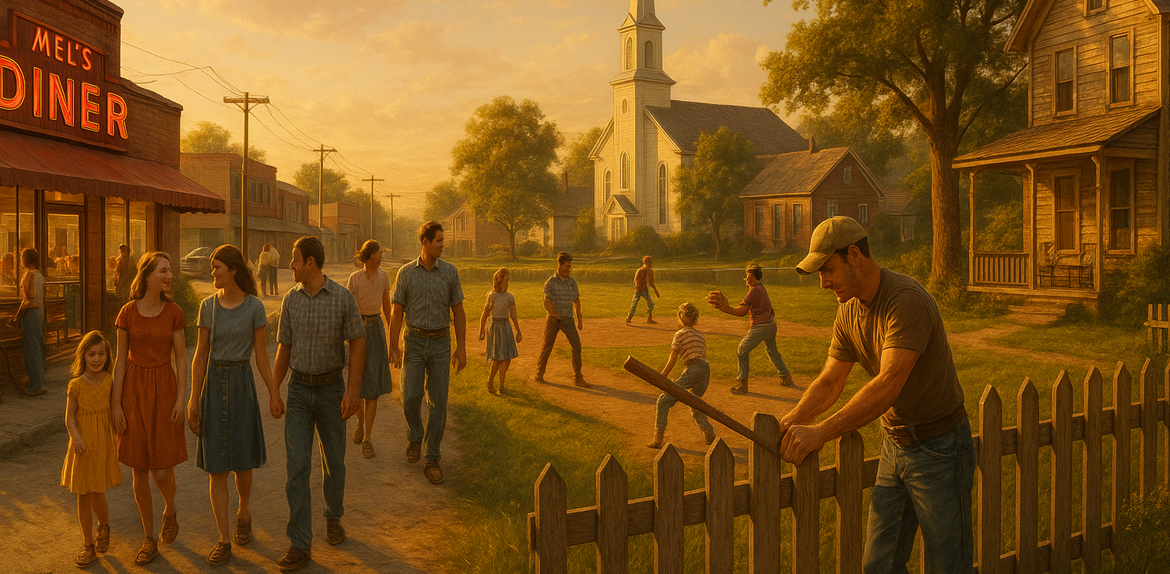
There’s a story we don’t hear enough in America. It’s not about billionaires launching rockets, Silicon Valley geniuses redefining reality, or celebrities setting trends. It’s about the woman stocking shelves at the local grocery store at dawn, the father coaching Little League after a 10-hour shift, the neighbor who fixes your fence without asking for anything in return. This is the story of the ordinary American—the heartbeat of a nation that often forgets to listen to its own pulse.

In a world obsessed with fame, wealth, and disruption, there’s something radical about choosing a life rooted in family, faith, and community. It’s a choice that doesn’t generate headlines, but it’s the foundation of what makes this country work. Let’s talk about why that matters.

Family: The First School of Love

Families are messy. They’re loud at Thanksgiving, stubborn in disagreements, and occasionally dysfunctional. But they’re also where we learn the basics of being human: kindness, sacrifice, and how to forgive. The ordinary American doesn’t post parenting highlights on social media or write books about “life hacks” for perfect households. Instead, they show up—day after day—to pack lunches, help with homework, and sit through school plays where the dialogue is barely audible.

Working-class parents might not have the resources to enroll their kids in elite extracurriculars or hire tutors, but they pass down something more valuable: resilience. A child who watches their parents navigate layoffs, illnesses, or car repairs with quiet determination learns that life isn’t about avoiding storms but learning to dance in the rain. These families don’t chase perfection. They chase connection.

Faith: The Anchor in Chaotic Times

For many ordinary Americans, faith isn’t about dogma or politics. It’s a quiet conversation with God during a morning commute, a casserole brought to a grieving neighbor, or the humility of admitting you don’t have all the answers. Churches, mosques, synagogues, and community centers become spaces where people gather not just to pray, but to rebuild.

After factory closures in the Midwest, it was church food pantries that kept families fed. When floods wiped out homes in Louisiana, it was faith groups that arrived first with chainsaws and blankets. This kind of faith doesn’t demand attention. It doesn’t trend on X (formerly known as Twitter). It simply acts—not out of self-righteousness, but because helping others is woven into the fabric of daily life.

Local Life: The Anti-Algorithm World

Walk into a small-town diner, and you’ll see a different kind of networking. The waitress remembers your order, the farmer at the next booth complains about crop prices, and the mechanic at the counter argues about last night’s game. These spaces operate on trust, not apps. Need a loaner tractor? Your word is enough. Looking for a job? Someone’s cousin knows a guy.

Tech giants promise to “connect the world,” but ordinary Americans know connection isn’t about faster Wi-Fi. It’s about showing up for the same summer parade every year, even when it’s scorching hot. It’s about the librarian who notices a kid checking out books on coding and quietly slips them a scholarship application. Local life thrives on eye contact, handshake deals, and the patience to listen to stories that don’t fit into 280 characters.

The Danger of worshiping “Exceptional”

Celebrity culture tells us ordinary is a synonym for “failure.” Billionaires preach that if you’re not changing the world, you’re wasting your life. But what if the goal Isn’t to be exceptional? What if it’s to be good?

Teachers shaping minds in underfunded schools, nurses working double shifts, truckers moving goods through blizzards—these people don’t have time to optimize their “personal brand.” They’re too busy keeping the lights on. Yet without them, the “exceptional” wouldn’t exist. No entrepreneur can code without electricity. No influencer can post without roads to deliver their gadgets. The irony is that the ones labeled “ordinary” make the extraordinary possible.

The Everyday Rebellion

Choosing a simple life is an act of defiance now. It means rejecting the lie that value is tied to productivity, clout, or net worth. It means sitting on a porch swing instead of scrolling through screens, prioritizing bedtime stories over “hustle culture,” and measuring success in board games played, not milestones unlocked.

The ordinary American isn’t naïve. They see the fractures in the system—the rising costs, the polarized politics, the sense that the future is slipping away. But they also possess a stubborn hope. They believe in fixing what’s broken instead of abandoning it, in planting trees they’ll never sit under, in fighting for a country that hasn’t always fought for them.

Heroes Without Capes

Let’s stop calling them “ordinary.” There’s nothing ordinary about a single mother working two jobs to send her kids to college, a volunteer firefighter rushing into a burning house, or a veteran organizing a neighborhood cleanup. These are small acts of courage that don’t go viral—but they hold communities together.

The media rarely celebrates these stories because they’re “unremarkable” on the surface. But dig deeper, and you’ll find a truth that outshines any celebrity headline: The backbone of America isn’t innovation or glamour. It’s the quiet, unyielding love of people who’ve decided that showing up is enough.

A Future Built on Humility

Maybe it’s time to redefine progress. Instead of chasing utopian tech fantasies or toxic fame, what if we embraced the wisdom of those who live simply? The ordinary American understands that life isn’t a ladder to climb but a garden to tend—patiently, together, with mud on your hands and grace in your heart.

This isn’t a rejection of ambition. It’s a plea for balance. For every teenager coding in a garage, there should be a mentor teaching them ethics. For every trillion-dollar AI project, there should be a community center teaching kids to read. Progress without humanity is just noise.

The Call to See Each Other

The next time you drive past a picket fence, a weathered barn, or a sidewalk chalk drawing, slow down. Remember that behind every “ordinary” façade is a life as complex and vibrant as your own. The American experiment only works if we stop shouting over each other and start listening—to the stories in line at the gas station, the laughter at a backyard barbecue, the quiet prayers of a grandmother in a half-empty choir loft.

Celebrity cultures rise and fall. Tech empires crumble. But the ordinary American endures. And in that endurance, there’s a beauty worth celebrating—no hashtags required.

America First Isn’t Isolationism — It’s Common Sense

 Conspiracy, Featured, Political  Comments Off on America First Isn’t Isolationism — It’s Common Sense
Jun 102025
 

Critics call America First 'isolationism.' The reality? It’s the only way to rebuild the middle class, secure borders, and stop bad trade deals.

For years, the phrase “America First” has been twisted into something it’s not. Critics call it isolationism, a retreat from the world, or even selfish. But that’s missing the point entirely. America First isn’t about hiding from global problems—it’s about fixing our own house before trying to fix everyone else’s.

Think of it like this: If your neighbor’s roof is leaking, but yours is caving in, which one do you fix first? Common sense says you take care of your own home. That doesn’t mean you ignore your neighbor forever. It just means you prioritize.

Why Globalism Has Failed the Average American

For decades, U.S. leaders pushed policies that sent jobs overseas, opened borders without securing them, and spent trillions on foreign wars while our roads, schools, and factories crumbled. The result? A shrinking middle class, rising debt, and cities struggling with crime and drugs.

Meanwhile, other countries took advantage of our generosity. They relied on our military for protection, undercut our workers with cheap labor, and laughed as we played world police. The truth is, no other nation puts everyone else’s interests ahead of their own. Why should we?

Trade Deals That Work for Us, Not Against Us

Trade isn’t the problem—bad deals are. For years, agreements were signed that helped corporations but hurt American workers. Factories closed. Wages stagnated. Entire towns were left with nothing.

America First means renegotiating these deals so they benefit our workers, not just Wall Street. It means tariffs on countries that cheat, bringing manufacturing back, and making sure our farmers and small businesses can compete. Other nations protect their industries. Why shouldn’t we?

A Strong Military Doesn’t Mean Endless Wars

Having the world’s strongest military doesn’t mean we should fight every conflict. Too many young Americans have died in wars with no clear goal, no exit plan, and no real benefit to our country.

America First means using our power wisely. It means no more nation-building in places that don’t want it. It means forcing allies to pay their fair share for defense instead of relying on us. And it means focusing on real threats, not wasting resources on fights that don’t serve our interests.

Borders Matter—Every Successful Country Knows This

Ask yourself: Can a country exist without borders? Can it protect its people, its culture, or its economy if it doesn’t control who enters? Every nation on earth manages immigration—except, it seems, the U.S.

America First isn’t about hating outsiders. It’s about making sure those who come here do so legally, contribute to society, and don’t strain our resources. It’s about stopping the flow of drugs, criminals, and unchecked entries that overwhelm our cities. Even the most pro-immigration countries have rules. Why shouldn’t we enforce ours?

Energy Independence Is National Security

Remember when gas prices skyrocketed because of conflicts overseas? When foreign nations held our economy hostage by controlling oil supplies? America First means tapping into our own resources—oil, gas, clean energy—so we’re never at the mercy of dictators or unstable regions again.

We have more energy than we need. Using it doesn’t just lower prices—it creates jobs, boosts manufacturing, and keeps our money in our economy instead of funding regimes that hate us.

The Media’s Fear Tactics

Any time someone suggests putting America first, the media screams “isolationism” or “extremism.” But what’s extreme about wanting safe streets, good jobs, and a country that works for its own people?

The truth is, the elites benefit from the status quo. Politicians get donations from global corporations. Media companies thrive on division. And the wealthy will always have options, no matter how bad things get for everyone else.

America First isn’t radical. It’s the opposite—it’s returning to the basics. It’s the idea that a government’s first duty is to its own citizens.

What Happens If We Don’t Put America First?

Look around. Inflation. Crime. Broken supply chains. A border in chaos. These aren’t accidents—they’re the result of decades of putting global interests ahead of our own.

If we keep going this way, the middle class will disappear. Our kids will inherit a weaker country. And the world, instead of respecting us, will see us as a fading power that forgot how to take care of itself.

The Bottom Line

America First isn’t about turning inward forever. It’s about getting strong at home so we can engage with the world from a position of strength, not desperation. It’s about making sure that when we help others, it’s because we choose to—not because we have to.

This isn’t isolationism. It’s common sense. And any country that forgets to put its own people first won’t stay strong for long.


 Posted by at 2:33 am  Tagged with:

Willing to Risk Everything

 Featured, Political, View Point  Comments Off on Willing to Risk Everything
Mar 092025
 

The people who are willing to risk everything and gain nothing, are probably on the side of truth.


The people who are willing to risk everything and gain nothing, are probably on the side of truth.