The Globalists Want You Powerless and Hungry

 Conspiracy, Featured, Political  Comments Off on The Globalists Want You Powerless and Hungry
Jul 152025
 

Globalists — From pandemics to economic crashes: Reveal the elites who profit and the historical patterns exposing their playbook.

Connecting the dots between energy policy, food control, and technocracy.

Have you ever noticed how major world events seem to follow a script? A sudden economic collapse here, a pandemic there, a war that “no one saw coming”—it’s almost too perfect. Coincidences pile up until they stop feeling random. Three different countries pass identical surveillance laws in the same week. A handful of media conglomerates push the same headline. Stock markets nosedive, then rebound just as mysteriously. Patterns like these hint at something deeper. It’s not paranoia to ask: Who benefits when chaos unfolds on cue?

Pay attention to the timing. Crises rarely happen in isolation. They’re often followed by sweeping policies that centralize power or wealth. Look at who profits, who gains influence, and who escapes blame. Answers emerge when you connect the dots.

Mysterious Networks of Power

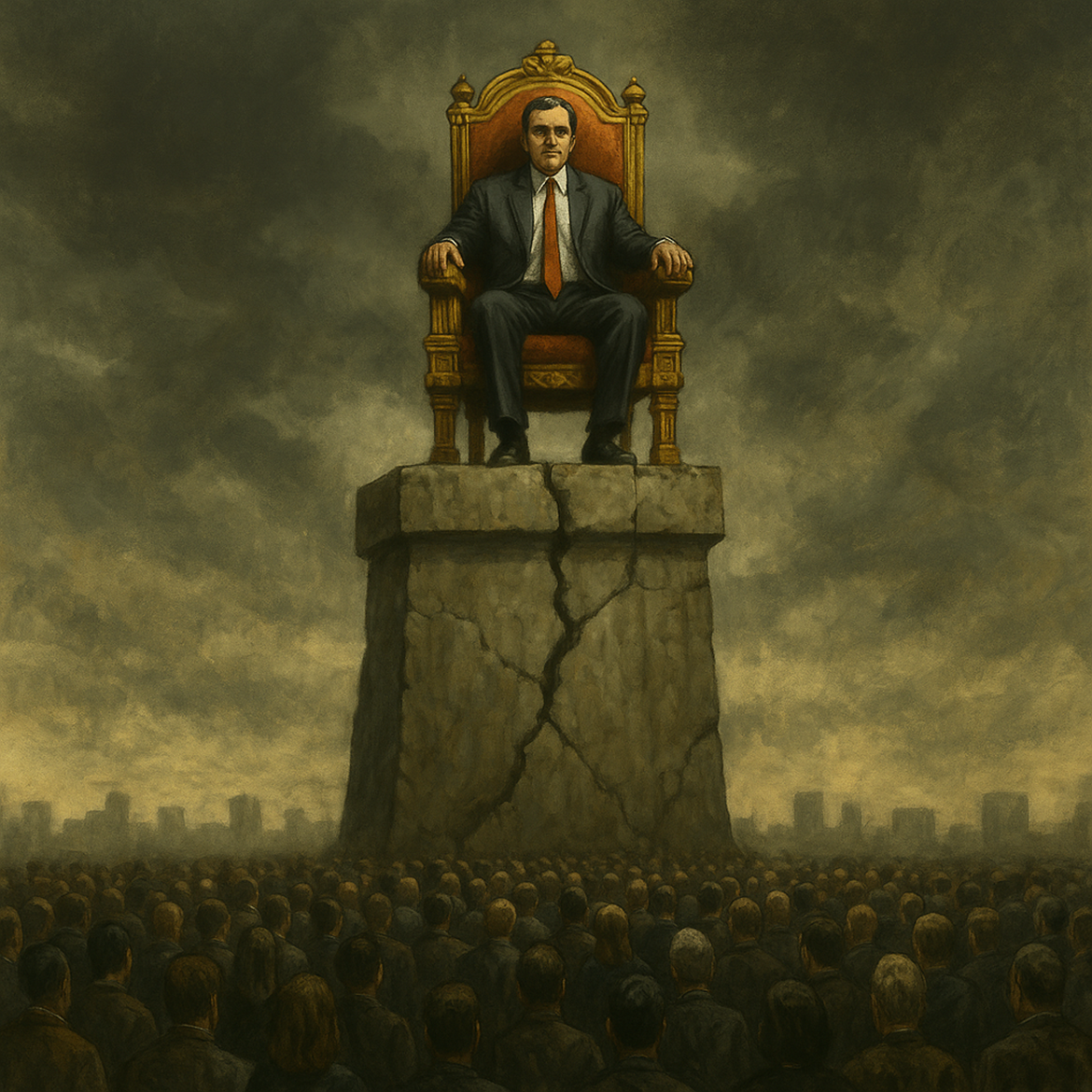
Behind every public figure, there are unseen players. Think of them as shadow architects—groups that operate quietly, far from headlines. Some are international organizations you’ve vaguely heard of. Others are private clubs where deals are made over whiskey and handshakes. Their members? Wealthy heirs, tech moguls, old-money dynasties. They don’t need elected titles to shape laws or economies.

Take central banks, for example. A small group of unelected officials controls the flow of money worldwide. They set interest rates, print currency, and decide which industries thrive. When inflation spikes or jobs vanish, these decision-makers face no consequences. How convenient.

Patterns in History

History repeats, but not by accident. The same stories play out across centuries with uncanny precision. In 1913, the U.S. Federal Reserve was created during a secret meeting on Jekyll Island. A decade later, the Great Depression wiped out small farmers and cemented corporate monopolies. Fast-forward to 2008: Banks gambled recklessly, caused a global crash, and got bailed out by taxpayer money. The winners? Always the same crowd.

Or consider pandemics. The 2020 crisis led to lockdowns, supply chain breakdowns, and a surge in digital payments. Who profited? Billion-dollar tech firms and pharmaceutical giants. Centuries ago, the Black Death reshaped Europe’s feudal system, transferring land and power to a select few. The script hasn’t changed—only the actors.

Modern-Day Puppeteers

Today’s control mechanisms are subtler. Social media algorithms decide what you see, amplifying fear or division with surgical precision. News outlets parrot identical talking points, drowning out independent voices. Digital currencies threaten to replace cash, putting every transaction on a public ledger. Even food and energy systems are controlled by monopolies.

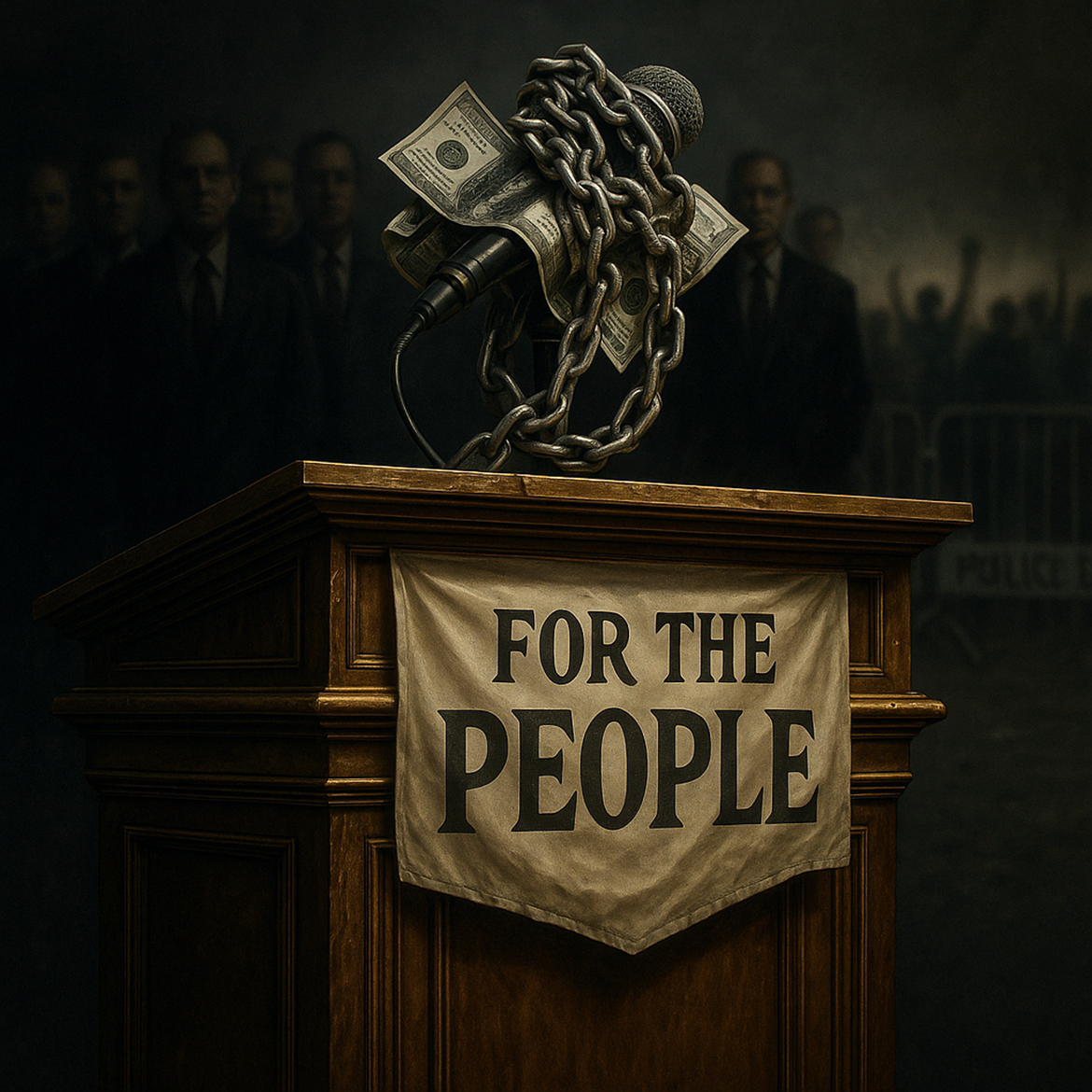
It’s not just about money. It’s about influence. A single tech CEO can silence a president overnight. A media empire can rebrand a war as a “peacekeeping mission.” When you zoom out, the game becomes clear: Concentrate power, erase dissent, and keep the masses too distracted to notice.

Cracks in the Facade

No system is flawless. Whistleblowers leak documents proving corruption. Grassroots movements reject corporate narratives. Unexpected events—like a lone retail trader crashing a hedge fund’s stock—expose the illusion of control. Even elites make mistakes. The 2008 crash revealed their greed. The pandemic revealed their reliance on public compliance.

Pay attention to the backlash. When banks tried to push digital currencies, millions turned to decentralized alternatives like Bitcoin. When censorship spiked, encrypted messaging apps exploded. The harder they grip, the more people slip through the cracks.

What You Can Do

You’re not powerless. Start by questioning everything. Who owns the media you consume? Who funds the politicians you vote for? Follow the money. Diversify your investments—cash, crypto, land, skills. Learn to grow food, fix your car, or hack basic tech. Dependence makes you vulnerable.

Build community. Share resources with neighbors. Support local farms and businesses. The less you rely on broken systems, the less they control you. Finally, think long-term. Teach your kids critical thinking. Document truths they won’t find in textbooks. History is written by those who show up—not just to protest, but to create alternatives.

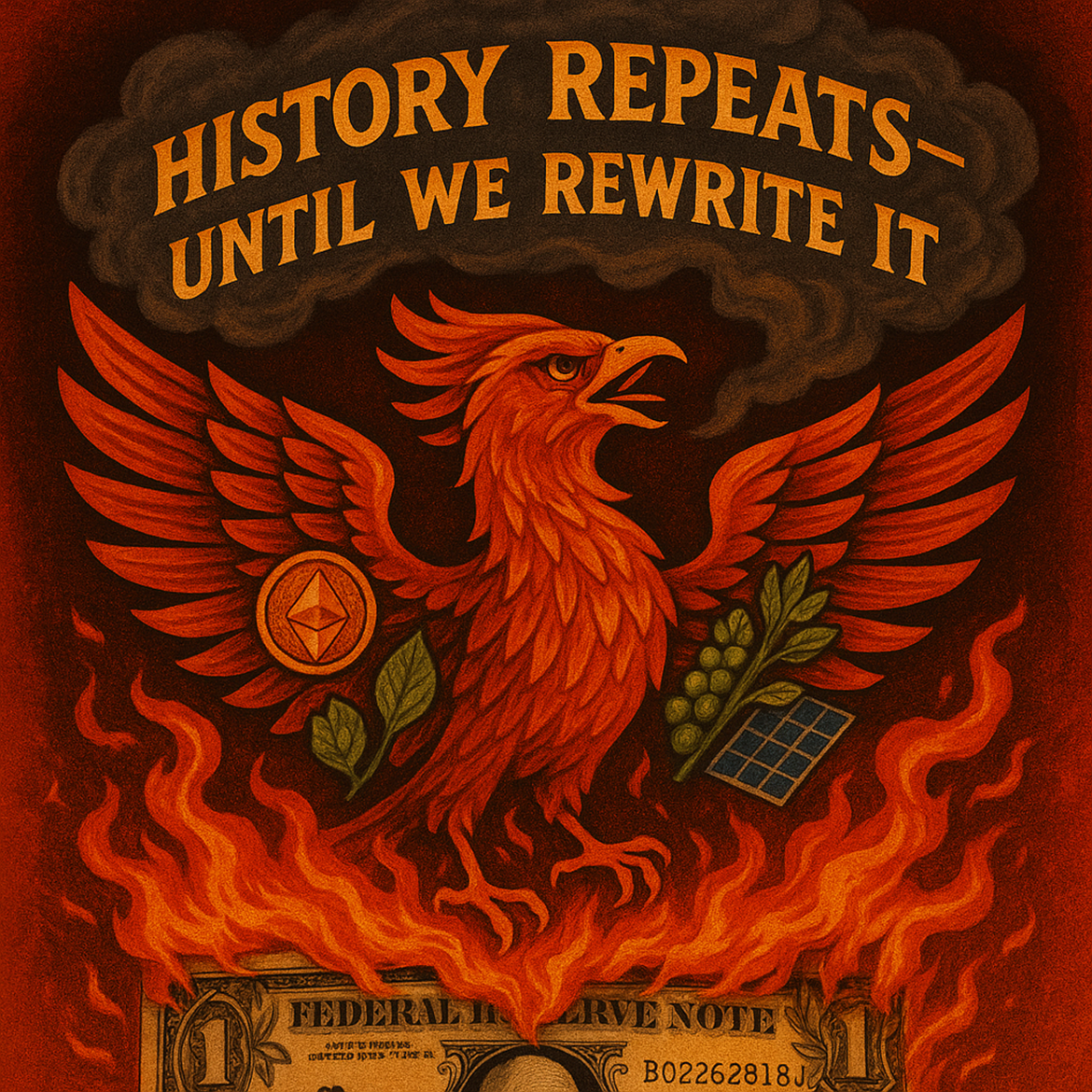
The next time a “crisis” unfolds, ask yourself: Who wrote this script? And how do I rewrite it?
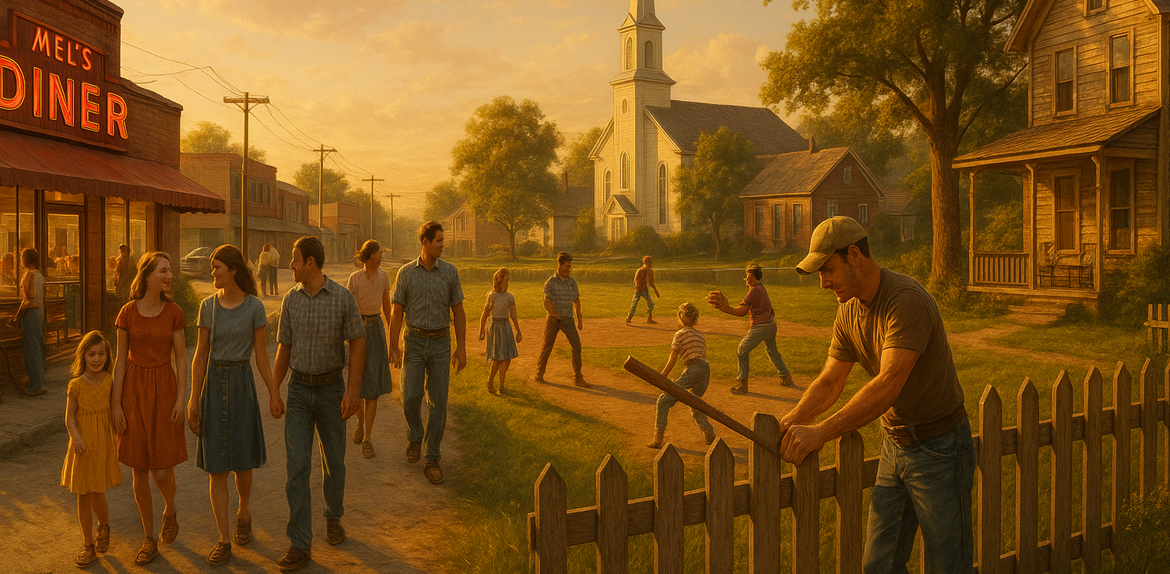
The Quiet Strength of Everyday Lives: Celebrating Family, Faith, and Community

 Conspiracy, Featured, Political  Comments Off on The Quiet Strength of Everyday Lives: Celebrating Family, Faith, and Community
Jul 082025
 

Celebrating Family, Faith, and Community - Celebrate the quiet heroes: Ordinary Americans building resilient communities through family, faith, and humble strength. Discover their stories.

There’s a story we don’t hear enough in America. It’s not about billionaires launching rockets, Silicon Valley geniuses redefining reality, or celebrities setting trends. It’s about the woman stocking shelves at the local grocery store at dawn, the father coaching Little League after a 10-hour shift, the neighbor who fixes your fence without asking for anything in return. This is the story of the ordinary American—the heartbeat of a nation that often forgets to listen to its own pulse.

In a world obsessed with fame, wealth, and disruption, there’s something radical about choosing a life rooted in family, faith, and community. It’s a choice that doesn’t generate headlines, but it’s the foundation of what makes this country work. Let’s talk about why that matters.

Family: The First School of Love

Families are messy. They’re loud at Thanksgiving, stubborn in disagreements, and occasionally dysfunctional. But they’re also where we learn the basics of being human: kindness, sacrifice, and how to forgive. The ordinary American doesn’t post parenting highlights on social media or write books about “life hacks” for perfect households. Instead, they show up—day after day—to pack lunches, help with homework, and sit through school plays where the dialogue is barely audible.

Working-class parents might not have the resources to enroll their kids in elite extracurriculars or hire tutors, but they pass down something more valuable: resilience. A child who watches their parents navigate layoffs, illnesses, or car repairs with quiet determination learns that life isn’t about avoiding storms but learning to dance in the rain. These families don’t chase perfection. They chase connection.

Faith: The Anchor in Chaotic Times

For many ordinary Americans, faith isn’t about dogma or politics. It’s a quiet conversation with God during a morning commute, a casserole brought to a grieving neighbor, or the humility of admitting you don’t have all the answers. Churches, mosques, synagogues, and community centers become spaces where people gather not just to pray, but to rebuild.

After factory closures in the Midwest, it was church food pantries that kept families fed. When floods wiped out homes in Louisiana, it was faith groups that arrived first with chainsaws and blankets. This kind of faith doesn’t demand attention. It doesn’t trend on X (formerly known as Twitter). It simply acts—not out of self-righteousness, but because helping others is woven into the fabric of daily life.

Local Life: The Anti-Algorithm World

Walk into a small-town diner, and you’ll see a different kind of networking. The waitress remembers your order, the farmer at the next booth complains about crop prices, and the mechanic at the counter argues about last night’s game. These spaces operate on trust, not apps. Need a loaner tractor? Your word is enough. Looking for a job? Someone’s cousin knows a guy.

Tech giants promise to “connect the world,” but ordinary Americans know connection isn’t about faster Wi-Fi. It’s about showing up for the same summer parade every year, even when it’s scorching hot. It’s about the librarian who notices a kid checking out books on coding and quietly slips them a scholarship application. Local life thrives on eye contact, handshake deals, and the patience to listen to stories that don’t fit into 280 characters.

The Danger of worshiping “Exceptional”

Celebrity culture tells us ordinary is a synonym for “failure.” Billionaires preach that if you’re not changing the world, you’re wasting your life. But what if the goal Isn’t to be exceptional? What if it’s to be good?

Teachers shaping minds in underfunded schools, nurses working double shifts, truckers moving goods through blizzards—these people don’t have time to optimize their “personal brand.” They’re too busy keeping the lights on. Yet without them, the “exceptional” wouldn’t exist. No entrepreneur can code without electricity. No influencer can post without roads to deliver their gadgets. The irony is that the ones labeled “ordinary” make the extraordinary possible.

The Everyday Rebellion

Choosing a simple life is an act of defiance now. It means rejecting the lie that value is tied to productivity, clout, or net worth. It means sitting on a porch swing instead of scrolling through screens, prioritizing bedtime stories over “hustle culture,” and measuring success in board games played, not milestones unlocked.

The ordinary American isn’t naïve. They see the fractures in the system—the rising costs, the polarized politics, the sense that the future is slipping away. But they also possess a stubborn hope. They believe in fixing what’s broken instead of abandoning it, in planting trees they’ll never sit under, in fighting for a country that hasn’t always fought for them.

Heroes Without Capes

Let’s stop calling them “ordinary.” There’s nothing ordinary about a single mother working two jobs to send her kids to college, a volunteer firefighter rushing into a burning house, or a veteran organizing a neighborhood cleanup. These are small acts of courage that don’t go viral—but they hold communities together.

The media rarely celebrates these stories because they’re “unremarkable” on the surface. But dig deeper, and you’ll find a truth that outshines any celebrity headline: The backbone of America isn’t innovation or glamour. It’s the quiet, unyielding love of people who’ve decided that showing up is enough.

A Future Built on Humility

Maybe it’s time to redefine progress. Instead of chasing utopian tech fantasies or toxic fame, what if we embraced the wisdom of those who live simply? The ordinary American understands that life isn’t a ladder to climb but a garden to tend—patiently, together, with mud on your hands and grace in your heart.

This isn’t a rejection of ambition. It’s a plea for balance. For every teenager coding in a garage, there should be a mentor teaching them ethics. For every trillion-dollar AI project, there should be a community center teaching kids to read. Progress without humanity is just noise.

The Call to See Each Other

The next time you drive past a picket fence, a weathered barn, or a sidewalk chalk drawing, slow down. Remember that behind every “ordinary” façade is a life as complex and vibrant as your own. The American experiment only works if we stop shouting over each other and start listening—to the stories in line at the gas station, the laughter at a backyard barbecue, the quiet prayers of a grandmother in a half-empty choir loft.

Celebrity cultures rise and fall. Tech empires crumble. But the ordinary American endures. And in that endurance, there’s a beauty worth celebrating—no hashtags required.

How to Measure Remaining Daylight with Your Hand

 Conspiracy, Featured, Information  Comments Off on How to Measure Remaining Daylight with Your Hand
Jul 032025
 

How to Measure Remaining Daylight with Your Hand

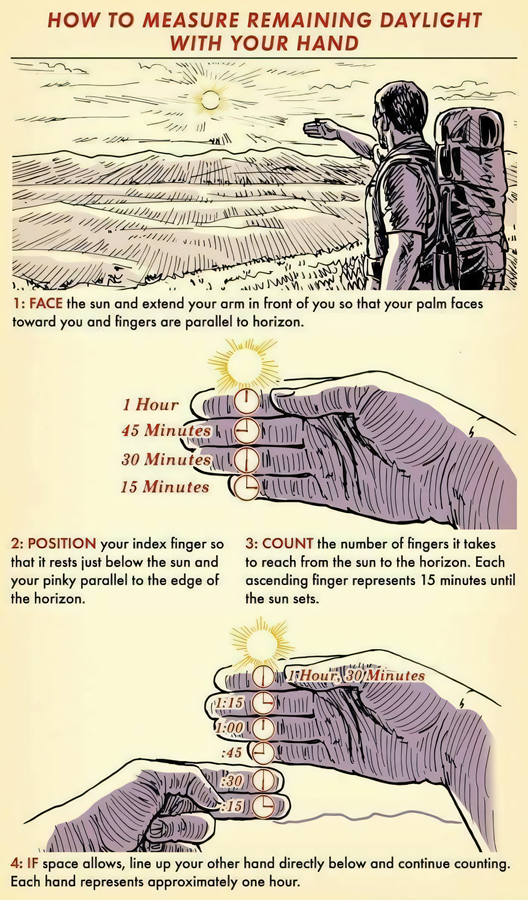
You can estimate the amount of remaining daylight by using your hand and the horizon. This is a popular outdoorsman trick known as the “hand method” or “finger rule.” Here’s how to do it:


Step-by-Step: How to Measure Remaining Daylight with Your Hand

  1. Face the Sun: Stand facing the setting sun, making sure you have a clear view of the horizon.
  2. Extend Your Arm: Stretch your arm out fully in front of you, palm facing you, fingers horizontal to the ground.
  3. Stack Your Fingers:
    • Place your bottom pinky finger on the horizon line.
    • Stack your fingers one over the other (palm-side toward you) toward the bottom edge of the sun.
    • Count how many fingers fit between the horizon and the sun.
  4. Estimate Time:
    • Each finger width (from pinky to index) represents roughly 15 minutes of remaining daylight.
    • A full hand (4 fingers) is about 1 hour.
    • If you can fit 2 hands (8 fingers), that’s about 2 hours of light left.

Notes & Tips:

  • This method works best closer to the equator and near sunset, when the sun’s angle is more horizontal.
  • It’s an approximation, but surprisingly accurate for planning hikes or travel before dark.
  • The trick works because the sun moves about 15 degrees per hour, and each finger equals around 1 degree at arm’s length.

Example:

You see the sun is 1½ hand-widths (6 fingers) above the horizon. That means you have approximately 1 hour and 30 minutes of daylight left.

Populism Isn’t the Threat—It’s the Response

 Conspiracy, Featured, Political  Comments Off on Populism Isn’t the Threat—It’s the Response
Jul 012025
 

Populism isn’t the threat—it’s a response to elite failure. Discover why the people are finally pushing back.

You hear it on the news, see it in headlines, feel it in every social media scroll: populism is dangerous. It’s unstable, they say. It’s anti-democratic. It’s a threat to institutions. But what if everyone has it backwards?

Populism isn’t the disease. It’s the fever that tells you something is already wrong.

It’s not some fringe movement trying to wreck the system—it’s a response to the system being wrecked long before the people ever rose up. When everyday people start pushing back, it’s not because things are fine. It’s because they’ve watched the rules shift, the gatekeepers close ranks, and the elites make mistakes with no consequences.

This isn’t about left versus right. It’s about power versus people. It’s about what happens when those in charge stop listening—and the people realize it.

The Real Cause of the Fire

Let’s drop the labels and look at the pattern.

Every time a populist wave hits—whether it’s through a vote, a protest, or a movement—you’ll notice something happened first. A long stretch of bad decisions, broken promises, and public trust draining like water from a cracked cup.

It’s not random.

People don’t just suddenly get angry for no reason. They don’t invent frustration out of boredom. They respond to what they see: corruption without punishment, billionaires growing richer while basic needs go unmet, experts making calls that turn out wrong—and then refusing to admit it.

Populism doesn’t come from nowhere. It comes from people feeling locked out of their own future. And instead of listening, the elite circle the wagons. Instead of reforming, they blame the backlash.

When Trust Dies, Revolt Isn’t Far Behind

Trust is slow to build and fast to break.

It takes years for people to trust leaders, institutions, and systems. But once they realize the game is rigged, it only takes one or two moments to flip that switch. And once it flips, there’s no going back.

History is full of examples.

People tolerate a lot—bad policy, unfair laws, even inequality—so long as they believe it’s leading somewhere better. But when they see that the deck is stacked, that decisions are being made without their voice, and that failure at the top brings no cost while failure at the bottom brings ruin, they check out. Then they push back.

Populist movements aren’t powered by ignorance. They’re powered by disappointment. And disappointment is stronger than anger—because it comes after hope has already died.

The System That Protects Itself

Here’s a pattern that repeats like clockwork:

  1. People rise up and demand change.
  2. The media, political class, and economic elite all say the movement is dangerous.
  3. Instead of asking why the people are angry, they say the people are being “radical.”
  4. Nothing changes. More people join in.

This is not just about ideology. It’s about self-preservation.

Those in power often don’t fear chaos. They fear accountability. They don’t want to admit that their policies have led to economic crashes, endless wars, surveillance states, and widening inequality. It’s easier to label any pushback as extremism than to look in the mirror.

So they treat populism like a virus—something to quarantine, not understand.

Elites Made the Bed—Now They’re Angry It’s Uncomfortable

Let’s be honest.

For decades, the people in charge said, “Trust us.” And they were trusted. They were trusted when they deregulated the banks, when they shipped jobs overseas, when they pushed wars based on shaky evidence, when they said inflation was temporary, when they promised the internet would empower everyone equally.

They were wrong. Repeatedly.

And every time, they acted like nothing happened. No one stepped down. No one paid the price. In fact, many of them got richer.

When people look at that and say, “We want something different,” that’s not chaos. That’s sanity.

Populism Is a Smoke Alarm, Not an Arsonist

Imagine a house with faulty wiring. The people living in it keep hearing weird noises, smelling something off. Then one day, the smoke alarm goes off.

You don’t blame the smoke alarm for the fire. You check the wires.

Populist movements are that smoke alarm. They’re loud, uncomfortable, and disruptive—but they’re a sign that something deeper is wrong.

Ignoring the alarm doesn’t make the danger go away. Calling the alarm crazy doesn’t fix the wiring. But that’s what the elites do. They act like silencing the alarm is the same as solving the problem.

It’s not.

Why the People Keep Rising

There’s a reason populism keeps coming back stronger.

It’s not because people are getting more extreme. It’s because the root issues are never addressed. Every crisis becomes an opportunity for those in power to grab more of it. Every failure is repackaged as progress. Every new voice is labeled “misinformed.”

But the people see through it.

And here’s the thing: the more you try to shut people up, the louder they get. The more you ignore the frustration, the more explosive it becomes. Populism is what happens when people run out of patience.

And right now, patience is in short supply.

The Future Is Watching

What happens next depends on one question:

Will the elite finally listen, or will they keep pretending the people are the problem?

If history is any guide, they’ll keep choosing denial. But that doesn’t stop the shift. It only delays the reckoning.

Populist movements will keep rising—not because people love conflict, but because they’re tired of being lied to, ignored, and patronized. They’re not asking for perfection. They’re asking for honesty, for fairness, for a voice.

That’s not a threat. That’s a warning.

Ignore it at your own risk.

The Rise of the Permanent Political Class

 Conspiracy, Featured, Political, View Point  Comments Off on The Rise of the Permanent Political Class
Jun 242025
 

The Rise of the Permanent Political Class - Career politicians don’t work for you. They work for donors. Here’s how they stay in power—and how to break their grip.

How Career Politicians Stay in Power Forever

Walk into any government building, and you’ll see them—the same faces, year after year, decade after decade. They call themselves “public servants,” but they’ve never worked a real job outside politics. They don’t know what it’s like to struggle to pay rent or worry about layoffs. Instead, they’ve turned governing into a lifelong career, insulated from the people they claim to represent.

This isn’t an accident. It’s by design.

Once elected, these politicians do everything they can to stay in office. They raise money from wealthy donors, pass laws that help their friends, and rig the system so challengers can’t compete. They talk about “fighting for the working class” while voting for policies that keep wages low and prices high. The longer they stay, the richer they get—while the rest of us foot the bill.

The Money Machine Behind Political Lifers

Running for office costs a fortune. That’s no problem for career politicians. They’ve spent years building networks of lobbyists, corporations, and special interest groups who fund their campaigns. In return, they pass laws that benefit those same donors.

Think about it: How often do you see a politician leave office poorer than when they started? Almost never. Many arrive with modest savings and leave as millionaires. They write laws that let them trade stocks based on insider information. They take high-paying “consulting” gigs after retiring. Some even get their family members jobs in the same system.

Meanwhile, the average worker hasn’t seen a real raise in decades.

The Revolving Door Between Government and Big Business

Here’s how the game works:

  1. A politician gets elected.
  2. They spend years making connections with corporate lobbyists.
  3. They pass laws that help those corporations.
  4. They leave office and get a cushy job with the same companies they used to regulate.

It happens all the time. Former lawmakers become lobbyists, earning ten times their old salary. Regulators take jobs with the industries they were supposed to oversee. It’s not illegal—because they made sure the rules allow it.

This isn’t about left or right. Both sides do it. The result? Laws that favor big banks, big tech, and big Pharma—not small businesses or working families.

How They Keep Voters Powerless

Career politicians know that if elections were fair, they’d lose. So they’ve rigged the system:

  • Gerrymandering – They redraw voting districts to ensure their party always wins.
  • Ballot Laws – They make it harder for third-party candidates to run.
  • Media Control – They cozy up to news outlets that paint them as heroes.

They also keep voters distracted with culture wars—fighting over issues that don’t actually change anything. While everyone’s arguing, they quietly pass bills that make their donors richer.

What Can Be Done?

This isn’t hopeless. Here’s how to fight back:

  1. Term Limits – No one should be in office for 30 years. Force them to go back to the real world.
  2. Ban Stock Trading – If politicians can’t profit from laws they pass, they’ll make better laws.
  3. Open Primaries – Let voters pick candidates, not party insiders.
  4. Public Campaign Funding – Cut off the corporate money pipeline.

Most importantly, stop voting for the same people expecting different results. The permanent political class won’t give up power willingly. It’s up to the rest of us to take it back.

The Bottom Line

Career politicians don’t work for you. They work for themselves. The longer they stay in office, the more they forget what real life is like for most Americans.

If we want change, we have to break the cycle. Otherwise, the same faces will keep making the same empty promises—while the rest of us keep getting left behind.