10 Rules Of House Cleaning

 Funny  Comments Off on 10 Rules Of House Cleaning
Jan 052017
 

vacuum-cleaner1. Vacuuming too often weakens the carpet fibers. Say this with a serious face, and shudder delicately whenever anyone mentions Carpet Fresh.

2. If disturbed, dust bunnies cannot evolve into dust rhinos. Rename the area under the couch “The Galapagos Islands,” and claim an ecological exemption.

3. Layers of dirty film on windows and screens provide a helpful filter against harmful and aging rays from the sun. Call it an SPF factor of 5, and leave it alone.

4. Cobwebs artfully draped over lampshades reduce the glare from the bulb, thereby creating a romantic atmosphere. If your husband points out that the light fixtures need dusting, simply look affronted and exclaim, “What? And spoil the mood?”

5. In a pinch, you can always claim that the haphazard tower of unread magazines and newspapers next to your chair provides the valuable Feng Shui aspect of a tiger, thereby reducing your vulnerability. Roll your eyes when you say this.

6. Explain away the mound of pet hair brushed up against the doorways by claiming you are collecting it there to use for stuffing hand-sewn play animals for underprivileged children.

7. If unexpected company is coming, pile everything unsightly into one room and close the door. As you show your guests through your tidy home, rattle the door knob vigorously, fake a growl and say, “I’d love you to see our Den, but Fluffy hates to be disturbed, and the shots are SO expensive.”

8. If dusting is REALLY out of control, simply place a showy urn on the coffee table and insist that “THIS is where Grandma wanted us to scatter her ashes.”

9. Don’t bother repainting. Simply scribble lightly over a dirty wall with an assortment of crayons, and try to muster a glint of tears as you say, “Junior did this the week before that unspeakable accident. I haven’t had the heart to clean it.”

10. Mix one-quarter cup pine-scented household cleaner with four cups of water in a spray bottle. Mist the air lightly. Leave dampened rags in conspicuous locations. Develop an exhausted look, throw yourself onto the couch, and sigh, “I clean and I clean, and I still don’t get anywhere.”


 

 Posted by at 3:26 am  Tagged with:

California Decriminalises Child Prostitution

 Political  Comments Off on California Decriminalises Child Prostitution
Jan 042017
 
A controversial California law, now in effect, will prevent minors charged with prostitution from being arrested by state authorities.

California Decriminalises Child Prostitution

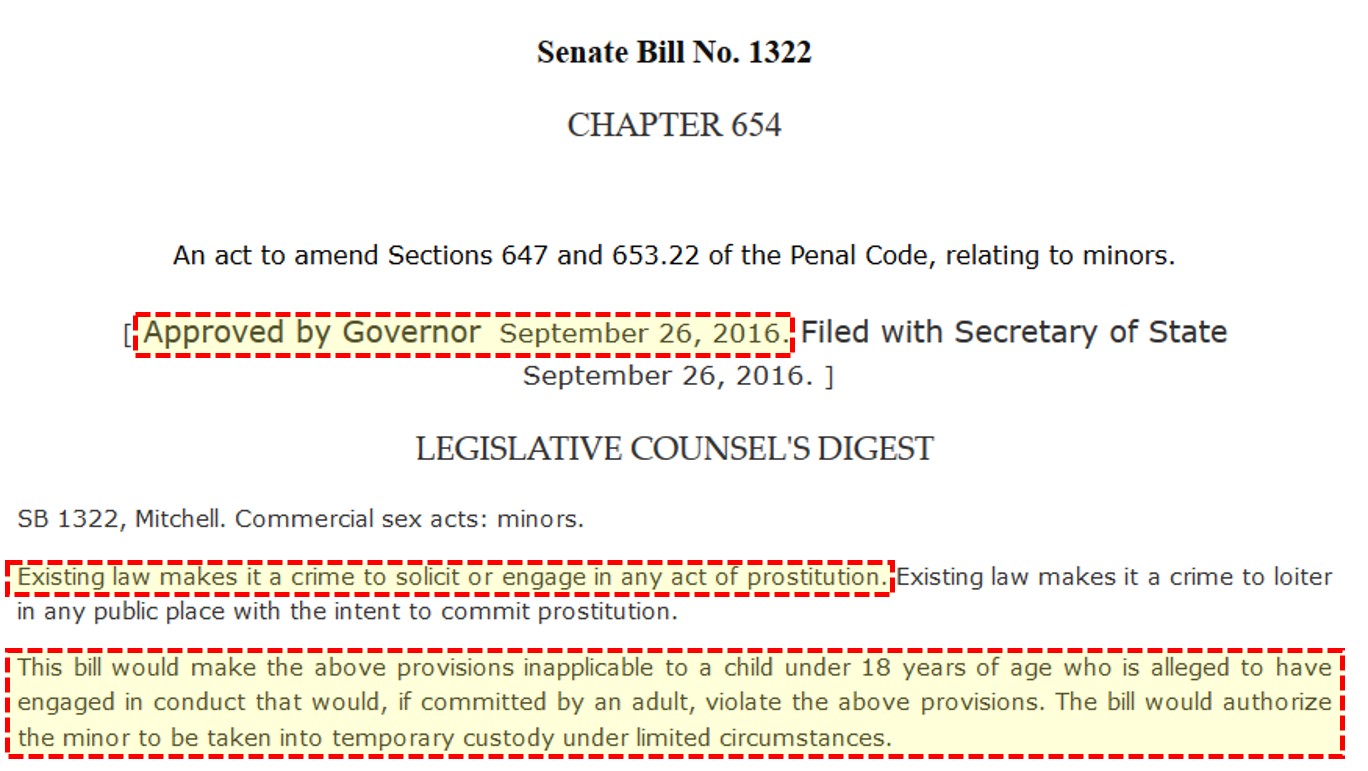
An unbelievable though ostensibly well-meaning law in California took effect at midnight January 1st. Unfortunately, the bill could have some very unpleasant consequences for the very group it seeks to protect. SB-1322, authored by State Senator Holly Mitchell (D-Los Angeles) and passed by the California legislature’s Democratic “super majority” in September, essentially legalizes the prostitution of minors. According to the text of the legislation, while “existing law makes it a crime to solicit or engage in any act of prostitution” the bill “would make the above provisions inapplicable to a child under 18 years of age who is alleged to have engaged in conduct that would, if committed by an adult, violate the above provisions.” The bill also allows police to take a minor caught violating into temporary custody only if leaving the minor unattended poses an immediate threat to their health of safety. Another controversial California law that targets prostitution has also taken effect. SB-1129, authored by Bill Monning (D-Carmel), repeals mandatory minimum sentences for prostitution offenses – further decriminalizing the practice for both adults and minors.

The author and supporters of SB-1322 have argued that legislation would improve the minors’ chances for rehabilitation by taking them out of the juvenile detention system and instead place them in the care of Social Services. Assemblywoman Shirley Weber (D-San Diego), who voted for the bill, said that “this is the beginning of us thinking differently about the problem.” Though the premise that the children are victims and not “prostitutes” in the same sense as an adult is sound, decriminalizing the practice for minors is, instead, more likely to empower those who exploit them. As the LA Times noted, the legislation “would prevent law enforcement from helping vulnerable children who often don’t see themselves as victims, run away from unsecured shelters and remain tied to their traffickers through complicated psychological and emotional bonds.” Alameda County District Attorney Nancy O’Malley also expressed such reservations about the measure, saying that “it just opens up the door for traffickers to use these kids to commit crimes and exploit them even worse.”

Another problem with the bill is its dependency on the state’s social services as a solution to the problem of child prostitution. California’s social services are notoriously under-funded after the state’s budget crisis led its government to cut over $1 billion in program funding. $121 million of those cuts directly targeted child welfare and foster care. This bill has legalized child prostitution without offering any alternative programs or funding to help “rehabilitate” young victims of sex trafficking and will only further This bill has legalized child prostitution without offering any alternative programs or funding to help “rehabilitate” young victims of sex trafficking and will only further overburden state-run child welfare programs.

“Right now the best way to get these young women help, the best way to rescue them from this lifestyle is by keeping law enforcement involved through the ability to arrest,” said Assemblywoman Kristin Olsen (R-Modesto). “Maybe in a few years from now, when we are doing better job at both the state and local level, we will better equipped and ready for this bill because services to young women will be readily available. But we are not there yet.”

Though the bill may have been well-intentioned, its consequences are more likely to harm, rather than help, the state’s youngest and most vulnerable citizens.

Senate Bill No. 1322


Source…