Taxation and Extortion: Drawing Parallels between Government Taxation and Mafia Protection Money

 Political, View Point  Comments Off on Taxation and Extortion: Drawing Parallels between Government Taxation and Mafia Protection Money
Jul 142023
 

Taxation and organized crime are two concepts that, on the surface, appear worlds apart. However, when we dig deeper into the mechanisms and effects of taxation, one might find some striking similarities between the government's collection of taxes and the Mafia's collection of protection money. This thought-provoking comparison challenges conventional views and prompts us to question the nature and legitimacy of taxation.

Taxation and organized crime are two concepts that, on the surface, appear worlds apart. However, when we dig deeper into the mechanisms and effects of taxation, one might find some striking similarities between the government’s collection of taxes and the Mafia’s collection of protection money. This thought-provoking comparison challenges conventional views and prompts us to question the nature and legitimacy of taxation. In this article, we explore the commonalities between tax by the government and protection money by the Mafia, highlighting the potential ethical and moral dilemmas surrounding taxation.

The Coercive Nature

At the heart of both taxation and extortion lies an element of coercion. The government uses its legal authority to enforce tax collection, backed by the threat of penalties and legal consequences for non-compliance. Similarly, the Mafia resorts to intimidation, violence, and property damage to compel individuals and businesses to pay protection money. While the government’s actions are sanctioned by the law, the fundamental principle of coercive extraction remains the same.

Exchange for Services

Proponents of taxation argue that the funds collected go towards providing essential services and public goods. Similarly, the Mafia claims to offer protection and security in exchange for the money they collect. Both systems create an implicit transactional relationship where individuals or businesses pay for services rendered or benefits received. However, critics often question the effectiveness and efficiency of government services, just as doubts arise regarding the Mafia’s ability to genuinely safeguard businesses.

Lack of Voluntary Consent

One fundamental difference between taxation and protection money lies in the consent of the parties involved. While paying protection money is often non-negotiable, taxation operates under the assumption of implied consent. Citizens are obliged to pay taxes simply by residing within a particular jurisdiction. This raises concerns about the legitimacy of taxation when individuals have no choice but to comply, mirroring the lack of voluntary consent seen in extortion scenarios.

Allocation and Misuse of Funds

Another point of contention arises from the allocation and misuse of funds. Critics argue that both the government and the Mafia regularly misappropriate the money they collect. Corruption, inefficiency, and wasteful spending are persistent issues that plague both systems. This misuse undermines the original intent of taxation as a means to fund necessary public goods or protection money as a mechanism for ensuring safety and security.

Punishment for Non-Compliance

While the government relies on legal sanctions and penalties to punish tax evaders, the Mafia adopts a more direct and often violent approach to deal with those who refuse to pay protection money. Although the severity of punishment differs, the fundamental purpose remains the same: to enforce compliance through fear and deterrence. The fear of retribution drives individuals to pay their taxes or protection money, regardless of their personal beliefs.

Legitimacy and Moral Dilemmas

Taxation enjoys legitimacy by virtue of being sanctioned by the government and serving the collective interest. However, this does not absolve it from potential moral and ethical dilemmas. The parallel with protection money raises questions about the moral foundation of taxation. Does the government have an inherent right to forcefully extract funds from its citizens? Is taxation morally justified merely because it serves the greater good?

Final Thoughts

Exploring the unsettling parallels between government taxation and Mafia protection money forces us to confront a darker reality surrounding the nature of taxation. While taxation operates within the bounds of legality and social acceptance, it bears an uncomfortable resemblance to the coercive tactics employed by organized crime. The coercive nature, lack of voluntary consent, and potential misuse of funds raise significant ethical and moral concerns.

This comparison sheds light on the often-overlooked aspects of taxation, challenging the prevailing belief in its inherent legitimacy. The government’s ability to forcefully extract funds from its citizens, under the guise of serving the collective interest, poses profound questions about the boundaries of power and individual rights. The legitimacy of taxation, when scrutinized through the lens of protection money, becomes a moral quagmire that demands our attention.

Moreover, the unfortunate truth is that both government taxation and Mafia extortion can result in the misallocation and misappropriation of funds. Corruption, inefficiency, and wasteful spending erode public trust in the government’s ability to manage taxpayer dollars effectively. Similarly, the Mafia’s dubious track record in providing genuine protection further undermines any justification for their extortionary practices.

The punishment for non-compliance is another disturbing similarity. While the government employs legal sanctions, the Mafia resorts to violence and intimidation. Although the degrees of severity differ, the underlying purpose remains the same: to ensure compliance through fear and deterrence. This unsettling reality raises questions about the boundaries of a just society and the moral implications of using coercion as a means to extract resources.

Examining taxation through the lens of Mafia protection money reveals an uncomfortable truth about the nature of governmental power. It challenges us to reevaluate the unquestioning acceptance of taxation as an essential societal function and prompts a critical examination of the ethical and moral foundations upon which it is built. By recognizing the darker parallels between taxation and extortion, we can foster a more profound dialogue about individual autonomy, governmental accountability, and the delicate balance between the rights of the citizenry and the obligations of the state.


Exploring the Most Believable Theories on Jimmy Hoffa’s Final Resting Place

 Conspiracy, Featured, Political  Comments Off on Exploring the Most Believable Theories on Jimmy Hoffa’s Final Resting Place
Jul 102023
 

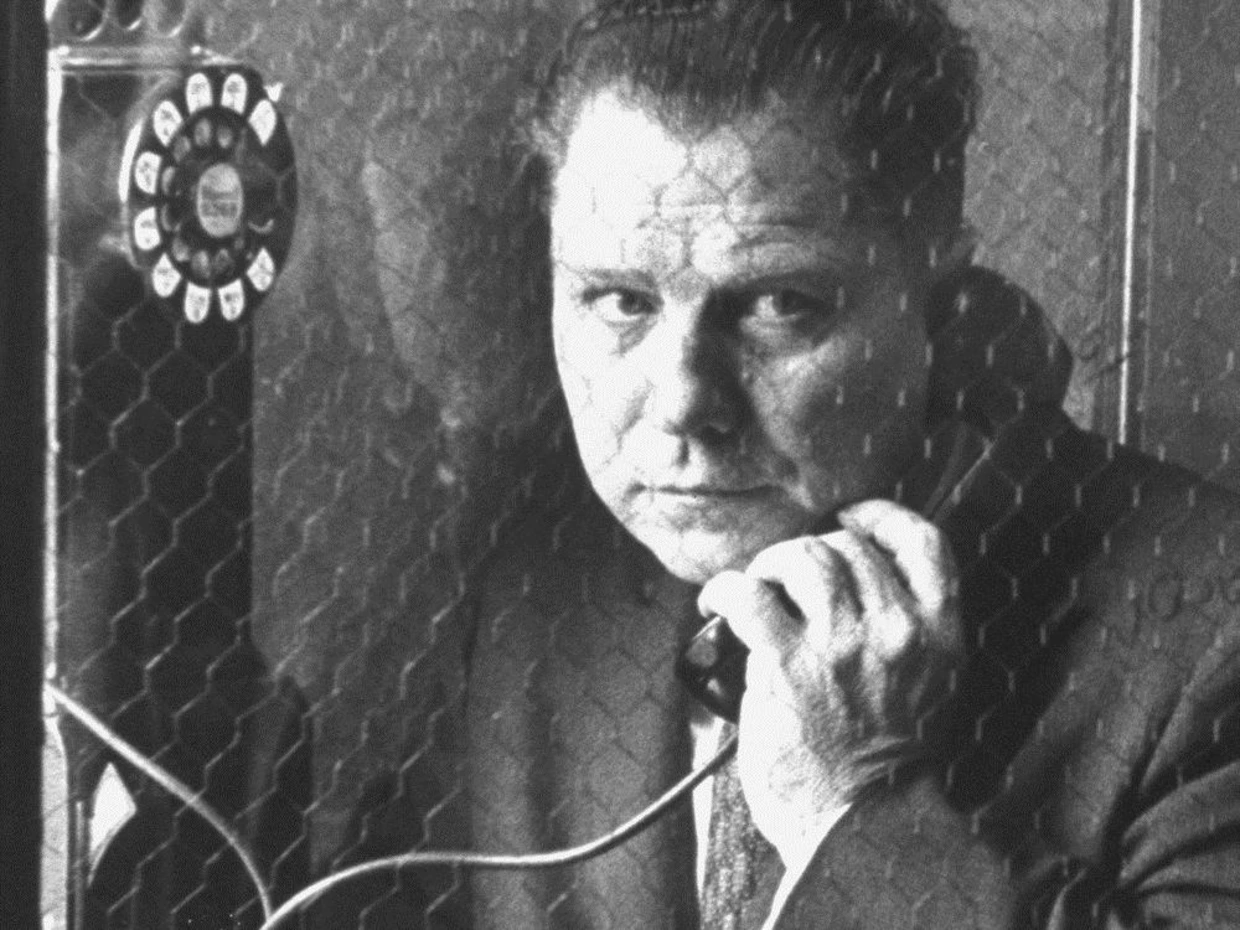
James Riddle Hoffa, famously known as Jimmy Hoffa, was an iconic figure in American labor history. As the former president of the International Brotherhood of Teamsters (IBT), he played a prominent role in shaping the labor movement. However, his mysterious disappearance in 1975 has captivated the nation for decades. Despite numerous investigations and speculation, the whereabouts of Hoffa's remains remain unknown. In this article, we delve into the background of Jimmy Hoffa and explore the most believable places where he could potentially be buried.

James Riddle Hoffa, famously known as Jimmy Hoffa, was an iconic figure in American labor history. As the former president of the International Brotherhood of Teamsters (IBT), he played a prominent role in shaping the labor movement. However, his mysterious disappearance in 1975 has captivated the nation for decades. Despite numerous investigations and speculation, the whereabouts of Hoffa’s remains remain unknown. In this article, we delve into the background of Jimmy Hoffa and explore the most believable places where he could potentially be buried.

Background on Jimmy Hoffa

Born on February 14, 1913, in Brazil, Indiana, Jimmy Hoffa grew up in a working-class family. His involvement in the labor movement began at an early age, and he quickly rose through the ranks of the Teamsters Union. Hoffa’s tenure as the president of the IBT, from 1957 to 1971, marked a significant era in the organization’s history. Known for his charismatic leadership and ability to mobilize the labor force, he transformed the Teamsters into one of the most powerful unions in the country.

Hoffa’s aggressive tactics and alleged connections with organized crime brought him under intense scrutiny from law enforcement agencies, notably the Federal Bureau of Investigation (FBI). In 1964, he was convicted of jury tampering, fraud, and conspiracy and served four years in prison. Following his release, Hoffa attempted to regain control of the Teamsters but faced resistance from within the union and the government.

Disappearance and Theories

On July 30, 1975, Hoffa was scheduled to meet with Anthony Provenzano, a suspected member of the Genovese crime family, and Anthony Giacalone, a Detroit mobster, at the Machus Red Fox restaurant in Bloomfield Township, Michigan. However, he mysteriously vanished, and his disappearance has become one of the most enduring unsolved cases in American history.

Numerous theories have emerged over the years, speculating on the circumstances surrounding Hoffa’s disappearance and the location of his burial. While some theories propose that Hoffa’s remains were disposed of in a manner that left no trace, others suggest specific places where his body may have been hidden.

Exploring the Most Believable Burial Places

  1. The Giants Stadium Theory: One popular theory suggests that Jimmy Hoffa’s remains were buried beneath the former Giants Stadium in East Rutherford, New Jersey. The proximity of the stadium to mob-controlled areas and the alleged connections between Hoffa and organized crime lend credibility to this theory. It is believed that the vast expanse of the stadium construction site during its early stages provided an opportunity to discreetly bury the body. However, extensive searches conducted in the late 1990s failed to yield any concrete evidence, casting doubt on the plausibility of this theory.
  2. The Horse Farm Theory: Another intriguing theory revolves around a horse farm located in Milford, Michigan. It is claimed that Jimmy Hoffa was murdered in Detroit and subsequently transported to this remote location for burial. The secluded nature of the farm, combined with the presence of large machinery and construction equipment, could have facilitated the clandestine burial of his remains. Additionally, the farm’s ownership and alleged ties to the Detroit underworld add credence to this theory. Despite several searches, no concrete evidence has been found to substantiate the claim.
  3. The Meadowlands Theory: Similar to the Giants Stadium theory, the Meadowlands Theory suggests that Jimmy Hoffa’s body was disposed of in the vast wetlands surrounding the Meadowlands area in New Jersey. This theory posits that Hoffa’s remains were buried in one of the many swamps, making it exceedingly difficult to locate them. The marshy terrain and the influence of organized crime in the region could have enabled the perpetrators to conceal the burial site effectively. However, despite occasional searches, the elusive nature of the Meadowlands makes this theory challenging to validate.
  4. The Brother-in-Law’s House Theory: A compelling theory points to a house owned by former mobster and Hoffa’s brother-in-law, Charles “Chuckie” O’Brien, in Detroit. According to this theory, Hoffa was murdered in a nearby location and then transported to O’Brien’s house for burial. O’Brien’s close relationship with Hoffa and his alleged involvement in the Mafia make this theory intriguing. However, extensive searches of the property, including the removal of a concrete floor, failed to uncover any evidence supporting this theory.
  5. The Renaissance Center Theory: Some theorists believe that Jimmy Hoffa’s body was buried under the Renaissance Center, a landmark building in downtown Detroit. Proponents of this theory argue that the complex network of tunnels and construction sites during the building’s construction provided ample opportunities for covert disposal of the remains. Furthermore, rumors about the building’s alleged mob connections and the involvement of corrupt construction workers lend weight to this theory. Despite sporadic investigations, no definitive evidence has been found to support this claim.

Final Thoughts

The mysterious disappearance of Jimmy Hoffa continues to captivate the American public, fueling speculation and giving rise to various theories about his burial location. Although no definitive evidence has been uncovered to solve the case, the mentioned theories provide plausible explanations and locations where his remains might be concealed.

Decades after his disappearance, the search for Jimmy Hoffa’s final resting place still captivates the imaginations of both true-crime enthusiasts and historians. Until concrete evidence emerges, the mystery surrounding his fate will persist, leaving us to wonder about the ultimate destination of this influential figure in American labor history.


You Have To Pay Taxes

 Political, View Point  Comments Off on You Have To Pay Taxes
May 252023
 

You have to pay taxes, so they protect you from what they'll do to you if you don't pay taxes. Isn't that how the Mafia works?


You have to pay taxes, so they protect you from what they’ll do to you if you don’t pay taxes.

Isn’t that how the Mafia works?

An Organized Crime Syndicate

 Political, View Point  Comments Off on An Organized Crime Syndicate
Apr 042023
 

The Democrat party operates like an organized crime syndicate and should be subject to RICO indictments and prosecution. But like a good crime syndicate, the Democrats control the justice department, the media, and all the federal police. So that won’t happen.


The Democrat party operates like an organized crime syndicate and should be subject to RICO indictments and prosecution. But like a good crime syndicate, the Democrats control the justice department, the media, and all the federal police. So that won’t happen.