How Bureaucrats Became Kings

 Conspiracy, Featured, Political  Comments Off on How Bureaucrats Became Kings
Sep 022025
 

An exposé on the unchecked power of the administrative state.

From clerks to kings: How bureaucrats gained unchecked power. Can reforms dismantle the administrative state’s silent rule?

Picture this: In 1900, the U.S. federal government had fewer employees than a modern Walmart Supercenter. Fast-forward to today, and over 2 million civilians work for federal agencies. But here’s the twist—while presidents and lawmakers come and go, these workers stay. They draft rules, enforce policies, and shape daily life in ways most people never see. How did we get here? Let’s rewind.

In the early 20th century, governments were lean. The average citizen might interact with a postal worker or a tax collector, but that was it. Then came crises—the Great Depression, world wars, the Cold War. Each emergency handed bureaucracies more responsibility. By the 1960s, agencies like the EPA and OSHA were created, armed with broad mandates to “protect the public.” Good intentions? Sure. But power grows in the shadows.


The Rulebook That Ate Democracy

Every year, federal agencies publish thousands of new regulations. These rules fill tens of thousands of pages. Congress might pass a vague law like “make air cleaner,” but unelected staffers decide what that means. They define limits, create penalties, and even fund their own projects through fines. It’s like writing a blank check to a stranger and hoping they spend it wisely.

Take the case of a family-owned bakery in Texas. In 2018, they were fined $12,000 for violating a workplace safety rule requiring specific labels on flour sacks. The labels? They were in English, but regulators argued the workers spoke Spanish. Never mind that the bakery had zero safety incidents. Compliance came before common sense.

This isn’t an isolated story. Small farms, tech startups, and mom-and-pop shops drown in permits, inspections, and paperwork. Meanwhile, big corporations hire lobbyists to shape regulations in their favor. The little guy can’t compete.


When Permits Replace Policymakers

Who’s really in charge? Consider the permitting process. Want to build a house? A road? A factory? You’ll need approvals from agencies that operate like medieval guilds—slow, expensive, and answerable to no one. Delays stretch for years, killing innovation. A tech CEO once told me, “It’s easier to launch a satellite than to get a zoning permit in California.”

And if you challenge these decisions? You’ll face a system rigged against you. Administrative courts often side with agencies, thanks to legal doctrines like “Chevron deference,” where judges defer to bureaucrats’ interpretations of laws. It’s a fancy way of saying, “The house always wins.”


The Lifers Who Outlast Presidents

Politicians have term limits. Bureaucrats don’t. Agency heads and career staff often stay for decades, building networks and influence. They attend the same conferences, swap jobs between agencies, and develop loyalties to their institutions, not the public.

A former FDA advisor once joked, “New commissioners come in with big ideas. We smile, nod, and wait them out. They leave in four years. We’re still here.” This isn’t laziness—it’s institutional inertia. Bureaucracies resist change like antibodies attacking a virus.

The result? Policies outlive their usefulness. Medicare still uses 1970s-era software. The Nuclear Regulatory Commission struggles to approve next-gen reactors, clinging to Cold War-era fears. Meanwhile, private sector advancements—AI, green energy, telehealth—hit a wall of “wait for permission.”


How to Take Back the Castle

This isn’t a doom-and-gloom story. Solutions exist, but they require courage.

  1. Sunset Clauses: Every regulation should expire unless lawmakers renew it. No more zombie rules from 1985 dictating how you run your business.
  2. Transparency Dashboards: Publish every regulation’s cost, purpose, and effect in plain English. No more hiding behind legalese.
  3. Civil Service Rotation: Make bureaucrats switch agencies every five years. Break the echo chambers.
  4. Rein in the Courts: End automatic deference to agencies. Let judges judge, not rubber-stamp.

Grassroots pressure works. In 2021, a coalition of farmers pushed Missouri to streamline agricultural permits, cutting wait times by 70%. Imagine scaling that nationwide.


The Bottom Line

Power corrupts, but unnoticed power corrupts unnoticed. The administrative state didn’t set out to rule, yet here we are. The fix starts with asking simple questions: Who benefits from this rule? Who’s accountable? And why can’t we vote them out?

Stay curious. Ask harder questions. And remember—kings wear suits now, not crowns.
Why They Want You Ashamed of America

 Conspiracy, Featured, Political  Comments Off on Why They Want You Ashamed of America
Aug 262025
 

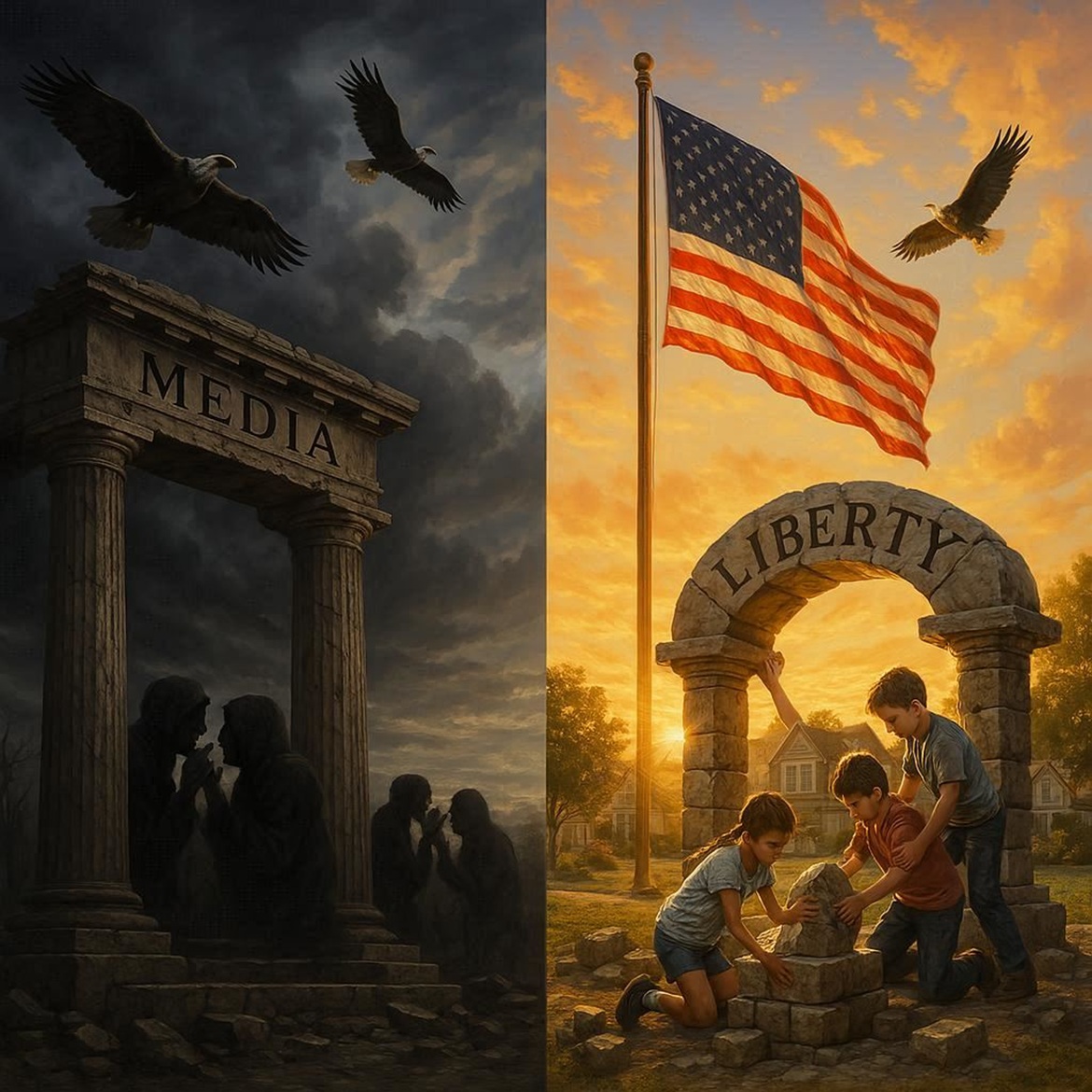
A breakdown of cultural demoralization tactics and why national pride is essential to preserving freedom.
Why They Want You Ashamed of America – Uncover tactics eroding American pride & why national unity defends freedom. Reject shame, embrace constructive patriotism.

Think about the last time you watched the news or scrolled through social media. How often did you hear about America’s failures compared to its successes? Wars, political scandals, systemic injustices—these stories dominate the conversation. But what happens when the same narratives repeat endlessly, while the quieter, everyday victories of communities, innovators, and ordinary people go ignored?

It’s no accident. When institutions—media, schools, even entertainment—focus disproportionately on flaws, they shape a worldview where shame overshadows pride. Over time, this conditions people to distrust the foundations of their own society. Historians once taught students to analyze both triumphs and mistakes. Now, textbooks often reduce complex figures like Thomas Jefferson or Woodrow Wilson to their worst deeds, erasing their contributions to democracy. The goal isn’t balanced debate. It’s to make you question whether anything about America deserves admiration.

Art and culture play a role, too. Museums revise exhibits to emphasize oppression over resilience. Movies frame the American Dream as a myth, not a flawed but aspirational ideal. This isn’t about honest critique—it’s about rewriting the story of who we are.


Rewriting History, One Story at a Time

History isn’t static. It’s a battleground of ideas. For example, consider how the Founding Fathers are discussed today. Yes, many owned slaves—a horrific reality that should never be minimized. But focusing only on that fact, while ignoring their radical experiment in self-governance, creates a lopsided narrative. It frames the entire American project as corrupt from the start, rather than a work-in-progress shaped by both noble ideals and human failings.

The same pattern repeats with events like World War II or the Civil Rights Movement. These moments are recast as hypocritical power grabs, rather than hard-fought struggles to expand freedom. When a Vietnam veteran is remembered solely for his role in a controversial war—not his bravery or sacrifice—the message is clear: Your heritage is shameful. Your heroes aren’t heroes.

This isn’t education. It’s demolition.


The Weaponization of Guilt

Guilt is a powerful tool. It paralyzes. It silences. And right now, it’s being leveraged in ways that go far beyond holding individuals accountable. Have you noticed how terms like “privilege” or “colonialism” aren’t just used to explain inequality? They’re brandished like moral verdicts, demanding that entire groups apologize for crimes they didn’t commit.

Ask yourself: Why are kids in middle school taught to “deconstruct” their racial identity before they’ve read the Constitution? Why do corporations suddenly champion social justice while dodging taxes or exploiting overseas labor? It’s not about fairness. It’s about convincing you that America’s past is so irredeemable, its future must be dismantled.

Guilt breeds complacency. If you believe your nation is inherently wicked, why defend it? Why push for reform? You’ll surrender to whoever claims the mantle of “progress.”


Why Pride Isn’t a Dirty Word

Critics call national pride dangerous. They say it fuels jingoism or ignores injustice. But strip away pride, and what’s left? A country with no compass. Pride isn’t about blind loyalty—it’s about believing in the values that could unite us: equality under the law, free speech, the right to self-determination.

Take the Civil Rights Movement. Activists like Martin Luther King Jr. didn’t reject America. They appealed to its founding principles, arguing the nation had strayed from its own promise. Their pride in what America could be gave their demands moral force. Without that shared belief in progress, dissent becomes cynical, not constructive.

Pride also fuels resilience. During the Great Depression, families survived by leaning on community and ingenuity. Apollo 11 didn’t happen because engineers were ashamed of their country—they were inspired to prove what it could achieve.


The Playbook of Division

Divide and conquer. It’s the oldest strategy in the book. Today, it looks like this: Reduce people to categories—race, gender, politics. Pit them against each other. Amplify the loudest, angriest voices on every side. Suddenly, no one’s debating ideas; they’re defending tribes.

Media algorithms feed this. Controversy gets clicks. Nuance doesn’t. Ever notice how social media platforms push content that outrages you? Or how politicians suddenly care about niche cultural issues right before elections? Chaos distracts. When citizens see neighbors as enemies, they stop asking tough questions about who’s really in charge.

History shows unified societies thrive. The New Deal. The Interstate Highway System. These weren’t built by fractured populations. They required collective buy-in. Without it, big problems—like inflation or border security—get stuck in rhetorical wars, never solved.


How to Push Back

First, question the narrative. If a news story or viral post makes you feel hopeless about America, dig deeper. Who benefits from that hopelessness? Follow the money. Follow the power.

Second, reclaim your history. Visit a local monument. Read the Declaration of Independence. Talk to a WWII veteran. Understand that every nation has dark chapters, but America’s story is unique because its people constantly fight to live up to their own ideals.

Finally, practice constructive pride. Celebrate what works. Fix what doesn’t. Support schools that teach critical thinking, not self-loathing. Vote for leaders who inspire instead of manipulate.

National pride isn’t about waving a flag. It’s about refusing to let anyone—foreign or domestic—define your country’s worth for you. The moment we stop believing in America’s capacity for good is the moment freedom loses.

Don’t hand them that victory.

Poetic Justice

 Featured, Political, View Point  Comments Off on Poetic Justice
Aug 252025
 

Finally. Using their own weapons against them. The courts they weaponized to silence us will now expose the corruption for all to see. This isn't persecution; it's poetic justice. The people are watching.


Finally. Using their own weapons against them. The courts they weaponized to silence us will now expose the corruption for all to see. This isn’t persecution; it’s poetic justice. The people are watching.

The War Machine

 Featured, Political, View Point  Comments Off on The War Machine
Aug 242025
 

The war machine is fueled by our taxes and our silence. They create enemies to justify the spending, while we lose sons and daughters. We've evolved past this barbarism. We should be done with politicians who see war as a tool for power. It’s time to choose only those who value peace and human life above all else.


The war machine is fueled by our taxes and our silence. They create enemies to justify the spending, while we lose sons and daughters. We’ve evolved past this barbarism. We should be done with politicians who see war as a tool for power. It’s time to choose only those who value peace and human life above all else.

Ignorance

 Featured, Political, View Point  Comments Off on Ignorance
Aug 212025
 

Ignorance is easy to control and incredibly hard to break free from. That’s why it’s a double threat to progress. When people don’t know better, they’re vulnerable to dictators. And when they believe everything they’re told, they resist learning the truth.


Ignorance is easy to control and incredibly hard to break free from. That’s why it’s a double threat to progress. When people don’t know better, they’re vulnerable to dictators. And when they believe everything they’re told, they resist learning the truth.