 |
Q: How much does a chimney cost?
A: Nothing, it is on the house.
|
| Each of the clues below describe the name of a candy. Can you name them? Example: Galaxy would be a Milky Way.
1. Sign of affection |
 |
|
While working at a pizza parlor, I observed a man ordering a small pizza to go. He appeared to be alone, and the cook asked him if he would like it cut into four pieces or six pieces.
He thought about it for some time before responding. “Just cut it into four pieces; I don’t think I’m hungry enough to eat six pieces.”
|
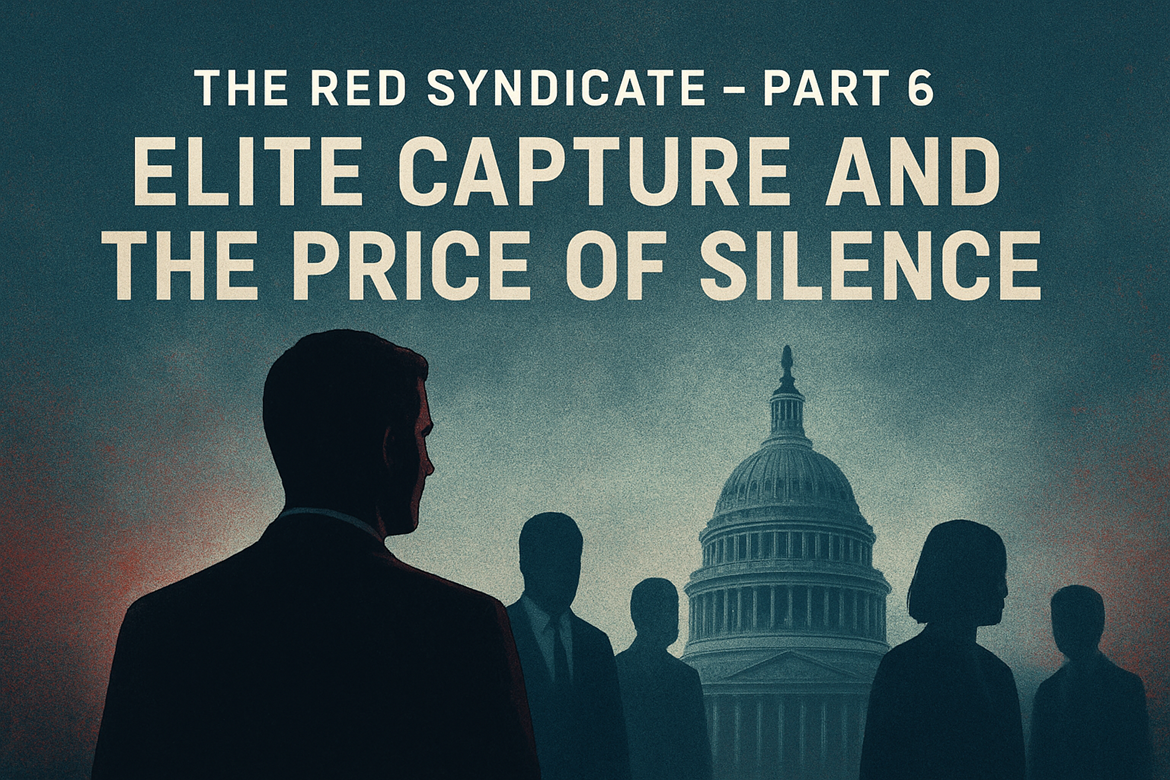
The hotel ballroom could have been anywhere.
Crystal chandeliers, white tablecloths, a stage with a tasteful backdrop showing a skyline and a slogan about “shared prosperity.” At one table sat a former minister. At another, a retired diplomat. A well known television host leaned in to speak with a man who chaired three corporate boards. Waiters moved quietly among them, refilling glasses.
On stage, the master of ceremonies introduced the keynote speaker, an executive from a major conglomerate that had become synonymous with China’s rise. There were polite laughs, nods, a few questions. The audience heard about “win win partnerships,” “mutual respect,” and the “need to avoid politicizing economic cooperation.”
No one mentioned the court cases that had tied subsidiaries of the conglomerate to bribery in other countries. No one raised the topic of human rights lawyers jailed back in China or of journalists harassed for asking the wrong questions.
The people in that room knew something the public did not fully grasp. They knew that their own fortunes, reputations, and future opportunities were now intertwined with a system that punished those who spoke too loudly.
This is what elite capture looks like from the inside. It does not begin with threats. It begins with invitations.
Elite capture rarely announces itself. It does not arrive under that name. It arrives as a dinner invitation, a board offer, a consulting contract, a joint venture, or a scholarship for a child.
A politician is approached with the chance to attract investment to his district. A business leader sees an opportunity to enter China’s vast market if she finds the right partner. A university president receives a proposal for a research center funded by a company with close ties to Beijing.
The initial decision looks harmless, even beneficial. The project creates jobs. The partnership boosts the balance sheet. The benefactor sponsors cultural exchanges and public events. Criticism seems ungrateful.
Only later, often much later, do the hidden costs emerge.
The investment turns out to depend on continued political goodwill. The research center quietly discourages studies on sensitive topics. The joint venture is structured so that technology and know how flow in one direction. Pulling out becomes costly. Speaking out becomes awkward.
By then, the relationship has hardened into dependence, and dependence is the soil in which capture grows.
Behind individual stories lies a pattern. It works across multiple sectors at once:
No single transaction is decisive. Taken together, they construct an architecture of entanglement. In that architecture, elites in other countries begin to internalize the idea that their prosperity, and often their personal status, rely on maintaining a smooth relationship with a system that does not tolerate scrutiny.
The Red Syndicate does not need to control every node. It needs only enough strategic relationships so that key voices, when the moment comes, choose quiet over confrontation.
Direct censorship is crude and visible. Self censorship is quiet and efficient.
An editor looks at a proposed investigation into a controversial project tied to a Chinese state owned enterprise. He asks himself: will this story jeopardize our bureau’s access? Will advertisers pull campaigns? Will management worry? Is now really the right moment? The story is delayed, softened, or quietly dropped.
A former official who sits on the advisory board of a multinational with deep Chinese interests is invited to comment on a television program about security threats or human rights abuses. She chooses her words carefully, emphasizing “complexity” and the need to avoid “unnecessary antagonism.” She mentions valid concerns but buries them under layers of caution. Viewers hear caution, not alarm.
A university hosting a visiting scholar from China receives informal advice that organizing a panel on a politically sensitive issue would be “unfortunate” for future cooperation. Administrators, already under budget pressure, decide to postpone the event. Organizers are told that scheduling was the problem.
In each case, no one orders silence. Silence is offered as a reasonable compromise. The price for not paying it is never stated plainly, but those in the know have already done the math.
Capture is not only about money and careers. It is also about emotions: flattery, belonging, and fear.
Flattery appears in invitations to exclusive forums, flattering coverage on state linked media, or praise from officials and executives who emphasize how “forward thinking” or “pragmatic” a foreign partner is. People like to be told they understand what others do not. They like to be treated as insiders.
Belonging appears when networks of businesspeople, diplomats, and experts who deal with China regularly begin to see themselves as a distinct community. They share experiences, jokes, and frustrations with “uninformed” critics. Over time, they may develop a subtle contempt for colleagues who take more principled stands.
Fear appears when cracks in this arrangement start to show. A sudden visa denial. A project cancelled without explanation. A public rebuke from a Chinese embassy or a state media outlet. A businessman detained during a “regulatory review.” These incidents are noticed. They are discussed in private. They reinforce the sense that there are lines one should not cross.
The result is an emotional economy in which compliance feels smart and dissent feels reckless.
Not all institutions are equally vulnerable to elite capture. Some have robust oversight, transparent funding, and a culture of independence. Others do not.
The Red Syndicate’s operators do not need to invent these vulnerabilities. They simply learn where they are and adapt to them, just as their predecessors once adapted to the weak enforcement of opium bans and customs regulations in treaty port China.
Elite capture is not complete until it shapes the stories a society tells itself.
Once enough key players are entangled, certain narratives gain strength:
These statements are not always false. They often contain grains of truth or half truths. That is what makes them effective. But when repeated often enough by business chambers, editorial pages, and former officials, they crowd out other questions:
Captured narratives do not flip a switch. They tilt the floor.
Elite capture is often discussed as a problem for geopolitics or national security. Its human cost is more intimate.
When foreign officials soften their criticism of abuses to preserve business ties, the victims of those abuses notice. They see governments that claim to stand for universal values hesitate when those values carry a price.
When international organizations mute their reports, activists imprisoned for their work receive fewer visits, fewer mentions, fewer signs that anyone outside cares. Silence travels inward.
Inside China, lawyers, journalists, religious believers, labor organizers, and ordinary citizens who challenge local injustice face a state that has grown adept at isolating them. When they look outward, hoping for pressure that might protect them, they instead encounter statements about “internal affairs” or “constructive dialogue.”
Some of those statements are written, literally or figuratively, by people whose careers and fortunes depend on maintaining a relationship with the very system that persecutes the dissidents in question.
In that sense, elite capture is not an abstract process. It is a chain that runs from a privileged dinner table to a prison cell.
The price of silence is not paid only by distant strangers. It is also paid within the societies whose elites have been captured.
When economic sectors become too dependent on a single external partner, domestic policy space shrinks. Governments may hesitate to regulate foreign investment, even when it threatens local industries or environment, for fear of retaliation. They may avoid defending their own citizens from harassment by foreign agents on their soil.
When media outlets blunt their coverage, the public loses access to essential information about how decisions are made and who benefits from them. Voters are asked to judge policy without understanding the pressures that shape it.
When universities or think tanks self censor, debate becomes skewed. Young scholars learn that certain topics are radioactive. The pool of expertise narrows. Policymakers have fewer independent voices to consult.
This erosion is gradual and quiet, but it weakens democratic resilience. Over time, it can produce a political culture in which certain interests are untouchable and certain questions are unspeakable.
Not everyone accepts capture. In many countries, journalists, activists, scholars, and some public officials push back.
They dig into opaque deals. They trace shell companies. They scrutinize campaign donations and post office jobs. They track how elite families benefit from joint ventures or real estate booms. They publish what they find, often at personal risk.
Some lose contracts. Others lose access. In extreme cases, they face legal harassment, smear campaigns, or threats from actors aligned with foreign interests. Their own institutions sometimes distance themselves, worried about losing funding or partnerships.
Yet their work exposes the architecture that this series has traced: the convergence of political power, economic advantage, and underworld methods into a system that thrives on darkness.
Their resistance also demonstrates something important. Elite capture is not destiny. It is a process, and processes can be interrupted.
Dismantling or even limiting the reach of elite capture does not require cutting off engagement with China or any other country. It requires making that engagement subject to rules that prioritize public interest over private gain.
Transparency would look like:
None of these measures would eliminate the Red Syndicate’s global influence overnight. But they would raise the cost of capture and give citizens a clearer view of who benefits from which decisions.
If the dangers are real and the remedies imaginable, why does silence persist?
Part of the answer is short term thinking. Election cycles, quarterly earnings, and annual budgets encourage decision makers to focus on immediate gains and defer long term risks. The benefits of engagement with a powerful authoritarian system are concrete and visible. The costs are diffuse and delayed.
Another part of the answer is denial. Admitting capture means admitting that institutions once seen as neutral or principled are, in fact, compromised. It means acknowledging personal mistakes and conflicts of interest. People rarely do that willingly.
Finally, there is fear. Fear that speaking honestly will close doors, cost allies, or trigger retaliation. Fear that others will not follow, leaving the first movers exposed.
The Red Syndicate’s greatest ally is not ideological sympathy. It is this combination of short termism, denial, and fear.
From Shanghai’s Bund under the rule of the Green Gang to the offshore accounts and quiet partnerships of the present, one theme has repeated: when power fuses with secrecy and money, it tends to capture those closest to it.
The Chinese Communist Party did not invent elite capture. It inherited techniques from the underworld, refined them during the revolution, and adapted them to the age of global markets. Today, those techniques shape decisions far beyond China’s borders.
The price of silence is paid by those who are excluded from the deals. It is paid by citizens whose choices narrow, by dissidents whose suffering is ignored, and by societies that wake up to find that their institutions no longer serve them as they imagined.
The question that remains is whether that price will continue to be paid quietly, or whether enough people will insist on treating engagement as a relationship between publics, not just between elites.
Part 7 – The Future of the Red Syndicate
How technology, surveillance, and shifting geopolitics may strengthen or weaken this architecture of hidden power, and what it would take to confront a system that thrives in the shadows of the twenty first century.
© 2025 The Red Syndicate Investigations / Common Sense Evaluation. All rights reserved.