A breakdown of cultural demoralization tactics and why national pride is essential to preserving freedom.
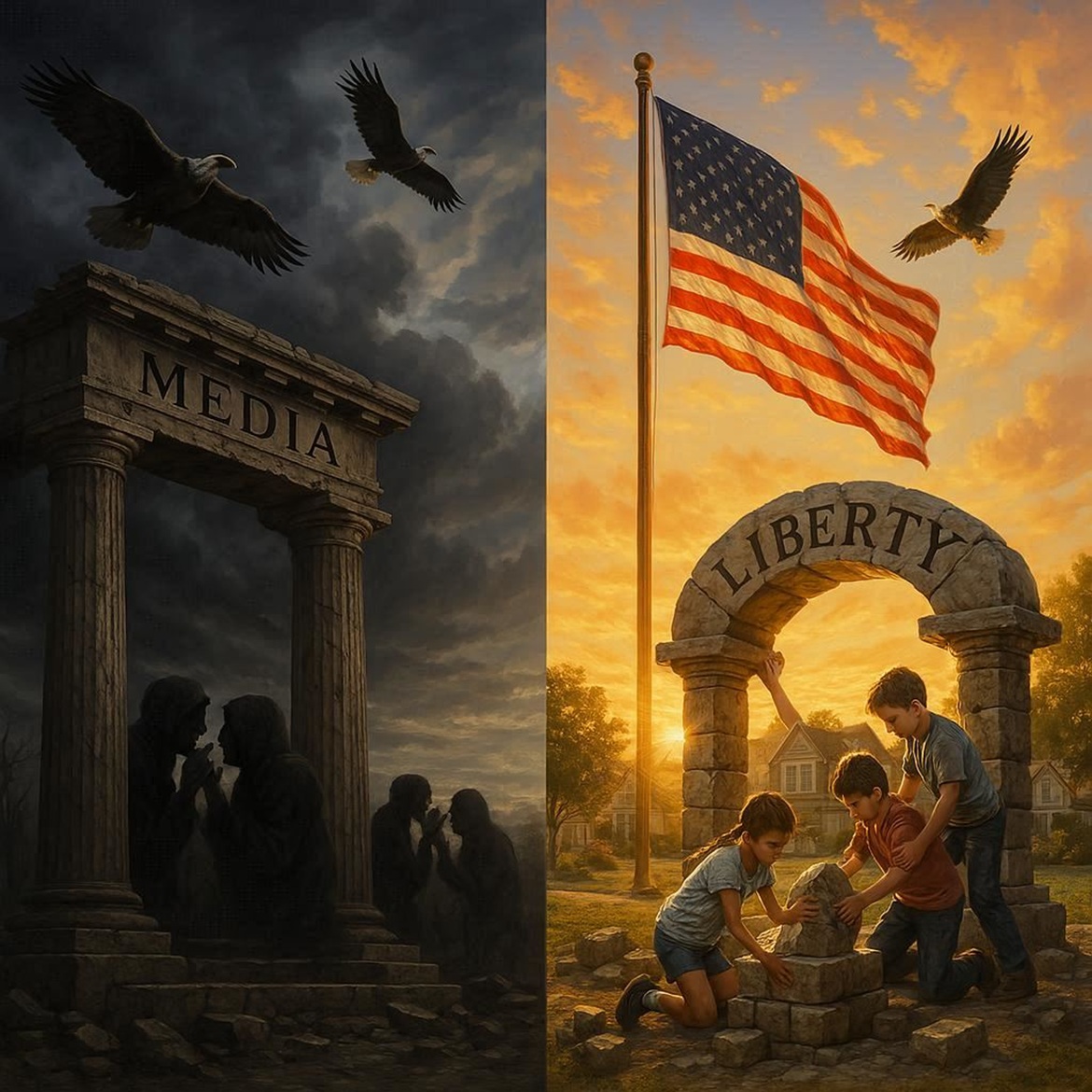
Think about the last time you watched the news or scrolled through social media. How often did you hear about America’s failures compared to its successes? Wars, political scandals, systemic injustices—these stories dominate the conversation. But what happens when the same narratives repeat endlessly, while the quieter, everyday victories of communities, innovators, and ordinary people go ignored?
It’s no accident. When institutions—media, schools, even entertainment—focus disproportionately on flaws, they shape a worldview where shame overshadows pride. Over time, this conditions people to distrust the foundations of their own society. Historians once taught students to analyze both triumphs and mistakes. Now, textbooks often reduce complex figures like Thomas Jefferson or Woodrow Wilson to their worst deeds, erasing their contributions to democracy. The goal isn’t balanced debate. It’s to make you question whether anything about America deserves admiration.
Art and culture play a role, too. Museums revise exhibits to emphasize oppression over resilience. Movies frame the American Dream as a myth, not a flawed but aspirational ideal. This isn’t about honest critique—it’s about rewriting the story of who we are.
Rewriting History, One Story at a Time
History isn’t static. It’s a battleground of ideas. For example, consider how the Founding Fathers are discussed today. Yes, many owned slaves—a horrific reality that should never be minimized. But focusing only on that fact, while ignoring their radical experiment in self-governance, creates a lopsided narrative. It frames the entire American project as corrupt from the start, rather than a work-in-progress shaped by both noble ideals and human failings.
The same pattern repeats with events like World War II or the Civil Rights Movement. These moments are recast as hypocritical power grabs, rather than hard-fought struggles to expand freedom. When a Vietnam veteran is remembered solely for his role in a controversial war—not his bravery or sacrifice—the message is clear: Your heritage is shameful. Your heroes aren’t heroes.
This isn’t education. It’s demolition.
The Weaponization of Guilt
Guilt is a powerful tool. It paralyzes. It silences. And right now, it’s being leveraged in ways that go far beyond holding individuals accountable. Have you noticed how terms like “privilege” or “colonialism” aren’t just used to explain inequality? They’re brandished like moral verdicts, demanding that entire groups apologize for crimes they didn’t commit.
Ask yourself: Why are kids in middle school taught to “deconstruct” their racial identity before they’ve read the Constitution? Why do corporations suddenly champion social justice while dodging taxes or exploiting overseas labor? It’s not about fairness. It’s about convincing you that America’s past is so irredeemable, its future must be dismantled.
Guilt breeds complacency. If you believe your nation is inherently wicked, why defend it? Why push for reform? You’ll surrender to whoever claims the mantle of “progress.”
Why Pride Isn’t a Dirty Word
Critics call national pride dangerous. They say it fuels jingoism or ignores injustice. But strip away pride, and what’s left? A country with no compass. Pride isn’t about blind loyalty—it’s about believing in the values that could unite us: equality under the law, free speech, the right to self-determination.
Take the Civil Rights Movement. Activists like Martin Luther King Jr. didn’t reject America. They appealed to its founding principles, arguing the nation had strayed from its own promise. Their pride in what America could be gave their demands moral force. Without that shared belief in progress, dissent becomes cynical, not constructive.
Pride also fuels resilience. During the Great Depression, families survived by leaning on community and ingenuity. Apollo 11 didn’t happen because engineers were ashamed of their country—they were inspired to prove what it could achieve.
The Playbook of Division
Divide and conquer. It’s the oldest strategy in the book. Today, it looks like this: Reduce people to categories—race, gender, politics. Pit them against each other. Amplify the loudest, angriest voices on every side. Suddenly, no one’s debating ideas; they’re defending tribes.
Media algorithms feed this. Controversy gets clicks. Nuance doesn’t. Ever notice how social media platforms push content that outrages you? Or how politicians suddenly care about niche cultural issues right before elections? Chaos distracts. When citizens see neighbors as enemies, they stop asking tough questions about who’s really in charge.
History shows unified societies thrive. The New Deal. The Interstate Highway System. These weren’t built by fractured populations. They required collective buy-in. Without it, big problems—like inflation or border security—get stuck in rhetorical wars, never solved.
How to Push Back
First, question the narrative. If a news story or viral post makes you feel hopeless about America, dig deeper. Who benefits from that hopelessness? Follow the money. Follow the power.
Second, reclaim your history. Visit a local monument. Read the Declaration of Independence. Talk to a WWII veteran. Understand that every nation has dark chapters, but America’s story is unique because its people constantly fight to live up to their own ideals.
Finally, practice constructive pride. Celebrate what works. Fix what doesn’t. Support schools that teach critical thinking, not self-loathing. Vote for leaders who inspire instead of manipulate.
National pride isn’t about waving a flag. It’s about refusing to let anyone—foreign or domestic—define your country’s worth for you. The moment we stop believing in America’s capacity for good is the moment freedom loses.
Don’t hand them that victory.