 |
How can you tell an ant’s gender?
|
The Department of Justice concludes that there is “reasonable cause to believe that the Chicago Police Department engages in a pattern or practice of use of excessive force in violation of the Fourth Amendment.”
Chicago has one of the highest crime rates of any city in the Nation. Sounds like they aren’t allowed to be excessive enough.
The DOJ is trying to burn down Chicago before Trump gets in. Very irresponsible. Obama is throwing Molotov cocktails on his way out. SHAME! pic.twitter.com/LFf07R5nj9
— Gags (@csevaluation) January 13, 2017
Imagine if the city were full of law abiding citizens. Would there still be a finding of excessive force?
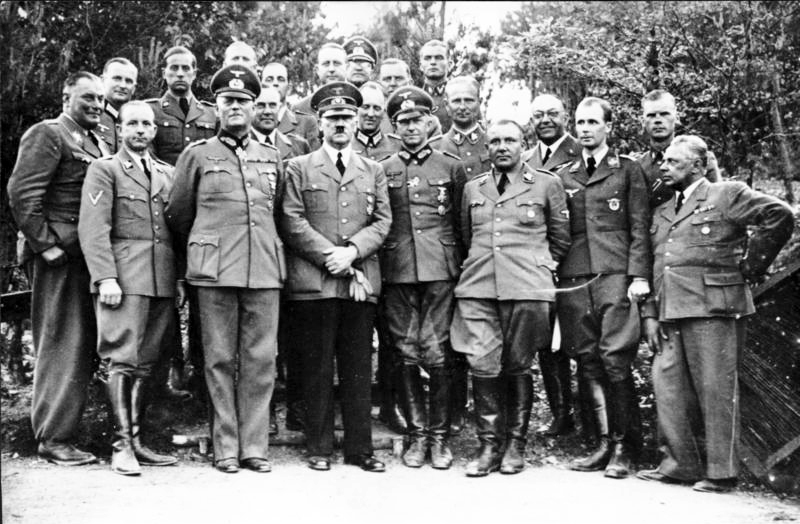
Nazi party had a plan for colonial enlargement. Photo Credit
Deep within Brazil’s Amazon rain forest, there’s a Nazi grave flanked by a towering cross with a swastika in a cemetery close to the isolated outpost of Laranjal do Jari. Inscribed on the cross in German is the name of Joseph Greiner who died there of fever on January 2, 1936 ‘in the service of German research.’
So what is it doing there? It’s the sole reminder of a little-known facet of history when Germany sought to found a colony there by bringing a swath of the Amazon River Basin into the Third Reich.
From 1935 to 1937, a team of Nazi explorers were in the region under the leadership of Otto Schulz-Kampfhenkel, a zoologist, documentary filmmaker, and member of Hitler’s SS. They chopped their way through the jungle around Brazil’s border with neighboring French Guiana. They collected indigenous jewelry, animal skulls, and studied topography along the 491-mile-long Jari River, an Amazon tributary.
The exploration began with the customary scientific appearances, explained Jens Glusing, a longtime correspondent for Der Spiegel, the German-language news outlet. He created a book explaining the Guyana Project. When the war began, Schulz-Kampfhenkel seized this opportunity for Nazi colonial enlargement.
He presented his plans to Heinrich Himmler, the head of the SS and the Gestapo, in 1940. The scheme was a way to curb the influence of the United States by taking control of French Guiana and the neighboring British and Dutch colonies. But the dream faded, and it might have been the expedition itself that doomed the venture.
Matters didn’t go well from the start. The expedition had a Heinkel 72 Seekadett seaplane, an example of Nazi industrial prowess – but it capsized after striking driftwood just a few weeks after the expedition started, National Post reported.
From then on they were compelled to rely on native tribes for their survival and finding their way through the jungle. Malaria and other ailments felled them. Schulz-Kampfhenkel, the expedition’s foreman, developed diphtheria and an unknown fever took Grenier’s life.
The mission was abandoned, and today only Grenier’s three-meter-high monument remains as the testament to their failed endeavors.
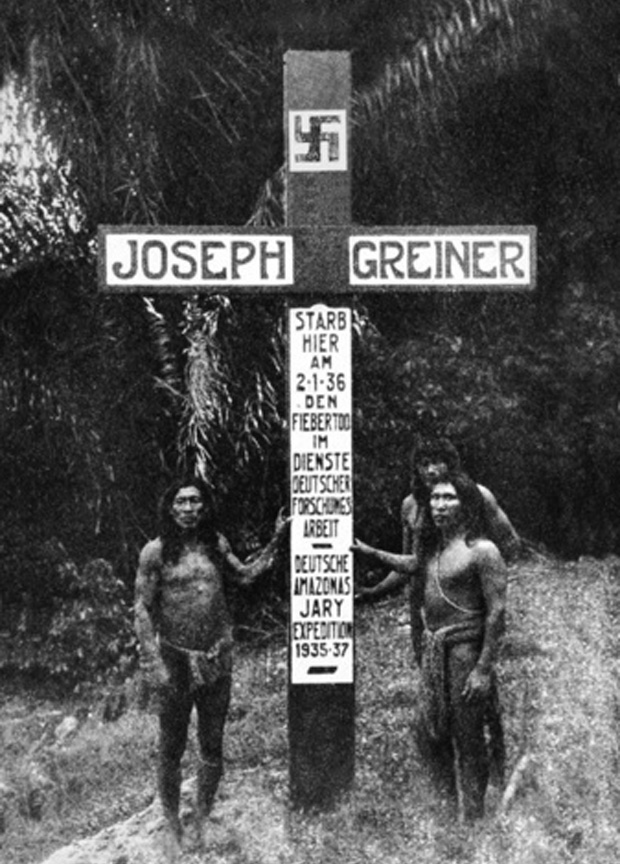
An archival image from a 1935 Nazi expedition to the Amazon rain forest, where expedition foreman Joseph Greiner died of an unspecified fever. The three-metre grave endures.