What Comes After the Uniparty?

 Conspiracy, Featured, Political  Comments Off on What Comes After the Uniparty?
Aug 192025
 

A call for post-partisan populist realignment — beyond GOP vs. Dems.
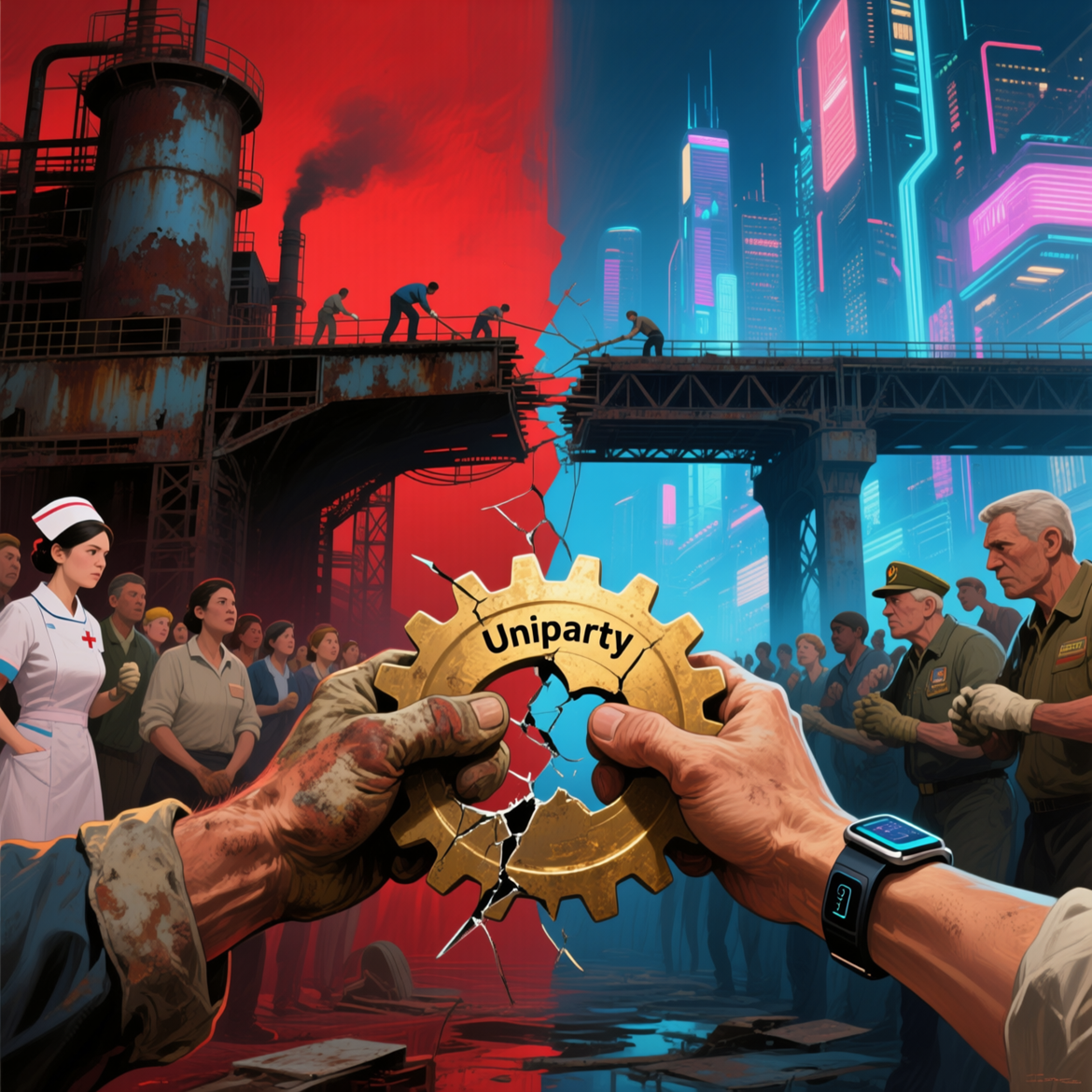
Fed up with GOP vs. Dems? Discover the rise of post-partisan populism—where tech, local action, and unlikely alliances dismantle the Uniparty.

Picture this: A factory worker in Ohio and a tech freelancer in Austin both stare at their ballots during the last election. They don’t know each other, but they’re thinking the same thing: “None of these people represent me.” The worker hasn’t seen a raise in a decade, despite record profits for the company. The freelancer’s health insurance costs more than her rent. Both parties promise change, but year after year, nothing shifts. The same donors fund the campaigns. The same faces rotate through power. The real debate isn’t Left vs. Right—it’s Everyone Else vs. A Machine that’s stopped listening.
So what happens when the machine breaks?


The Two-Party Illusion (And Why It’s Failing)

Let’s cut through the noise. Republicans and Democrats aren’t enemies. They’re business partners. Think about it: When’s the last time a major bill didn’t pass without bipartisan support? Corporate tax breaks, military spending, surveillance laws—the votes are usually lopsided in favor, no matter who’s “in charge.” Red or blue, the outcomes for ordinary people stay eerily similar. Wages stagnate. Housing gets pricier. Wars drag on.

Why? Because the system rewards loyalty to the machine, not to voters. Politicians chase donor cash and media attention, not solutions. The result? A “Uniparty” — a fused power structure that pretends to fight while quietly splitting the spoils. But here’s the twist: Cracks are showing. Polls show trust in both parties is crumbling. Voter turnout? Apathy is the new majority.


The Silent Majority Isn’t Silent Anymore

For years, pundits claimed America was split 50-50 between the two teams. What they missed was the 45% in the middle—the nurses, teachers, tradespeople, and small-business owners who don’t see their lives in party slogans. These folks aren’t “moderates.” They’re post-partisan. They want healthcare that doesn’t bankrupt them, neighborhoods safe from crime and overpolicing, and jobs that don’t require a side hustle.

Social media’s exposing this shift. Viral movements don’t fit cleanly into Left or Right: parents fighting school bureaucracies, farmers blocking land grabs by megacorps, veterans demanding better care. These are single-issue voters on steroids, rallying around shared pain, not party labels.


Technology: The Great Equalizer

The 2020s aren’t the 1990s. You don’t need a political machine to build a movement anymore. Crowdfunding lets candidates bypass donor elites. Podcasts and streaming platforms drown out legacy media gatekeepers. Even local governments are using apps to let residents vote directly on zoning laws or budget priorities.

This isn’t about “disrupting” politics. It’s about rewiring it. Imagine a future where:

  • Town halls happen in Discord servers.
  • Ballot measures get drafted via TikTok collaborations.
  • Representatives are held accountable through real-time transparency apps (think Venmo, but for tracking lobbyist meetings).

The tools exist. The old guard just hopes you won’t use them.


Local Tribes, National Impact

Forget senators and governors. The real action is in school boards, city councils, and sheriff elections. These roles control daily life—what’s taught in schools, how police operate, which roads get fixed—and they’re easier to sway with grassroots energy.

Look at what’s happening in Tennessee. Parents and teachers teamed up to oust education officials pushing shady contracts with tech companies. In Arizona, a coalition of libertarians and environmentalists blocked a foreign mining conglomerate from draining groundwater. These groups don’t agree on everything, but they shared a common enemy: outsiders profiting at their expense.


The New Playbook for Leadership

What does a post-Uniparty leader look like? Not a career politician. Not an activist with a podcast. Think local heroes with national networks. A diner owner who organized meal deliveries during a flood. A mechanic who unionized his shop without Washington’s help. A stay-at-home mom who hacked the zoning code to build a community garden.

Credibility comes from action, not endorsements. Transparency is nonnegotiable. No more backroom deals—every meeting, every dollar, every vote gets streamed. And term limits? Two to four years, max. No one stays long enough to become the thing they swore to replace.


Building Unlikely Alliances

The left-right divide is a trap. Real change happens when opposites unite over shared goals. Farmers and climate activists? Both want clean water and stable land. Tech workers and privacy advocates? Both hate censorship and corporate snooping. Even unions and small businesses can agree on breaking monopolies.

This isn’t kumbaya idealism. It’s strategy. The Uniparty thrives on division. Ruin their game by finding common ground they can’t exploit.


Your Move

No one’s coming to save you. Not a billionaire. Not a third party. Not a protest vote. The fix starts at your kitchen table. Talk to the coworker who votes the “other way.” Start a group chat about that pothole everyone’s complaining about. Run for water commissioner.

The Uniparty’s greatest fear isn’t losing an election—it’s becoming irrelevant. And that’s exactly the goal.

Final Thought: Systems don’t change until the pain of staying the same outweighs the fear of what’s next. We’re close. The ball’s in your court. What’s your play?

A Permanent Political Class

 Featured, Political, View Point  Comments Off on A Permanent Political Class
Aug 062025
 

When politicians serve forever, they build systems that serve themselves, not the people. They become part of a permanent political class. That’s how freedom gets eroded. The longer they stay, the more they betray.


When politicians serve forever, they build systems that serve themselves, not the people. They become part of a permanent political class. That’s how freedom gets eroded.

The longer they stay, the more they betray.

The Reset Button

 Featured, Political, View Point  Comments Off on The Reset Button
Jul 172025
 

They’ll never give up power willingly. Career politicians become the very thing they swore to fight—entrenched, self-serving, out of touch. Term limits are the reset button.


They’ll never give up power willingly. Career politicians become the very thing they swore to fight—entrenched, self-serving, out of touch. Term limits are the reset button.

A Necessary Check

 Featured, Political, View Point  Comments Off on A Necessary Check
Jun 302025
 

Those in power will stop at nothing to maintain their grip on control. Term limits are a necessary check on their authority, a way to prevent the corrupting influence of long-term power and ensure that our representatives actually represent US, not just themselves.


Those in power will stop at nothing to maintain their grip on control. Term limits are a necessary check on their authority, a way to prevent the corrupting influence of long-term power and ensure that our representatives actually represent US, not just themselves.

The Rise of the Permanent Political Class

 Conspiracy, Featured, Political, View Point  Comments Off on The Rise of the Permanent Political Class
Jun 242025
 

The Rise of the Permanent Political Class - Career politicians don’t work for you. They work for donors. Here’s how they stay in power—and how to break their grip.

How Career Politicians Stay in Power Forever

Walk into any government building, and you’ll see them—the same faces, year after year, decade after decade. They call themselves “public servants,” but they’ve never worked a real job outside politics. They don’t know what it’s like to struggle to pay rent or worry about layoffs. Instead, they’ve turned governing into a lifelong career, insulated from the people they claim to represent.

This isn’t an accident. It’s by design.

Once elected, these politicians do everything they can to stay in office. They raise money from wealthy donors, pass laws that help their friends, and rig the system so challengers can’t compete. They talk about “fighting for the working class” while voting for policies that keep wages low and prices high. The longer they stay, the richer they get—while the rest of us foot the bill.

The Money Machine Behind Political Lifers

Running for office costs a fortune. That’s no problem for career politicians. They’ve spent years building networks of lobbyists, corporations, and special interest groups who fund their campaigns. In return, they pass laws that benefit those same donors.

Think about it: How often do you see a politician leave office poorer than when they started? Almost never. Many arrive with modest savings and leave as millionaires. They write laws that let them trade stocks based on insider information. They take high-paying “consulting” gigs after retiring. Some even get their family members jobs in the same system.

Meanwhile, the average worker hasn’t seen a real raise in decades.

The Revolving Door Between Government and Big Business

Here’s how the game works:

  1. A politician gets elected.
  2. They spend years making connections with corporate lobbyists.
  3. They pass laws that help those corporations.
  4. They leave office and get a cushy job with the same companies they used to regulate.

It happens all the time. Former lawmakers become lobbyists, earning ten times their old salary. Regulators take jobs with the industries they were supposed to oversee. It’s not illegal—because they made sure the rules allow it.

This isn’t about left or right. Both sides do it. The result? Laws that favor big banks, big tech, and big Pharma—not small businesses or working families.

How They Keep Voters Powerless

Career politicians know that if elections were fair, they’d lose. So they’ve rigged the system:

  • Gerrymandering – They redraw voting districts to ensure their party always wins.
  • Ballot Laws – They make it harder for third-party candidates to run.
  • Media Control – They cozy up to news outlets that paint them as heroes.

They also keep voters distracted with culture wars—fighting over issues that don’t actually change anything. While everyone’s arguing, they quietly pass bills that make their donors richer.

What Can Be Done?

This isn’t hopeless. Here’s how to fight back:

  1. Term Limits – No one should be in office for 30 years. Force them to go back to the real world.
  2. Ban Stock Trading – If politicians can’t profit from laws they pass, they’ll make better laws.
  3. Open Primaries – Let voters pick candidates, not party insiders.
  4. Public Campaign Funding – Cut off the corporate money pipeline.

Most importantly, stop voting for the same people expecting different results. The permanent political class won’t give up power willingly. It’s up to the rest of us to take it back.

The Bottom Line

Career politicians don’t work for you. They work for themselves. The longer they stay in office, the more they forget what real life is like for most Americans.

If we want change, we have to break the cycle. Otherwise, the same faces will keep making the same empty promises—while the rest of us keep getting left behind.