The Color Of Feeling Better

 Information  Comments Off on The Color Of Feeling Better
Oct 042017

 

A pill’s color can affect how it’s judged by patients, how it’s marketed, and even how well it works.

The Color Of Feeling Better

When you take a pill, it makes its way to your stomach where it eventually dissolves. The stuff the pill is made of (or for capsules and the like, the stuff inside the pill) makes its way into your bloodstream. Some cause chemical reactions which block pain, reduce swelling, open blood vessels, or which go to war against infections. Regardless, taking a pill — beyond putting it in your mouth and swallowing — doesn’t take much, if any, thinking. It just works on its own.

Except that it doesn’t. Before we put the pills into our mouths, something happens: we look at what we’re taking. And, perhaps subconsciously, we notice something about the pill that shouldn’t matter:

We see what color the pill is.

The color of the pill shouldn’t affect how effective the pill is, of course — by and large, what a pill’s design is decided only after we determine the pill’s medicinal value. But, studies have shown — here’s one of many — that while we shouldn’t judge a pill by its cover, we can’t help ourselves. It’s a pretty standard example of the placebo effect — we already associate certain colors with certain moods, outcomes, etc., and those associations don’t disappear simply because the colored item is our medication. As a result, different colored pills thrive at reaching different medical goals. The Atlantic shares the basics of the color code:

Blue pills [ . . . ] act best as sedatives. Red and orange are stimulants. Cheery yellows make the most effective antidepressants, while green reduces anxiety and white soothes pain. Brighter colors and embossed brand names further strengthen these effects—a bright yellow pill with the name on its surface, for example, may have a stronger effect than a dull yellow pill without it.

And, as the Atlantic further explains, that color system isn’t universal — our cultural differences can have an impact:

For instance, the sedative power of blue doesn’t work on Italian men. The scientists who discovered this anomaly think it’s due to ‘gli Azzuri’ (the Blues), Italy’s national soccer team—because they associate the color blue with the drama of a match, it actually gets their adrenaline pumping. And yellow’s connotations change in Africa, where it’s associated with better antimalarial drugs, as eye whites can turn yellowish when a person is suffering from the disease.

The good news is that drug manufacturers are aware of this quirk of our consciousness and act accordingly. (That’s why you don’t often see black pills, which we’d associate with darkness, despair, and death.) It’s not foolproof, of course; there’s no way to account for how we, individually, associate colors with the world around us. But the only other solution is to take your pills without looking at them first, and that would be a very, very bad idea.


via

Home Remedies Our Grandparents Shared With Us That Actually Work

 Information  Comments Off on Home Remedies Our Grandparents Shared With Us That Actually Work
Jun 272017
 

10 unorthodox home remedies our grandparents shared with us that actually work

Home Remedies Our Grandparents Shared With Us That Actually Work

Modern science has gotten us to the point of utilizing various chemicals to cure nearly everything, but back in the day, people were using home remedies to fix some common bodily issues. Surprisingly, a lot of these actually treat issues!

From spider bites to chapped lips, we’ve listed 10 DIY remedies that have actually been proven to work.

1) Use a potato for a spider bite

This one easily might be one of the weirdest things we’ve read about, but multiple sites note that this actually works! Take a slice of a potato, place it on the bite, and hold it with medical tape. You’ll need to change that every few hours until the bite subsides.

2) Vodka soak for foot odor

Vodka was used back in the day to help with foot odor. Just soak your feet into vodka and wipe them with a towel afterwards. Rubbing alcohol also apparently works great just as well!

3) Yogurt for your breath

Yogurt is apparently great for preventing bad breath. Probiotics in the yogurt fight the bacteria that causes bad breath. Prevention.com also notes gargling with lemon juice can also help fight bad breath.

4) Olives for motion sickness

Have a problem with motion sickness? Try some olives. Olives contain tannins, a compound that helps dry out the mouth and ease queasiness.

5) Sugar for hiccups

If you’ve got hiccups that just won’t quit, consider taking a teaspoon of sugar for relief. Supposedly, the dry granules stimulate and help resets the nerves that are making your diaphram spasm.

6) Olive Oil for chapped lips

This one makes a lot of sense, and we’re definitely going to try this one out. Just simply rub some oil onto your lips when they are chapped. It should feel instantaneously better, even if it takes a few days for it to fix itself naturally. Use olive oil

7) Black Tea for puffy eyes

Black tea also contains tannins, which deflates and tightens the bags under eyes. Put the teabag

8) Cure nausea with ginger chips

Frozen ginger chips can help with nausea. To make these chips, infuse fresh ginger in hot water, and then strain and freeze water in ice cube trays. Suck on these ice chips throughout the day to ease any issues with nausea.

9) Use a pencil to fix headaches

A lot of our headaches can stem from us subconsciously clenching our jaws through the day. To treat this headache, place a pencil in between your teeth to relax your jaw.

10) Dark chocolate to stifle coughs

If you’re trying to settle your coughing, think about snacking on dark chocolate. It contains a compound called theobromine that’s reportedly better than codeine in suppressing coughs, without the drowsiness attached!

Of course, with all of the advances in science, medicine will be massively important in our lives. However, there are little things we can do to ease everyday pains and annoyances, and all of these are tried and true methods of using noninvasive materials to help. Good luck!


via

1930’s Pharmacist Map of Herbal Cures

 Amusing, Information  Comments Off on 1930’s Pharmacist Map of Herbal Cures
Jul 212016
 
1930’s Pharmacist Map of Herbal Cures

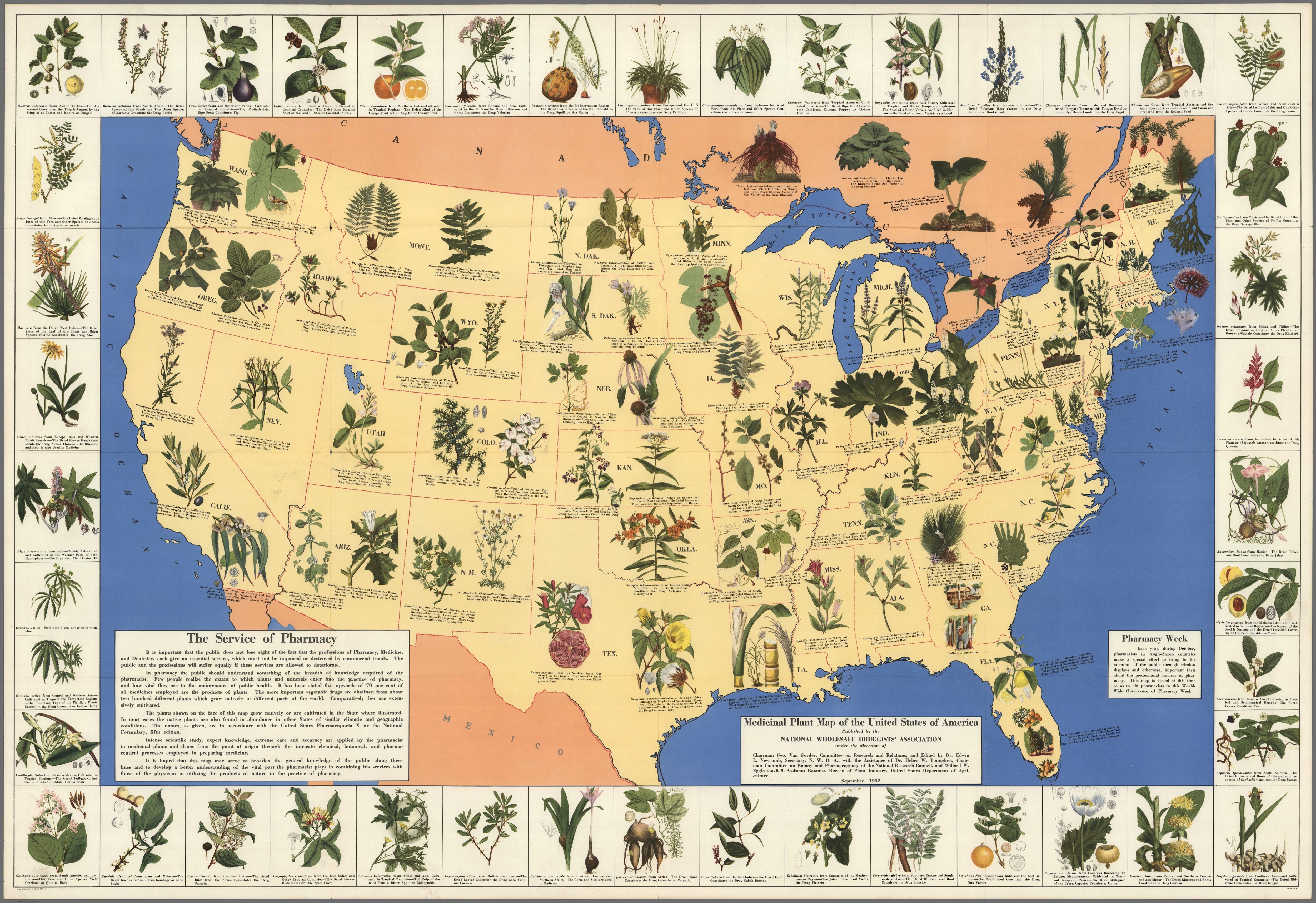
Click to enlarge

The map depicts different plant species that grew in each state of the United States in the 1930’s. It was printed by the National Wholesale Druggists’ Association, and serves as a fascinating reminder that, in our not-so-distant past, medicine was one hundred percent natural. Different herbs and plants were prescribed for different diseases, and people knew that healing takes time. When the 1938 Food, Drug & Cosmetic Act was passed, however, the landscape of medicine changed, and a federal regulation was put into place to govern the production of new medicines. The pharmaceutical industry completely took over, and our knowledge of herbal medicines was lost and shunned. As a result of these regulatory changes, medicine relying on synthetic chemistry took over, and pharmacists lost the ability to prepare medicine straight from the earth.

Source…