You can’t change what you refuse to confront.
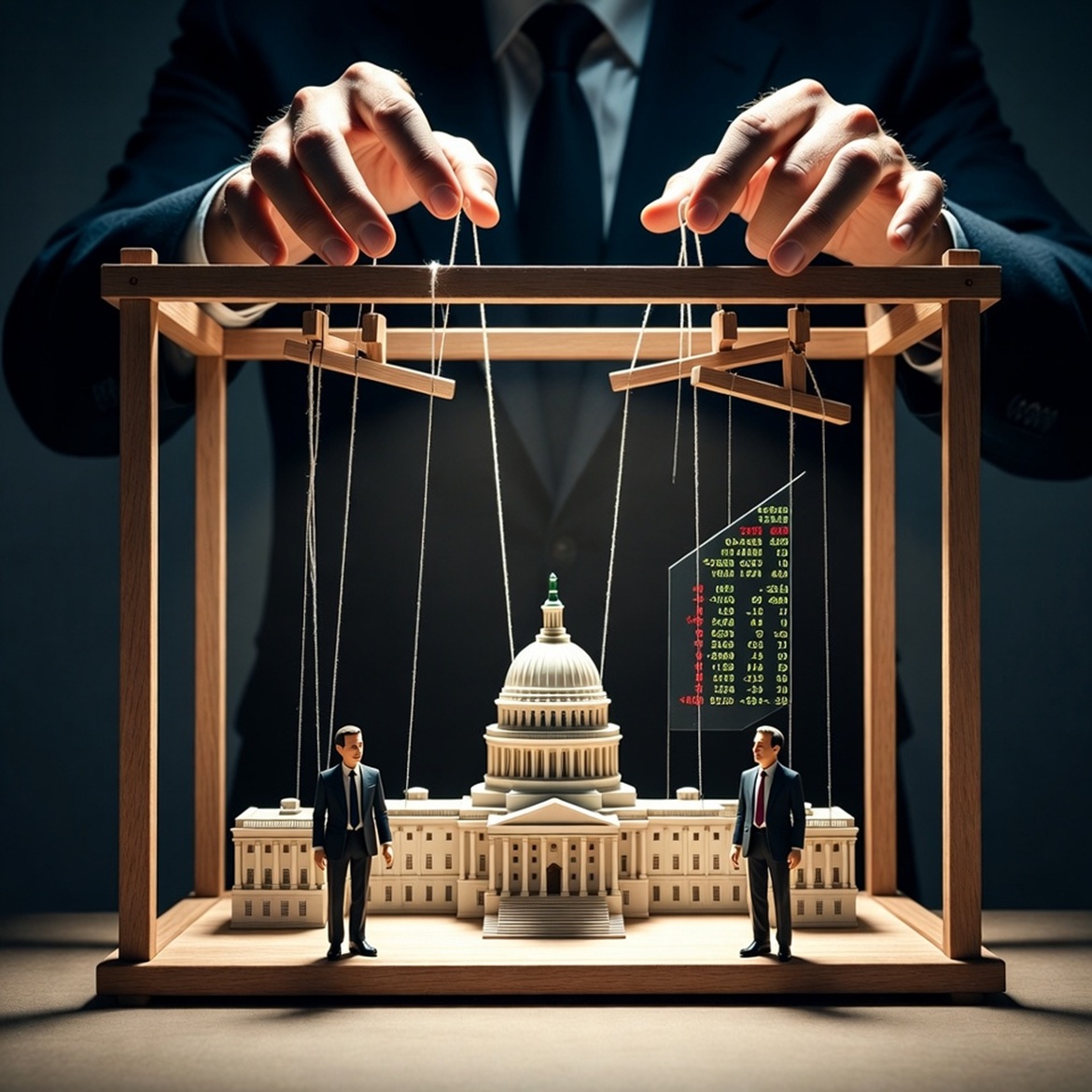
You’re being managed. Not with force, but with narrative. The nightly news, the front-page headline, the viral news clip—it’s all become a little too smooth, a little too uniform. Have you noticed?
I’m not talking about bias. That’s child’s play. I’m talking about something more structured, more modern. It’s the rise of a new class of information worker: the state-approved journalist.
This isn’t about a badge or a license. It’s subtler. It’s about access, career tracks, and social signaling. It’s a system that rewards harmony and marginalizes difficult questions. And once you see the pattern, you can’t unsee it.
The most dangerous censorship doesn’t look like a black bar over text. It looks like a friendly face on your screen, telling you only what has been pre-cleared for your consumption.
Let’s break down how this works.
Forget the image of the gritty reporter in a trench coat. The modern approved version is polished, professional, and deeply embedded within the system. Their work relies on access to powerful people and official sources.
Their reporting often follows a simple formula: Official Statement + Supporting Expert + Neat Conclusion. The hard questions—the “why,” the “what about the contrary evidence,” the “who benefits”—get left on the cutting room floor. Their primary source is an official press release or a government briefing. Their greatest fear is losing their seat in the press room or their spot on the exclusive email list.
You’ll see them transition seamlessly from roles in government communications offices to major news networks. Their social circles include policy advisors and agency heads. They speak the language of institutions fluently because, in many ways, they are part of the institution.
No one is born approved. This is a crafted career path.
It often starts at universities where journalism programs increasingly emphasize “professional practice” over rugged investigation. Students are taught to navigate the existing media ecosystem, not to overturn its tables. Then comes the first job: maybe a stint at a local newspaper that survives on publishing verbatim police reports, or as an associate producer for a network news show.
The key step is the move to a media hub. Here, success is defined by the caliber of your sources. To get high-caliber sources, you need to prove you’re safe. You build trust by not causing trouble. You report the debate, not the truth behind it. You focus on the “how” of policy, never the “should we” or the “what they’re not saying.”
After a few years of reliable, uncontroversial work, you gain access. You get the background briefings, the leaks that are really just trial balloons, and the interviews with mid-level officials. You have become a reliable part of the information distribution chain. You are, for all intents and purposes, approved.
This doesn’t happen in a vacuum. A whole support system has evolved to prop up this model.
First, the economics. Legacy media is starving. In the scramble for survival, cheap, reliable content is king. What’s cheaper than rewriting a government press conference? Investigative teams are slashed. The expensive, time-consuming work of digging for original stories is abandoned in favor of repackaging official narratives.
Second, the social pressure. In tight-knit media circles, being labeled a “conspiracy theorist” or “unserious” is a career killer. Groupthink is enforced not by decree, but by social ostracization. The approved journalist rises within this system by aligning with the consensus, whatever that consensus may be in a given week.
Finally, the legal and digital landscape. Complex regulations, libel laws, and the threat of de-platforming on major tech channels create a minefield. The path of least resistance—and greatest career safety—is to stick close to official, pre-vetted information.
You might think, “So what? The news is bland. I’ll get my information elsewhere.”
The danger is not in any single story. The danger is in the cumulative effect. When the most prominent, best-funded news sources all operate on this model, the Overton Window—the range of acceptable public discourse—shrinks dramatically. Ideas that challenge official stories get pushed to the fringes by default.
Complex issues get reduced to simple, state-friendly frameworks. A multi-faceted geopolitical conflict becomes a simple tale of a good side and a bad side. A detailed economic report becomes a single, reassuring statistic. The messy, contradictory, and often unsettling reality is sanitized for your protection.
This creates a population that is informed only of what the governing bodies want them to be informed of. It creates the illusion of a free press while carefully managing its output.
You are not powerless. Your attention is your weapon. Here is how to retrain yourself to see past the approved narrative.
1. Follow the Career Path. When you see a reporter on a major platform, look them up. What was their job before this? A lot of resumes now read: Government Press Office -> Network News Correspondent. This isn’t inherently evil, but it explains a perspective. Know the lens through which they are viewing the story.
2. Audit Your Sources. Make a list of where you get news. How many of them rely primarily on anonymous government sources or official statements? Actively seek out independent journalists and researchers who are not invited to White House briefings. Their lack of access is often their greatest strength.
3. Read the Primary Source. If a news article is about a new law or a government report, find the actual document. It’s almost always linked. Read the first three pages. You will be stunned at the difference between the raw material and the spun, approved summary.
4. Reward Difficult Work. When you find a journalist or outlet doing real investigative work, support them. Share their work. Pay for their subscription. They are an endangered species, and they need a direct line to their audience to survive.
5. Embrace Cognitive Dissonance. If you only consume news that makes you feel good or confirms what you already believe, you are part of the problem. Seek out smart, factual perspectives that challenge the official line. Your goal is not to find a new “truth,” but to see the full spectrum of the debate.
The age of trusting a single anchor or a major network to tell you the whole story is over. It was always a flawed idea, but now the machinery behind it is too obvious to ignore.
The state-approved journalist is not a villain. They are a product of a system. Your job is to understand that system, so you can see around its edges. Stop being a passive consumer of information. Start connecting the dots yourself.
The truth isn’t handed out in press briefings. It’s assembled, piece by piece, by those willing to look where they are told not to look. Be one of those people.
You hear it every single day. From the news anchor reading the Teleprompter. From the politician giving the rehearsed speech. From the talking head on the panel show.
“We must protect our democracy.”
“This is a threat to our democracy.”
“The future of our democracy is at stake.”
It’s repeated so often, with such solemn gravity, that most people just nod along. It sounds good. It sounds noble. Who wouldn’t want to protect democracy?
But let’s hit the pause button. Let’s actually look at the words they’re using. Not through the fog of emotion, but with clear eyes.
When a powerful person, an insider, a member of the permanent political class says “our democracy,” they are not talking about an idea. They are not quoting a history book. They are naming a system. A very specific, carefully managed system of power. And they are telling you it belongs to them.
The word “democracy” is the perfect shield. It’s so bright and shiny, you never see the machinery behind it.
We Don’t Live In A Democracy. We Live In A Republic.
This is the first thing they hope you’ve forgotten. They love that you’ve forgotten.
The founders of this country were deeply suspicious of pure democracy. They called it “mob rule.” They saw it as chaotic, emotional, and easily manipulated by tyrants who could whip the crowd into a frenzy. Their solution was a constitutional republic.
Think of the difference like this:
A pure democracy is two wolves and a sheep voting on what’s for dinner.
A republic is a set of ironclad rules that says, “No matter how many wolves vote, you cannot eat the sheep.”
In a republic, the power of the majority is checked. It is limited by a constitution that protects individual rights—your speech, your property, your defense against unjust claims. The system is designed to be slow, to be deliberative, to prevent any one group from trampling everyone else in a momentary fit of passion.
So why has the word “republic” almost vanished from our public speech? Why has it been completely replaced by “democracy”?
Because “democracy” is flexible. “Republic” is firm. “Democracy” can be molded to mean whatever the speaker needs it to mean at the moment. It can be a weapon. “Republic” is a set of instructions. It’s a boundary. And boundaries are the last thing the ruling class wants you to remember.
“Our” Is The Most Important Word In The Phrase
They never say “the democracy.” It’s always “our democracy.” This is a classic linguistic trick. It’s meant to create a team, an in-group. You’re either with “us,” protecting “our” thing, or you’re against us. You’re a threat.
But ask yourself: Who is “us”? Who is “our”?
When a senator who has been in office for forty-five years, who lives inside a bubble of staffers and lobbyists and special interests, says “our democracy,” he is not including you. He is including the other people who benefit from the system exactly as it is currently running. He is talking about the political machines, the media gatekeepers, the bureaucratic administrators, the connected elites whose wealth and influence grow no matter which party logo holds the podium.
“Our democracy” means their turf. Their game. Their network of perks and privileges. When they say “protect it,” they mean “keep it running smoothly for us.” When they say something is a “threat,” they mean a threat to their control over the mechanisms of that system.
A system that truly belonged to the people wouldn’t need such constant, desperate, feverish protection from the people themselves.
How The Phrase Is Used As A Tool
Watch closely, and you’ll see the pattern. The phrase “our democracy” is deployed in three specific ways.
First, as a distraction. When a real scandal breaks, when corruption is exposed, you will hear a chorus of “This is a distraction from what’s important: protecting our democracy.” It’s a magic spell to change the subject from their failings to a vague, noble concept.
Second, as a silencer. Have a legitimate criticism about election integrity? Question the unbelievable speed of a billion-dollar spending bill? You will be labeled an “enemy of our democracy.” The goal is not to debate your point. The goal is to make you shut up. It makes you toxic. It’s a social and professional kill switch.
Third, and most importantly, as a justification. This is the big one. “To save our democracy” becomes the reason for any action, no matter how extreme, no matter how it bends the old rules. It justifies censorship (“fighting misinformation”). It justifies expanded surveillance (“preventing foreign interference”). It justifies consolidating power (“streamlining the process”).
Every power grab in history came wrapped in a pretty flag. “Our democracy” is today’s flag.
What You Can Do About It
This isn’t about despair. It’s about clarity. When you see the words for what they are, you disarm them. You stop reacting to the trigger and start thinking for yourself.
Here is a simple three-step process you can start today:
The greatest trick played on the American public wasn’t a single event. It was the slow, quiet swapping of a foundational idea. They took the sturdy, principled framework of a republic—built for durability and freedom—and began calling it a democracy in every textbook, every speech, every news segment.
Why? Because a republic is a cage for rulers. A democracy, as they define it, is a tool for rulers.
The cage is still there, in the form of our founding documents. But they’re hoping you’ve forgotten the combination. They’re hoping you’ll just keep polishing the lock while they pass the keys around amongst themselves.
Start remembering the words. It’s the first step to taking back the thing they pretend is already yours.