The Party Learns the Code

 Conspiracy, Featured, Political  Comments Off on The Party Learns the Code
Dec 022025
 

The Red Syndicate – Part 3
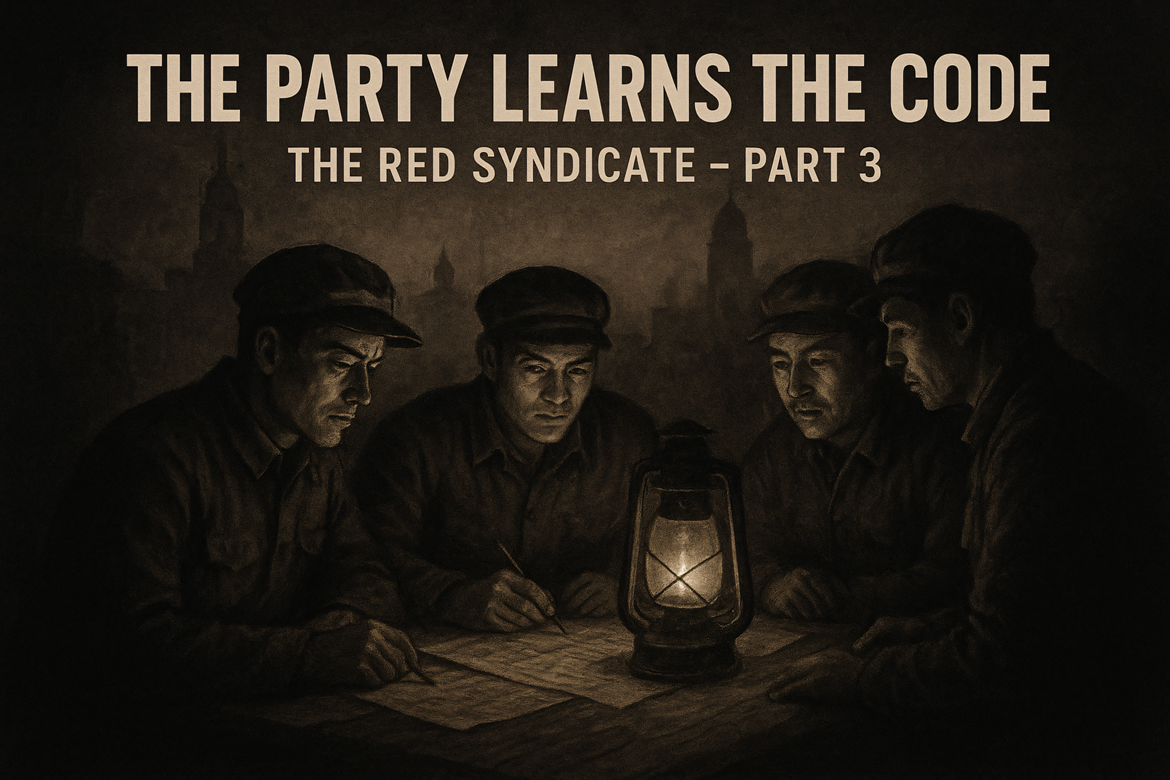
The Red Syndicate - Revolutionary cadres gathered around a lantern-lit table in the countryside, with a faint image of old Shanghai’s skyline behind them.
In the hills and caves far from Shanghai, the Party studied the methods of the underworld it once condemned.

Night in the hills of Jiangxi was not like night in Shanghai. There were no neon signs, no jazz drifting from dance halls, no riverfront lights painting silver streaks on the water. There was only the whisper of pine trees, the crackle of campfires, and the quiet murmur of men planning how to seize a country they could barely feed.

In a farmhouse lit by a single oil lamp, a group of Communist leaders sat around a rough wooden table. The walls sweated damp. Mosquitoes circled the light. Maps lay unrolled beside notebooks filled with coded names and numbers.

At the head of the table, a young cadre reviewed reports from the city. Shanghai was hundreds of miles away, yet its influence filled the room. The documents described strikebreakers, gang enforcers, and secret police. They also described something more important: how power actually worked on the streets.

The revolutionaries had lost Shanghai. They had been hunted, betrayed, and driven into the countryside. But they had not forgotten what the city taught them. In fact, they were taking careful notes.


After the Massacre

The 1927 purge in Shanghai shattered the early alliance between the Communist Party and the Nationalists. Thousands of union organizers, student activists, and sympathizers were killed or disappeared. Survivors fled to rural bases or went deep underground in the cities.

In public, Party propaganda framed the catastrophe as the work of traitors and imperialists. In private, the leadership knew they had been outplayed by a system that understood power better than they did. The Green Gang and Chiang Kai-shek had shown them how quickly ideals could be crushed by organized violence and how fragile a movement was when it relied on open meetings and visible leaders.

The Party now faced an uncomfortable truth. If it wanted to survive, it had to become less like a debating society and more like a syndicate. It needed secrecy, discipline, and a structure that could withstand infiltration and betrayal. It needed to learn the code of the underworld.


From Street Cells to Secret Cells

The first change was structural. In the early years, party branches in cities like Shanghai had operated almost like open clubs. Members knew each other by name. Meetings took place in factories, schools, and rented rooms. After 1927, that openness became a death sentence.

Borrowing from the method used by secret societies and gangs, the Party reorganized into small, compartmentalized cells. Each unit knew only a handful of other members. Communication passed through trusted couriers and coded notes. If one cell was compromised, the damage stopped there.

This was the underworld’s logic applied to politics. The Green Gang had survived for decades because information was distributed carefully. The Communists now adopted the same approach. They introduced rigorous vetting, surveillance of their own members, and harsh punishments for informants.

The Party’s internal regulations began to resemble the rules of a criminal brotherhood. Loyalty was everything. Disobedience was treated as betrayal. New members underwent ideological training that functioned like an initiation rite. They swore to put the Party above family, above friends, above self.

A movement that had once imagined itself as a spontaneous uprising of the people was becoming something more controlled and more dangerous.


The Cult of Discipline

In Shanghai, gang members obeyed their bosses because of a clear hierarchy backed by violence. In the revolutionary base areas, discipline had to serve a different purpose. The Party did not have the money or guns to compete with warlords and gangs outright. What it did have was ideology.

Leaders such as Mao Zedong began to fuse ideological devotion with the kind of personal loyalty once demanded by syndicate bosses. Cadres were taught that the Party was the sole guardian of the people’s future. To doubt its line was not just a mistake but a moral failing. To defy orders was treason.

Criticism sessions and self-criticism rituals reinforced this mindset. Members confessed their doubts, denounced their own “errors,” and reaffirmed their loyalty in group meetings. This process resembled the way the Green Gang used shame and ritual to bind members together, but it added an element of psychological control that went beyond money or fear.

The result was a new form of discipline. It blended the underworld’s code of silence with the fervor of a religious sect. The Party did not simply command obedience. It colonized conscience.


Intelligence as a Weapon

In Shanghai, the Green Gang had relied on spies in the police, the customs office, and competing gangs. Information was their most valuable asset. The Communists, now excluded from official power, came to the same conclusion.

The Party built a sophisticated intelligence network that stretched from treaty ports to inland towns. Operatives infiltrated unions, merchant associations, and even the Nationalist government. Underground members kept lists of sympathetic officials who could be bribed or persuaded. They also tracked enemies for future reprisals.

One crucial innovation was the use of cover identities. Urban cadres posed as shopkeepers, rickshaw pullers, or clerks. Rural operatives became teachers, peddlers, or minor officials. Their lives became a series of masks, just as gang couriers in Shanghai had used legitimate jobs as fronts for smuggling.

Codes and ciphers filled notebooks. Correspondence referred to key figures by nicknames or numbers. Safe houses were rotated. Meetings took place in teahouses, temples, or crowded markets. The Party had turned espionage into a routine part of its survival, a mirror of the underworld’s reliance on informants and double agents.

Intelligence gathering did more than keep the Party alive. It taught the leadership how society actually functioned. They learned which officials could be bought, which merchants were desperate for protection, which neighborhoods resented the Nationalists. This knowledge would later shape their strategy for taking power, then for keeping it.


Financing the Revolution

No movement can survive on slogans alone. It needs money, and money has a tendency to come with strings attached.

In the countryside, the Party raised funds by taxing the local population, confiscating land from landlords, and controlling trade routes. In the cities, however, it had to operate more like a criminal organization.

Underground cells turned to many of the same sources that had financed gangs in Shanghai. They collected “protection fees” from sympathetic shop owners in exchange for defense against extortion by warlord troops or local police. They ran small-scale smuggling operations, moved goods across blockades, and occasionally robbed banks or seized Nationalist payrolls.

Officially, such activities were portrayed as revolutionary requisitions. In practice, they blurred the line between political fundraising and racketeering. A pattern emerged. Once a territory fell under Communist control, legitimate economic activity and secret Party finances became deeply intertwined.

The lesson from Shanghai was clear. True power lay in controlling the flow of resources. If you controlled who could buy and sell, who received loans, and who got access to transport, you controlled everything else.

This philosophy would eventually become the backbone of state planning and state-linked business. But in the revolutionary years, it was still a survival tactic, borrowed from the underworld and dressed in the language of class struggle.


The Politics of Fear

In the gang-dominated districts of Shanghai, fear acted as a kind of currency. People obeyed because they believed refusal would bring swift and brutal punishment. The Communists, determined to avoid past mistakes, began to use fear more consciously.

Early on, the Party leadership insisted that its violence was purely defensive, directed only at landlords, traitors, and agents of foreign powers. Over time, however, the definition of “enemy” expanded. Public executions and “struggle meetings” in the base areas served a dual purpose. They eliminated opponents and sent a message to everyone else.

When a landlord was denounced before a crowd, beaten, and sometimes killed, the spectacle communicated more than any pamphlet. It said that the Party possessed the authority to decide who lived and who died. It also reminded recruits of what would happen if their own loyalty wavered.

The underworld had long used displays of violence to maintain control. The Party added a political justification and a vocabulary of justice. The combination proved powerful and enduring.


Mao’s Synthesis

Among the Party’s leaders, Mao Zedong was the one who most fully absorbed the lessons of Shanghai’s underworld and transformed them into a governing philosophy.

Mao recognized that sheer repression could not sustain a movement. Nor could moral purity alone. What he sought instead was a system that combined popular support, ideological fervor, and the efficient brutality of a syndicate.

He insisted on tight control over the local branches, echoing the centralized authority of a gang boss. At the same time, he promoted land reform and peasant mobilization, which gave millions of ordinary Chinese a reason to see the Party as their defender.

The synthesis was subtle but decisive. The Party presented itself as a champion of the poor while building an internal culture that rewarded unquestioning obedience and punished dissent. Mao framed internal rivals as “factionalists” or “counterrevolutionaries,” labels that justified purges comparable to the Green Gang’s treatment of informants.

By the time the Long March ended and the Party regrouped in Yan’an, this new structure was firmly in place. The Communists no longer resembled a loose coalition of students and workers. They had become a disciplined organization that combined the emotional appeal of a liberation movement with the internal discipline of a criminal syndicate.


Yan’an: The New Headquarters

If Shanghai had been the classroom, Yan’an became the laboratory. The remote caves and mud-brick houses of this northern town were a world away from the cosmopolitan streets of the Bund, yet the ideas that shaped the movement there were born in the same crucible.

In Yan’an, the Party tested its methods of control on a captive community. Cadres managed every aspect of life, from food rations to marriage approvals. Study sessions blended ideological training with surveillance, as members were encouraged to expose each other’s “incorrect thoughts.”

The leadership scrutinized personal histories, looking for signs of suspect class background or past ties to rival factions. Those who failed political tests were ostracized, demoted, or imprisoned. The process resembled a background check for a secret society, except that the consequences were often harsher.

At the same time, Yan’an projected an image of simplicity and sacrifice. Foreign visitors saw leaders in plain clothes eating coarse grain and living in caves. They rarely saw the classified files, the internal struggles, or the punishments meted out behind closed doors.

In this environment, the Party transformed secrecy and discipline into everyday habits. Children grew up learning that the Party’s needs came before personal ones. Adults learned to guard their words even among friends. A code had been written into daily life.


The Capture of the State

When the Communists finally won the civil war and captured major cities in 1949, they did not confront a blank slate. They inherited the same kind of fragmented, corrupt, and semi-criminal environment that had existed under the Nationalists, but now they possessed the tools to control it.

They took over banks, factories, and shipping companies. They seized opium stocks and declared an end to the drug trade. They arrested or executed known gang leaders. To the public, it looked like the destruction of the old underworld.

Behind the scenes, however, many of the functions that gangs had once performed were absorbed into party and state institutions.

The Party now controlled labor allocation, just as the Green Gang once controlled dock workers. It controlled trade and smuggling routes through state monopolies. It controlled information through censorship and the consolidation of media. Loyalty and silence were still rewarded. Dissent was still expensive.

The difference was that these mechanisms now operated with the authority of a government. What had once been an informal syndicate became a formal system of rule.


A Code Written in the Dark

By the early 1950s, the Party had succeeded in presenting itself as the clean, disciplined alternative to the chaos of the past. It outlawed prostitution, gambling, and opium. It spoke of building a new society governed by law and equality. Many ordinary people believed in that promise, because they had witnessed the predatory nature of the old system.

Yet beneath the surface, the same logic persisted. Political power remained opaque. Personal connections still mattered more than formal procedure. High-level decisions were made behind closed doors, recorded in secret archives, and explained to the public only after the fact.

The revolution had learned from the Green Gang that the true strength of a syndicate lies in its ability to control information and enforce loyalty without exposing its inner workings. The Party now wielded that strength on a national scale.

The code that guided this system had been written in the back alleys of Shanghai and refined in the caves of Yan’an. It spoke in the language of ideology, but its grammar was that of the underworld: silence, hierarchy, and control.


From Survival Strategy to Blueprint

What began as a desperate survival strategy during the years of persecution gradually solidified into a permanent model of governance. After Mao’s victory, there was no clear dividing line between the habits formed in the revolutionary struggle and the practices of the new state.

Cadres continued to treat information as a private resource. Policies were enforced by a mixture of persuasion and fear. Economic decisions favored those with the best connections to the center.

The Party had not only learned the code of the underworld. It had normalized it. It became the invisible operating system of Chinese politics.

As the decades passed and the country industrialized, this operating system proved remarkably adaptable. It could manage collective farms or joint ventures, state-owned factories or stock exchanges. Its core principle did not change. Power remained concentrated in networks of loyalty that functioned much like a legalized syndicate.


The Shadow of Shanghai

Modern China often describes the fall of the old order as the end of chaos and the beginning of stability. The gangs are gone, the opium dens have been replaced by banks and cafes, and the docks are monitored by customs officials and security cameras.

Yet the shadow of Shanghai’s underworld still stretches across the landscape. The habits forged in that city continue to influence how decisions are made, how careers rise and fall, and how truth is managed.

The Party did not simply replace the Green Gang. It learned from it, copied its most effective methods, and then buried the evidence under layers of official history.

In the next stage of this investigation, we will follow how that hidden code adapted to a new era of reform and opening, where opportunity and corruption again marched side by side, and where the syndicate spirit found fresh ways to prosper.


Next in the Series

Part 4 – Reform, Openness, and the New Underworld
How economic liberalization in the late twentieth century revived old patterns of patronage and smuggling, turned party cadres into businessmen, and opened the door for a new generation of state-protected criminal enterprises.


Source Notes

This article draws on:

  • Frederic Wakeman Jr., Policing Shanghai, 1927–1937
  • Brian G. Martin, The Shanghai Green Gang: Politics and Organized Crime, 1919–1937
  • Gao Hua, How the Red Sun Rose: The Origin and Development of the Yan’an Rectification Movement
  • Selected Chinese Communist Party documents from the revolutionary base areas and Yan’an period
  • Contemporary scholarship on CCP organizational history and intelligence work

© 2025 The Red Syndicate Investigations / Common Sense Evaluation. All rights reserved.
The Red Syndicate: Inside the Architecture of Hidden Power

 Conspiracy, Featured, Political  Comments Off on The Red Syndicate: Inside the Architecture of Hidden Power
Nov 112025
 

An Introduction to the Series

Power in China did not begin in Beijing’s halls. It began in Shanghai’s underworld, where the boundaries between crime and politics vanished. The Red Syndicate investigates how that fusion of loyalty, money, and fear still shapes the world today.

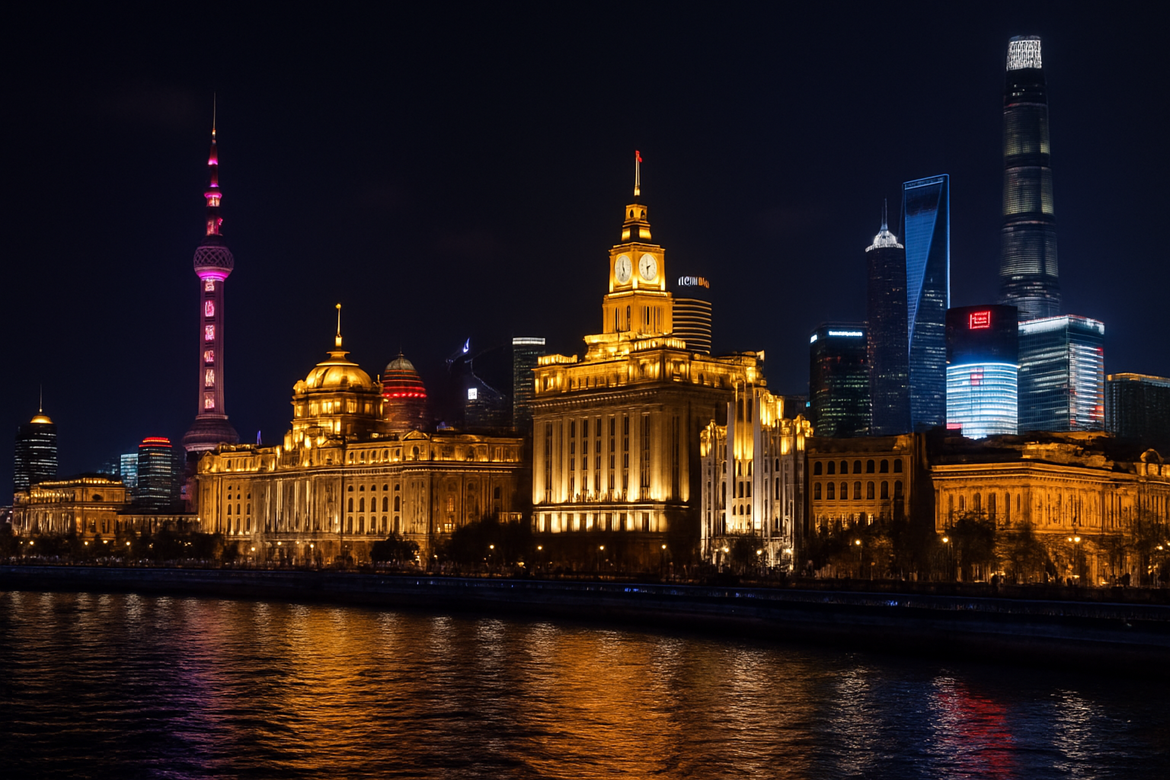
The same waterfront where the Green Gang once ruled is now lined with global banks.

The skyline of Shanghai glitters at night like a promise. Towers of glass and steel rise where opium warehouses once stood. The Huangpu River cuts through the city, carrying tankers and yachts instead of gunboats and smugglers. Yet behind the new prosperity, behind the slogans of progress and rejuvenation, the logic that built modern China has not changed. It still runs on deals made in the dark, alliances forged in secrecy, and loyalty bought with favors rather than earned through trust.

This is not a story about ideology. It is a story about power.

Power that learned to survive by adapting, concealing, and infecting everything it touched.

Power that began in the smoke-filled gambling dens of old Shanghai and found its way into the corridors of global finance.

This series, The Red Syndicate, investigates how organized crime, political ambition, and state authority intertwined to form a single system that endures to this day. It is a history of how China’s criminal underworld became the blueprint for its political one, and how that model spread its influence far beyond China’s borders.


The Origins of the Machine

To understand how the present works, we must first understand the city that invented it.

A century ago, Shanghai was the world’s most profitable city and also one of its most corrupt. Western colonial powers ran the foreign concessions. Chinese warlords ruled the countryside. Between them stretched a network of secret societies and business syndicates that handled everything the officials could not or would not control. The Green Gang was the most powerful of them all.

Its leaders financed newspapers, operated banks, and supplied drugs and entertainment to both colonials and nationalists. They also financed political movements, quietly deciding who would rise and who would vanish. In 1927, they helped Chiang Kai-shek destroy the Communist movement in Shanghai, proving that whoever controlled the streets controlled the nation.

Those years built a template for how Chinese politics would function: alliances between officials, businessmen, and enforcers. Transactions instead of laws. Loyalty instead of accountability. That fusion of power and profit was never dismantled. It was perfected.


Revolution and Reinvention

When the Communists eventually took power, they promised to eradicate the corruption that had consumed the old order. They executed gang bosses, nationalized opium trade routes, and declared that the people now owned the state.

But the habits of the old world survived. Networks of loyalty and exchange adapted to the new ideology. The same secrecy, discipline, and mutual dependence that once bound the Green Gang’s members now bound Party cadres. What had been a criminal hierarchy became a political one. The result was not a clean break with corruption but a rebranding of it.

Power in China remained personal, not institutional. The tools of control were the same: favors, money, and fear. The only difference was the flag that flew above the system.


The Modern Syndicate

Today, the mechanisms of influence operate on a global scale. The structures that once confined themselves to Shanghai’s underworld now extend through corporations, investment vehicles, and diplomatic networks. China’s rapid economic rise did not erase its past. It scaled it.

Modern power brokers do not wear gang colors or carry pistols. They manage conglomerates, control access to markets, and reward loyalty with contracts and promotions. Corruption has become more sophisticated but no less pervasive. The same logic that allowed the Green Gang to thrive under foreign empires now allows state-linked enterprises to thrive within global capitalism.

Every empire needs intermediaries, and every intermediary learns how to extract a price.

The syndicate no longer traffics in opium but in influence. It moves through boardrooms and ministries instead of brothels and gambling halls. The currency has changed from silver to equity, from bribes to partnerships. Yet the pattern remains identical: control the flow of money, suppress dissent, and reward obedience.


The Global Reach

This investigation is not about assigning blame to one nation. It is about recognizing how systems of corruption cross borders and ideologies. When money becomes the measure of power, morality becomes negotiable everywhere.

Western democracies that once lectured others on transparency now find themselves dependent on Chinese capital, technology, and markets. Elite networks that were once patriotic have become transnational, bound not by ideology but by profit. The methods that began in Shanghai’s backrooms now shape boardrooms from London to Los Angeles.

Understanding this history is not an act of hostility. It is an act of clarity. Every nation builds its myths, but beneath those myths are transactions, and beneath the transactions are relationships that decide who prospers and who disappears.


How This Series Works

The Red Syndicate is built on documented evidence, not speculation. Each chapter draws from declassified intelligence reports, academic research, police archives, financial disclosures, and eyewitness accounts from the 19th century to the present. Every claim can be traced to its source. The purpose is not to sensationalize, but to connect the patterns that history keeps repeating.

The series will move chronologically and thematically. It begins in 1920s Shanghai, tracing the Green Gang’s empire and its alliances with political power. It will then follow how those networks evolved under Mao’s revolution, how they adapted to the economic reforms of the late 20th century, and how they operate today through a mixture of ideology, surveillance, and wealth.

Each post will be written as a standalone exposé but also as part of a larger mosaic. Taken together, they will reveal how China’s fusion of state and underworld became both a domestic strategy and an exportable model.


Why It Matters

Power never disappears; it only changes form. The criminal syndicates of the past taught the modern state how to operate behind a façade of legitimacy. In return, the state gave those syndicates new life under different names. This partnership between political authority and illicit profit has shaped not only China’s development but the rules of global influence.

Ignoring this history allows it to continue. Understanding it exposes how deeply corruption has been woven into the machinery of modern power.

The story of the Red Syndicate is not just a story about China. It is a mirror held up to every system that mistakes prosperity for virtue and control for stability.


A Warning from the Past

If you walk along the Bund at night, the same river that once carried opium ships now reflects the lights of global finance. The faces in the towers have changed, but the architecture of power beneath them has not. It still rewards obedience, punishes transparency, and thrives on silence.

Shanghai taught the world a lesson a century ago: control the underworld, and you control everything above it. That truth built an empire once. It may be building another now.


Next in the Series

Part 1 – Shanghai: The Birthplace of the Red Underworld
A deep look at how one city became the crucible where organized crime, nationalism, and revolution fused into a single system that would shape China for generations.


About The Red Syndicate

The Red Syndicate is an ongoing investigative series that explores the shadow networks which shaped modern China, where revolutionary zeal met organized crime and power was brokered through loyalty, money, and fear.

Drawing on declassified archives, historical research, and firsthand accounts, the series traces how Shanghai’s criminal empires, political movements, and elite corruption intertwined to build a system that still echoes through global power today.


China

 Featured, Political, View Point  Comments Off on China
Jun 192025
 

They’re not selling out America—they already sold it. Watch who defends China at every turn. It’s not loyalty. It’s payroll. Politicians don’t serve the people anymore—they serve their real masters, and Mandarin isn’t just a fruit.


They’re not selling out America—they already sold it. Watch who defends China at every turn. It’s not loyalty. It’s payroll. Politicians don’t serve the people anymore—they serve their real masters, and Mandarin isn’t just a fruit.

The Silent War: How China and the Mexican Cartels Are Controlling U.S. Politicians

 Conspiracy, Featured, Political  Comments Off on The Silent War: How China and the Mexican Cartels Are Controlling U.S. Politicians
Feb 042025
 

The Silent War - Is the U.S. in a silent war? See how China and cartels may be using money, threats, and bioweapons to weaken America from within.

There’s a battle happening right now that most Americans don’t even realize they’re in. A Silent War. It’s a war without missiles or tanks. No battle lines are drawn on maps. Instead, it’s fought in backroom deals, hidden transactions, and quiet compromises.

The enemies? China and the Mexican drug cartels.

The battlefield? The minds, policies, and bank accounts of U.S. politicians.

And the cost? The future of America.


Are Politicians on the Payroll of Mexican Drug Cartels?

The opioid epidemic isn’t just a health crisis—it’s an invasion. Every year, tens of thousands of Americans die from fentanyl overdoses, and the supply chain tells a damning story. The cartels manufacture and distribute the drugs, but where do the raw chemicals come from? China.

This is no accident. China supplies precursor chemicals to the cartels, fueling an epidemic that weakens America from within. But why would U.S. politicians turn a blind eye? Why do policies keep failing to stem the flow of drugs? Some believe the answer is simple: money.

Drug cartels bring in billions every year, and some of that money must be making its way into the hands of key decision-makers. Whether it’s campaign donations, offshore bank accounts, or lucrative business deals, the financial incentives are enormous. When a politician allows open borders, refuses to crack down on cartels, or ignores the fentanyl crisis, is it incompetence—or something worse?

The cartels don’t just use money to get what they want. They use fear. Political figures who refuse to cooperate often face intimidation or worse. And those who play along? They get rewarded handsomely.


China’s Quiet War Against America

China doesn’t need a traditional military invasion to weaken the United States. Their strategy is far more subtle—and far more dangerous.

They send chemicals that turn into deadly drugs instead of soldiers. Economic warfare replaces bombs as they infiltrate key industries and political institutions. Deception, bribery, and control are used instead of direct attacks.

Consider this: Why does China continue to enjoy favorable trade deals despite its blatant theft of U.S. intellectual property? Why do American leaders downplay threats from the Chinese Communist Party (CCP)? Why is there such resistance to investigating China’s role in the COVID-19 pandemic?

The answer may lie in bribery, blackmail, and carefully crafted influence operations.


The Tools of Influence: Bribes, Honeypots, and Bioweapons

China and the cartels don’t just use money to gain influence. They use people. The classic “honeypot” trap—where foreign operatives seduce and compromise powerful figures—has been a favorite tool of intelligence agencies for decades. And China is a master at it.

There are countless reports of high-ranking officials and business leaders being caught in compromising situations, only to find themselves forced into silence or compliance. Once someone is compromised, they’re owned forever.

Then there’s the bioweapon strategy. COVID-19 devastated the global economy, but who benefited? While the world locked down, China expanded its influence, buying up distressed assets and tightening its grip on supply chains. Was the pandemic just a tragic accident, or was it part of a larger strategy? A non-kinetic war designed to weaken the U.S. while China remained in control?

Many in power don’t want these questions asked—let alone answered.


Who Is Really Running America?

When U.S. politicians prioritize foreign interests over American citizens, we must ask: Who do they really serve?

Are they making decisions based on what’s best for the people—or what’s best for their own bank accounts?

Why do some lawmakers seem so eager to dismiss concerns about foreign influence? They push policies that weaken America’s position while strengthening China’s. Meanwhile, the drug crisis rages on as solutions are ignored.

The pieces of the puzzle are there. The question is: Are we willing to put them together?


The Time to Wake Up Is Now

The war is happening. Right now. And most Americans don’t even realize it.

Every day, fentanyl floods across the border, Chinese influence seeps further into U.S. politics, and decisions are made that harm America while benefiting those pulling the strings.

The truth is out there, but it’s up to the people to demand accountability. If politicians are compromised, they must be exposed. If foreign entities are controlling policy, the public has a right to know.

The only way to win a silent war is to wake up and start fighting back.

Why the Government Won’t Protect You: The Shocking Truth Behind Their Inaction

 Conspiracy, Featured, Political  Comments Off on Why the Government Won’t Protect You: The Shocking Truth Behind Their Inaction
Oct 152024
 

Why the Government Won’t Protect You — Why isn’t the government acting? Explore the hidden motives behind their failure to protect America’s borders and economy.

Our country is in serious trouble. The government is supposed to protect its citizens, defend our borders, and ensure our prosperity. But what we see today is a government that seems to be doing the exact opposite. Critical issues like illegal immigration, foreign ownership of our land, the national debt, and international conflicts are being ignored—or worse, allowed to fester while the American people are left to pay the price.

It’s hard to look at what’s happening and not feel betrayed by those who claim to represent us. We deserve better, but if we don’t act soon, it might be too late.

Why Is China Buying Our Farmland?

Here’s a major red flag: foreign entities—especially those with ties to the Chinese government—are buying up U.S. farmland. And it’s not just about farmland. It’s the strategic locations of these purchases that should concern every American.

Why is this allowed to happen? Why isn’t the government stepping in to stop foreign adversaries from buying pieces of America? The answer is simple: profit. Politicians and their allies benefit financially from these deals. This isn’t about national security for them—it’s about money and power.

If our leaders truly cared about safeguarding the country, they would put a stop to this immediately. Instead, they’re letting it happen, knowing full well the long-term risks this poses to our national security and food supply. The government has been compromised by its own greed.

The National Debt: A Crisis That Can’t Be Ignored

As of 2024, the U.S. national debt has soared past $35 trillion. Let that sink in for a moment. That’s more than $100,000 of debt for every single American citizen. The government is spending money it doesn’t have, and future generations will be the ones forced to pay the price.

But here’s the part that really should get your attention: a significant portion of this debt is owned by foreign countries, including China. The same nation that’s buying our farmland also holds a large part of our financial future. Every dollar we borrow is another step closer to losing control of our own destiny.

So why isn’t the government tackling this problem? Why do politicians keep borrowing and spending like there’s no tomorrow? It’s because they don’t care about the long-term consequences. They’ll be out of office by the time the bill comes due, leaving the mess for someone else to clean up. Meanwhile, they get to look good by funding expensive programs and racking up political points, all at your expense.

This reckless spending has to stop. The national debt isn’t just a number on a page; it’s a ticking time bomb. And when it goes off, it won’t be the politicians who suffer—it will be everyday Americans.

Illegal Immigration: Our Borders Are Wide Open

Let’s talk about illegal immigration. The situation at our southern border is beyond alarming. Estimates suggest there are well over 10 million illegal immigrants living in the U.S. today. Our border is porous, and it’s no secret that people are crossing every single day. But what is the government doing to stop it? Next to nothing.

This isn’t just about people seeking a better life. It’s about the strain this places on our resources—schools, healthcare, law enforcement—and the security risks involved when we don’t know who’s entering the country. It’s about protecting American jobs and ensuring that we control who comes into our country.

So why isn’t the government acting? Why aren’t our leaders securing the border and protecting American citizens? Once again, it comes down to money and influence. Big businesses benefit from cheap labor, and many politicians are happy to look the other way because they receive donations from these corporations.

Meanwhile, ordinary Americans are left to deal with the consequences: rising crime rates, overwhelmed public services, and a country that feels less secure by the day. The government could fix this if they wanted to—but clearly, they don’t.

Politicians Are No Longer Representing the People

When you look at what’s happening, it’s hard not to feel like our leaders are more interested in their own wealth and power than in representing the American people. Look at how many politicians enter office with modest financial means and leave as millionaires. How does that happen? Through backroom deals, insider trading, and cozy relationships with lobbyists and special interests.

These politicians are more interested in maintaining their power and status than doing the right thing for the country. They no longer serve us—they serve themselves.

You can see it in the way they fail to act on critical issues like border security, foreign ownership of our land, and the national debt. Instead of addressing these problems head-on, they pass the buck, hide behind excuses, and continue to enrich themselves at our expense.

The Ukraine-Russia War: Endless Conflict, Endless Profits

Let’s turn to the Ukraine-Russia war. The U.S. has poured billions of dollars into this conflict, with no end in sight. We’re told this is about defending democracy and standing up to aggression, but is it really? Or is it just another way for defense contractors and politicians to profit from endless war?

The longer this war drags on, the more money flows into the pockets of defense contractors and their allies in Washington. Politicians claim they want peace, but actions speak louder than words. As long as there’s money to be made, they’ll keep funding the war effort, no matter the human cost.

This isn’t about protecting America’s interests—it’s about making money off of conflict. The American people are being used to bankroll a war that has no direct benefit to our country, while politicians and their corporate backers profit from the chaos.

It’s Time to Take Back Control

The government has failed us. They’ve allowed foreign interests to buy our land, let our debt spiral out of control, ignored the crisis at the border, and profited from endless war. It’s time we stop trusting them to fix these problems because they’ve shown time and again that they won’t.

What can we do? We need to start holding our leaders accountable. It’s time to demand transparency, real solutions, and an end to the corruption that’s undermining our country.

  1. Demand secure borders: It’s time for real border control. We need to know who is entering our country, and we need to stop the flood of illegal immigration once and for all.
  2. Push for fiscal responsibility: The national debt is a threat to our future. Demand that politicians stop their reckless spending and start paying down the debt before it’s too late.
  3. Say no to foreign ownership: We should never allow foreign governments to buy up pieces of America. Demand that politicians put a stop to these dangerous land sales.
  4. Hold politicians accountable: We need leaders who represent us—not their own interests. If your representative is part of the problem, vote them out.

The government has shown us where its true loyalties lie. It’s up to us to take action and demand better. The future of our country depends on it.