Mar 052026
 

Breaking China’s Hold - Discover how Trump’s strikes on Venezuela and Iran—and looming moves on Cuba—are quietly dismantling China’s global empire and sparking hope for freedom.

If you think the Trump administration is giving conflicting signals about what’s going on in the world right now, let me explain.

President Trump returned to the White House on January 20, 2025, and he hit the ground running. On January 3, 2026, U.S. forces went into Caracas and grabbed Nicolás Maduro along with his wife, Cilia Flores. It was a clean operation. Maduro’s sitting in New York now, facing charges for drugs, weapons trafficking, and terrorism links. Delcy Rodríguez stepped up as acting president, and things are changing quickly. Oil that’s been locked up is starting to flow again, political prisoners are walking free, and the U.S. is helping steer the whole transition.

Then came February 28. Joint U.S.-Israeli strikes, part of what they’re calling Operation Epic Fury, hit Tehran hard. They took out Supreme Leader Ayatollah Ali Khamenei right in his compound, along with a bunch of top commanders, some family, and other big names. Iran’s military is hurting badly. Their air force and navy destroyed, missile sites are in ruins, and bases keep getting pounded every day. Explosions are still going off in Tehran. Trump has said straight up this could drag on four to five weeks or longer. Iran fired back at U.S. bases, Israel, and some spots around the region, but the momentum is still with the strikes.

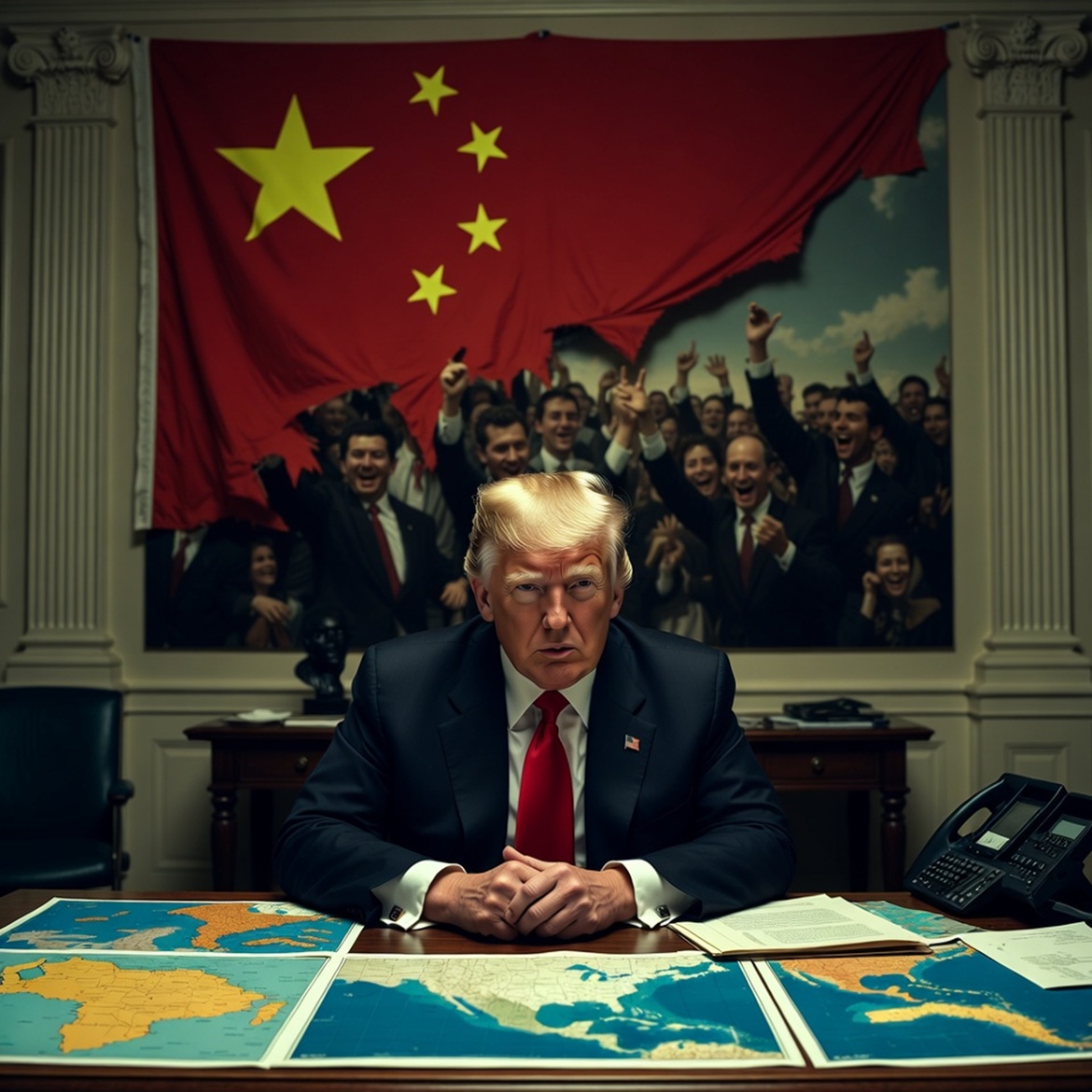
None of this is happening by chance. These are connected pieces of a bigger picture. The goal is to chip away at China’s worldwide reach, give the Chinese people a real chance to shake off the Chinese Communist Party’s tight hold, and stop the dirty cash that’s been buying politicians around the world. And now Cuba is clearly next in line. With Venezuelan oil gone, Cuba’s in real trouble. Shortages are everywhere, the economy is tanking, and people are restless. Trump floated the idea of a “friendly takeover” just a few days ago, saying Cuba is talking to us and maybe we’ll end up handling things that way. He’s got Secretary of State Marco Rubio working on high-level talks, and there’s talk of regime change by the end of the year. This isn’t some side thing. It’s about cutting another thread in China’s web and finally giving the Cuban people a shot at breaking free after decades stuck under communist control.

What looks like separate messes in different parts of the world is actually one steady push against the real heavyweight staying mostly out of the spotlight.

Let’s walk through it step by step and see why this all adds up to something huge.

Venezuela Right Now: Cutting the Oil Flow and Loosening China’s Hold

Maduro’s capture back on January 3 basically ended a setup that China had been bankrolling for years with loans and oil deals. Venezuela sits on huge reserves, and that crude kept China’s factories humming, helped build up their military, and fueled their push everywhere else. Now with Maduro out and Rodríguez running things (even with her own past), she’s moving fast: handing over billions in sanctioned oil, opening up parts of the industry to private hands, and cutting deals that put the U.S. in a stronger spot.

Trump called it the perfect setup. Most of the government people stay put so things don’t collapse, but the rotten connections snap. China suddenly loses a big supplier and has to hunt for replacements. Their economy is already stretched thin from spreading out too far, and now it’s feeling the pinch: prices go up, growth slows, and supplies get tight. Regular people in China feel it right away. Jobs dry up a bit, stuff costs more, and all those big promises about never-ending boom start sounding empty.

That kind of pressure creates space inside China. The Party stays in power by looking tough abroad and keeping everyone locked down at home. Lose key partners and watch resources shrink, and that tough image starts to crack. People begin wondering out loud about all the censorship, the endless watching, and the lack of any real say. Little questions today turn into bigger demands tomorrow for basic fairness, open conversation, and leaders who actually work for the people instead of the other way around.

The corruption side hurts too. Chinese money used to slide through Venezuela to buy favors. Politicians in the Americas and farther out got quiet envelopes for going along with whatever Beijing wanted. Those pipelines are shutting down. Less secret cash floating around means officials have to start answering to voters instead of foreign wallets.

One solid move like that capture, and you watch a whole network come apart in front of everyone.

It helps protect the neighborhood as well. Countries next door don’t have to worry about a Chinese-backed bully right on their border anymore. Trump keeps saying the plan is to transition to local control, not sticking around forever. It’s about stopping the cycle of leaning on outsiders.

Iran’s Frontline Today: Top Leader Gone, Forces Breaking, China’s Backup Fading

Khamenei’s death on February 28 flipped the script overnight. The guy who ran things for decades is out from one clean strike on his compound. A bunch of senior military guys, intelligence heads, and even relatives went down in that first wave. Iran shot missiles toward Israel, U.S. bases, and Gulf spots in response, but they’re taking serious hits themselves. Strikes keep coming, smashing missile factories, navy ships, drone setups, command centers. Trump says their air force and navy are basically knocked out, and more is on the way.

China was the quiet lifeline here: buying their oil even under sanctions, handing over tech for missiles and spying gear, funding projects that look civilian but help the military. That setup let Iran stir up trouble in the Middle East, pulling eyes away from what China was doing in Asia and the Pacific. Now with no real lasting leader and the military in shambles, those ties are coming loose. Iran can’t keep up their end, so China’s ability to use them as a stand-in drops fast. Those big Belt and Road dreams hit snags when your partners can’t guarantee safety or deliver.

Back in China, this piles on more stress for everyday people. The leaders sell this idea of unstoppable global power to excuse all the rules and limits at home. When those overseas plays fall apart, lost allies and extra defense money show how hollow it is. People deal with higher costs, less room to breathe, shakier futures. Voices that stayed quiet start getting louder, asking for decent wages, the ability to speak freely, a government that actually responds.

Corruption gets hit here as well. Iranian oil money routed through Chinese channels funded all kinds of influence games worldwide: lobbyists, quiet donations, backroom deals that went against what regular people wanted. Slowing Iran down cools that whole stream. Politicians lose their secret supporters and find it tougher to sell out their own countries for personal gain.

Strikes happening right now are breaking chains that have held millions down for far too long.

Trump frames the whole thing as stopping bigger dangers: no nuclear breakout, no missiles that reach farther. It’s about using real strength to get lasting results, not dragging things out forever.

Cuba on the Horizon: Another Weak Link, Real Hope for Cuban Freedom

Venezuela going down exposed how fragile Cuba really is. The island depended on cheap oil from there in trade for doctors and other help. Without it, shortages hit hard, the economy craters, unrest builds. China jumped in with food aid, money, and diplomatic cover to keep their socialist buddy afloat against U.S. pressure. Beijing keeps saying no to outside meddling and props up Havana to hold things steady.

Trump turned up the heat: declared a national emergency over Cuba late January 2026, slapped tariffs on countries sending oil their way, and started signaling serious talks. He threw out the “friendly takeover” line recently, saying they’re talking to us and it could happen. Rubio’s handling high-level discussions, reports say they’re looking for people inside Cuba ready to help make a shift, with regime change possibly by year’s end. Diplomats in Havana are talking about a decisive moment and freedom after 67 years without it.

This matches the pattern perfectly. Cuba is another close-by base for Chinese influence in the Americas, right on our doorstep, with connections that poke at U.S. security. Snapping this link isolates China more, makes them pull resources back home. The Party’s story of endless rise takes another hit. Chinese citizens see the price of stretching too far, and that builds more pressure from inside for real change.

For Cubans, this is personal. Decades of tight rules, little freedom, constant hardship, and now the walls are cracking. Enough pressure might push a transition like Venezuela’s: keep the basic setup, get rid of the hardest hardliners, guide things toward openness. Real liberation would mean actual choices, better days, no more leaning on patrons like China.

Corruption takes another punch too. Chinese backing for Cuba often hides influence plays, money and favors that sway politics around the region. Cutting that off dries up those channels and pushes for cleaner ways of doing things.

The pressure is building, and another group of people could soon get to live freer.

China’s Role in 2020: Engineering Chaos with COVID, Mail-Ins, and Rigged Machines?

Dig a little deeper, and you see this fight did not start in 2026. Go back to 2020, and a lot of people have long suspected China played a dirty hand in flipping that election. Think about it: COVID hits right as the campaign heats up, lockdowns force massive mail-in voting experiments in key states, and suddenly electronic voting machines from companies like Dominion get accused of flipping votes or deleting them. Coincidence? Or part of a bigger plan to weaken America from the inside?

Reports that surfaced later, some declassified under the current administration, point to the CCP mass-producing fake U.S. driver’s licenses and shipping them here. The idea was to let sympathetic people, like students or immigrants tied to Beijing, use those fakes to request and cast fraudulent mail-in ballots for their preferred candidate. Customs seized thousands of those bogus IDs around the same time, mostly from China. The FBI had tips on this in summer 2020, but higher-ups allegedly buried or recalled the intel to avoid rocking the boat.

Then there is the Dominion angle. Whispers tied those machines to vulnerabilities that could let outside actors tweak results remotely. Some claims even looped in Venezuela as a middleman, with Chinese tech or influence in the mix. Many of these electronic voting machines had hardware straight from China, components made over there that raised red flags about backdoors or easy hacks. Nothing stuck in court, sure, but the timing of COVID pushing mail-ins, combined with those seized IDs and machine glitches in swing states, makes you wonder if Beijing saw a chance to sow chaos, boost mail voting (easier to game), and tip the scales without fingerprints.

Why go to all that trouble? A weakened U.S. under a friendlier administration lets China expand unchecked—more Belt and Road projects, more influence buys, less pushback on their own people. If they helped engineer 2020’s mess, it explains why they are so invested in keeping allies like Maduro and the mullahs in power. Trump’s moves now are payback: cut those lifelines, expose the old tricks, and make sure no foreign power pulls that stunt ever again.

But the non-kinetic war doesn’t stop at elections. At the end of the day, China is really in a non-kinetic war with us, fighting through cyber tricks, economic pressure, hidden interference, and even chemical sabotage instead of open battles, all to wear us down without firing a shot. Fentanyl fits right into that playbook. The same country that allegedly shipped fake IDs to game mail ballots is the primary source of the fentanyl precursors flooding across the southern border. Mexican cartels cook it up using chemicals from Chinese factories—factories that get tax rebates and subsidies from Beijing even after “crackdowns” that never seem to stick.

Over 100,000 Americans die every year from overdoses, mostly fentanyl-laced pills. Hospitals overwhelmed, families destroyed, police stretched thin, workforce gutted. It’s slow poison that costs the U.S. hundreds of billions and breaks communities without a single PLA soldier crossing the Pacific. Some call it modern opium warfare—payback for the 19th-century Opium Wars, but this time China is the one supplying the drug and reaping the profits while America bleeds. The CCP could shut down those precursor plants tomorrow if it wanted; their surveillance state tracks everything. Instead, the flow continues. It’s classic unrestricted warfare: hurt the enemy where it hurts most, make money doing it, and never admit a thing.

All these pieces—COVID chaos, mail-in vulnerabilities, machine hardware from China, fake IDs, and now fentanyl flooding the streets—are different fronts in the same quiet campaign to hollow out American strength. Trump’s current operations are about hitting back hard, severing the supply lines, and forcing the CCP to feel the pain they’ve been dishing out for years.

The Bigger Picture Coming Into Focus: Pulling Down China’s Shields and Spreading Freedom

Put Venezuela in January, Iran through February and March, and Cuba’s building crisis together, and the plan stands out clear. President Trump is hitting the outer defenses around China: oil from Venezuela, muscle from Iran, a nearby foothold in Cuba. Take those away, and China’s overextended setup has to pull back. Resources shift home, the economy squeezes, the hold loosens. The Communist Party lives off looking unbeatable. Take that away, and people inside start pushing harder for real chances, open talk, leaders who answer to them.

It weakens the shadowy layers too: unelected types who live off chaos and foreign money. When the front-line players fall and the cash stops, their influence fades. Things get more open. Countries start running their own show again.

Trump keeps it straightforward: keep going until the goals are met, wipe out threats, lock in stability, don’t let it spiral. He sees Iran and maybe Cuba going the Venezuela route: hold onto the structures, swap out the bad actors, build something better. Sure there are risks and losses, but the point is peace through strong action, not sitting in stalemate.

We’re right in the middle of it: blasts in Tehran, big changes in Caracas, serious talks in Havana. Check the White House briefings yourself, skip the surface spin, track what’s really happening. Pass along what stands out. The more people see the full picture, the less room there is to twist it.

This is about heading toward a world with less hidden pulling of strings, and it’s playing out live. Keep your eyes open.
The Future of the Red Syndicate

 Conspiracy, Featured, Political  Comments Off on The Future of the Red Syndicate
Dec 302025
 

The Red Syndicate – Part 7

The final chapter examines where the Red Syndicate is heading and what its future means for global power and accountability.

On the outskirts of a second tier Chinese city, a camera mounted on a streetlight watched a man buy breakfast.

It did not care about his steamed buns or his coffee. It cared about his face, the shape of his gait, the phone in his pocket, and the social graph that grew from that device like invisible roots.

Behind the camera, servers stored images and metadata. Algorithms sorted his movements into patterns. His name was linked to his national ID, his bank accounts, his health records, and his posts on social media. If he missed a loan payment, a red warning might appear. If he visited the wrong address too often, another flag could be triggered.

For him, this amounted to mild annoyance, an awareness that life now came with constant observation. For others, those who organized strikes, reposted banned articles, or spoke to foreign journalists, the consequences were heavier. A knock on the door. A warning call. A child’s school application delayed.

In this web of signals and responses lies the outline of the Red Syndicate’s possible future. The methods it once used with ledgers and informants now scale through sensors and code.

The question is no longer whether this architecture exists. It is what happens when it stabilizes, evolves, or collides with crises.


From File Cabinets to Data Lakes

In the early days of the Party’s rule, control depended on file cabinets. Cadres maintained dossiers on citizens. Local police knew who had been arrested, who had joined the wrong group, who had relatives abroad. Information moved slowly, on paper.

Today, information moves at the speed of light.

China’s digital infrastructure is dense and increasingly integrated. Mobile payment apps, ride hailing platforms, delivery services, and social media all collect enormous amounts of data. Many of these platforms are run by private or semi private firms, but they operate under laws that require cooperation with security agencies.

This creates what might be called data lakes of obedience. In these lakes:

  • Consumption habits hint at income and preferences
  • Location data reveals networks and routines
  • Online comments show opinions and emotional temperature

For an authoritarian system that has always valued surveillance, this is an upgrade of historic proportions. It allows the Red Syndicate’s logic to extend its reach without needing more informants in every block.

The risk is not that every citizen is watched equally. It is that the system can focus its attention with surgical precision on those who matter most to it: organizers, dissenters, whistleblowers, and anyone who disrupts profitable arrangements.


The Algorithmic Underworld

Old style organized crime relied on personal intimidation. Modern syndicate power can outsource part of its control to algorithms.

Credit scores, travel permissions, and access to services can be adjusted without a single knock on the door. A person finds that a loan application has been rejected, a train ticket blocked, a business license reviewed and denied. The reasons are buried in code, policy, or a combination of both.

These tools do not replace direct repression. They complement it. Before, the underworld enforced discipline with threats of physical harm. Now, the system can inflict digital and economic harm in ways that are:

  • Cheaper
  • Easier to deny
  • Harder to link to specific decisions

For those inside China, this means that the cost of resistance can be quietly raised through a thousand small inconveniences. For those outside, it means that dependence on Chinese platforms and technologies may bring similar risks over time.

If cities around the world adopt camera networks, cloud services, or communication tools that route data through entities aligned with the Red Syndicate’s interests, the possibility of transnational surveillance and coercion grows.

The underworld learns to speak the language of application programming interfaces.


Cracks in the Machine

Yet no system, however sophisticated, is invulnerable.

China faces structural challenges that will test the Red Syndicate’s adaptability: an aging population, slowing growth, high local debt, environmental strain, and discontent that sometimes bursts into view despite censorship.

Within the elite, factional struggles continue beneath the surface. Purges and anti corruption campaigns not only discipline cadres; they also reveal that trust at the top is fragile. Families who once felt secure may quietly seek exits for their wealth and children.

These cracks matter because they expose the limits of control. When economic promises falter, the legitimacy of the system rests more heavily on nationalism and security. The temptation to tighten internal repression and external confrontation grows.

At the same time, technology that strengthens the state can also empower individuals. Encrypted messaging, anonymization tools, and dispersed information networks create pockets of resistance. Diaspora communities use digital platforms to document abuses and coordinate campaigns.

The future of the Red Syndicate will not be a straight line of strengthening power. It will be a contest between its ability to adapt and the tendency of complex systems to produce unexpected outcomes.


Global Pushback and Selective Decoupling

Outside China, awareness of the risks associated with elite capture, opaque investments, and technological dependence has grown.

Some governments have:

  • Tightened screening of foreign investments, especially in strategic sectors
  • Restricted the use of certain telecom or surveillance technologies linked to Chinese firms
  • Imposed transparency rules on property ownership and shell companies
  • Valued supply chain resilience over short term cost savings

Civil society groups and investigative journalists have exposed influence campaigns, secret deals, and surveillance of diaspora communities. Parliaments have held hearings. Regulations have been debated, sometimes passed, sometimes watered down.

These measures amount to selective decoupling, not full disengagement. Trade continues. Supply chains remain intertwined. However, certain sensitive areas become battlegrounds rather than open doors.

For the Red Syndicate, this environment is both a challenge and a cue. It signals that the era of easy, unquestioned expansion is ending in some regions. It also encourages a shift of focus toward countries with weaker regulatory frameworks or higher levels of corruption, where capture remains easier.

The future landscape will likely be uneven: tougher in some capitals, permissive in others.


Competing Syndicates

China is not the only state that blends official power, business networks, and covert operations into a quasi syndicate system. Other authoritarian and hybrid regimes use similar methods.

As geopolitical competition intensifies, these syndicates may:

  • Collaborate to evade sanctions or coordinate disinformation
  • Compete for influence in resource rich regions and fragile states
  • Learn from each other’s techniques of digital control and money laundering

For democracies, this means that confronting the Red Syndicate in isolation will not be enough. The problem is structural: a global system that allows hidden wealth, unaccountable power, and technological surveillance to reinforce each other across borders.

The future could see overlapping spheres of influence where different power blocks operate their own versions of the same hidden architecture, sometimes clashing, sometimes quietly trading favors.


The Battle Over Standards

One of the least visible but most consequential fronts in this struggle is technical standards.

Who writes the protocols that govern 5G networks, facial recognition systems, smart cities, and cross border data flows? Who sets the norms for what is considered acceptable monitoring, retention, and sharing of information?

Chinese firms and state agencies actively participate in international standard setting bodies. They propose frameworks and definitions that often align with their own domestic practices, where security and control take precedence over privacy and individual rights.

If those standards become dominant, either through technical adoption or commercial leverage, the Red Syndicate’s operating assumptions will be baked into the infrastructure of everyday life far beyond China.

That would make it easier for similar systems to emerge elsewhere, even under different political labels. The underworld’s code would become part of the world’s code.


The Role of Ordinary People

It can be tempting to see this story as one entirely about elites and systems. But ordinary people, both inside and outside China, still shape the margins of what is possible.

Inside China, workers who strike over unpaid wages, residents who protest pollution, and families who publicly grieve victims of negligence or corruption all widen the cracks through which truth leaks. They rarely speak in geopolitical terms. They talk about fairness, dignity, and basic rights. Their courage complicates the narrative that the system is universally accepted.

Outside China, consumers who pressure companies for supply chain transparency, citizens who demand clear rules on foreign influence, and voters who reward or punish politicians based on their stance toward capture, all influence the calculus of power.

None of these actions alone can dismantle the Red Syndicate. But they can narrow its room for maneuver and force compromises that would not otherwise occur.

The future is not decided only in back rooms and server farms. It is also shaped in streets, classrooms, and ballots.


What Breaking the Code Would Require

If the world truly wanted to weaken the Red Syndicate’s hold, certain steps would be unavoidable. They would come with costs, and they would not be quick.

They would include:

  • Financial transparency at scale: Ending anonymous shell companies, enforcing beneficial ownership registries, and sharing information across jurisdictions to make it harder for hidden wealth to move untraced.
  • Stronger protections for whistleblowers and investigative reporters: Ensuring that those who expose transnational corruption and influence operations are shielded from legal and physical retaliation.
  • Clear red lines on technological dependence: Limiting the adoption of systems that give authoritarian states leverage over critical infrastructure and data.
  • Firm defense of academic and media independence: Making foreign funding contingent on full transparency and non interference, and diversifying revenue sources to reduce vulnerability.
  • Support for those inside the system who resist: Offering safe haven, platforms, and practical help to dissidents, exiles, and independent voices who can explain how the architecture works from the inside.

These measures would not target China as a civilization or its people. They would target the fusion of hidden wealth, unchecked power, and transnational opacity that defines the Red Syndicate.

They would also have positive side effects, limiting similar practices by corrupt elites in other countries.


The Temptation to Look Away

There is, however, another possible future. In it, the world keeps acknowledging the problem but does little about it.

Economic pressures, political polarization, and crises such as wars, pandemics, or climate disasters create constant distractions. Governments focus on urgent issues. The long, slow work of building transparency and resilience is postponed.

Elites who benefit from the current arrangements quietly lobby against strong reforms. They argue that now is not the time, that their hands are tied, that engagement is too important to risk.

Under this scenario, the Red Syndicate continues to refine its methods. It expands where resistance is weakest, adjusts its rhetoric where it meets pushback, and waits for moments of chaos to deepen its reach.

The price of this choice would be paid gradually, in compromised institutions and shrinking spaces for independent action, until one day it no longer feels like a choice at all.


A Look Back from the Bund

Imagine standing again on the Bund, this time sometime in the future.

The skyline may have changed. Perhaps the towers are taller, the holographic billboards brighter, the ships cleaner and more automated. Or perhaps the growth has slowed, cranes stand idle, and the glow has dimmed. History rarely follows a straight line.

Yet one can imagine two very different conversations.

In one, a guide tells visitors that the city was once ruled by gangs, then by a single party that fused syndicate methods with state power, and that over time, pressure from inside and outside forced a genuine separation between law and power. The story is still complicated and imperfect, but it bends toward accountability.

In the other, the guide shrugs and says that the world has always worked this way, that elites everywhere do deals in private, and that nothing fundamental ever changes. The underworld simply relocated upward, into glass towers, satellites, and encrypted networks.

Which story will be told depends on choices being made now, many of them small and apparently technical, some of them personal and costly.


What This Series Has Shown

Over these seven parts, we have followed a line that runs:

  • From Shanghai’s Green Gang, where crime, business, and politics blurred in the shadows of the Bund
  • Through the Communist revolution, where the Party studied and adopted the methods of the underworld to survive
  • Into the era of reform and opening, where those methods scaled alongside markets and privatization
  • Across borders, as the syndicate went global through finance, infrastructure projects, and elite partnerships
  • Into the realm of elite capture, where silence became a commodity traded for access and advantage
  • And finally into a future where technology and geopolitics may either tighten or loosen this architecture of hidden power

The central lesson is not that China is uniquely corrupt or sinister. It is that when a powerful organization learns to merge ideology, secrecy, and wealth, it can create a durable system that corrodes accountability at home and abroad.

Understanding that system does not tell us what will happen. It tells us what is at stake.


The Choice

The Red Syndicate is not a prophecy. It is a description of a path that has been taken and that may continue, but that can also be resisted and reformed.

For those inside China, the space for such resistance is narrow and dangerous. For those outside, the space is larger but often wasted.

The future will not be decided by slogans about engagement or confrontation. It will be decided by concrete decisions about:

  • How transparent we make our economic and political systems
  • How much risk we accept to defend principles rather than comforts
  • How seriously we take the voices of those who live under the shadow of syndicate power every day

At the core, the question is simple:
Will hidden power remain the quiet center of global life, or will we insist that what happens in the shadows is brought, at last, into the light?

The answer will not come from this series. It will come from what you, and people like you, choose to tolerate, demand, or build.


© 2025 The Red Syndicate Investigations / Common Sense Evaluation. All rights reserved.

Elite Capture and the Price of Silence

 Conspiracy, Featured, Political  Comments Off on Elite Capture and the Price of Silence
Dec 232025
 

The Red Syndicate – Part 6

Elite Capture and the Price of Silence - Part 6 traces how business, media, and politics fall into quiet compliance with the Red Syndicate.

The hotel ballroom could have been anywhere.

Crystal chandeliers, white tablecloths, a stage with a tasteful backdrop showing a skyline and a slogan about “shared prosperity.” At one table sat a former minister. At another, a retired diplomat. A well known television host leaned in to speak with a man who chaired three corporate boards. Waiters moved quietly among them, refilling glasses.

On stage, the master of ceremonies introduced the keynote speaker, an executive from a major conglomerate that had become synonymous with China’s rise. There were polite laughs, nods, a few questions. The audience heard about “win win partnerships,” “mutual respect,” and the “need to avoid politicizing economic cooperation.”

No one mentioned the court cases that had tied subsidiaries of the conglomerate to bribery in other countries. No one raised the topic of human rights lawyers jailed back in China or of journalists harassed for asking the wrong questions.

The people in that room knew something the public did not fully grasp. They knew that their own fortunes, reputations, and future opportunities were now intertwined with a system that punished those who spoke too loudly.

This is what elite capture looks like from the inside. It does not begin with threats. It begins with invitations.


How Capture Begins

Elite capture rarely announces itself. It does not arrive under that name. It arrives as a dinner invitation, a board offer, a consulting contract, a joint venture, or a scholarship for a child.

A politician is approached with the chance to attract investment to his district. A business leader sees an opportunity to enter China’s vast market if she finds the right partner. A university president receives a proposal for a research center funded by a company with close ties to Beijing.

The initial decision looks harmless, even beneficial. The project creates jobs. The partnership boosts the balance sheet. The benefactor sponsors cultural exchanges and public events. Criticism seems ungrateful.

Only later, often much later, do the hidden costs emerge.

The investment turns out to depend on continued political goodwill. The research center quietly discourages studies on sensitive topics. The joint venture is structured so that technology and know how flow in one direction. Pulling out becomes costly. Speaking out becomes awkward.

By then, the relationship has hardened into dependence, and dependence is the soil in which capture grows.


The Architecture of Entanglement

Behind individual stories lies a pattern. It works across multiple sectors at once:

  • Politics: Senior and mid level officials cultivate ties with state linked or private Chinese firms that can deliver visible projects. These firms may channel donations, hire relatives, or promise future appointments.
  • Business: Corporate leaders adjust their strategies to preserve access to Chinese markets and capital. They lobby against policies that might jeopardize that access, sometimes framing their arguments as concern for workers or shareholders.
  • Media: Outlets rely on advertising from companies with exposure to China or participate in content partnerships that soften coverage. Individual commentators self censor to avoid jeopardizing book deals, speaking tours, or future contracts.
  • Academia and Think Tanks: Institutions accept funding for centers, chairs, and fellowships. In return, they may face subtle pressure to avoid certain research topics or public positions. Scholars who push the boundaries risk losing access or being labeled “unhelpful.”

No single transaction is decisive. Taken together, they construct an architecture of entanglement. In that architecture, elites in other countries begin to internalize the idea that their prosperity, and often their personal status, rely on maintaining a smooth relationship with a system that does not tolerate scrutiny.

The Red Syndicate does not need to control every node. It needs only enough strategic relationships so that key voices, when the moment comes, choose quiet over confrontation.


The Logic of Self Censorship

Direct censorship is crude and visible. Self censorship is quiet and efficient.

An editor looks at a proposed investigation into a controversial project tied to a Chinese state owned enterprise. He asks himself: will this story jeopardize our bureau’s access? Will advertisers pull campaigns? Will management worry? Is now really the right moment? The story is delayed, softened, or quietly dropped.

A former official who sits on the advisory board of a multinational with deep Chinese interests is invited to comment on a television program about security threats or human rights abuses. She chooses her words carefully, emphasizing “complexity” and the need to avoid “unnecessary antagonism.” She mentions valid concerns but buries them under layers of caution. Viewers hear caution, not alarm.

A university hosting a visiting scholar from China receives informal advice that organizing a panel on a politically sensitive issue would be “unfortunate” for future cooperation. Administrators, already under budget pressure, decide to postpone the event. Organizers are told that scheduling was the problem.

In each case, no one orders silence. Silence is offered as a reasonable compromise. The price for not paying it is never stated plainly, but those in the know have already done the math.


The Emotional Economy of Capture

Capture is not only about money and careers. It is also about emotions: flattery, belonging, and fear.

Flattery appears in invitations to exclusive forums, flattering coverage on state linked media, or praise from officials and executives who emphasize how “forward thinking” or “pragmatic” a foreign partner is. People like to be told they understand what others do not. They like to be treated as insiders.

Belonging appears when networks of businesspeople, diplomats, and experts who deal with China regularly begin to see themselves as a distinct community. They share experiences, jokes, and frustrations with “uninformed” critics. Over time, they may develop a subtle contempt for colleagues who take more principled stands.

Fear appears when cracks in this arrangement start to show. A sudden visa denial. A project cancelled without explanation. A public rebuke from a Chinese embassy or a state media outlet. A businessman detained during a “regulatory review.” These incidents are noticed. They are discussed in private. They reinforce the sense that there are lines one should not cross.

The result is an emotional economy in which compliance feels smart and dissent feels reckless.


The Vulnerable Institutions

Not all institutions are equally vulnerable to elite capture. Some have robust oversight, transparent funding, and a culture of independence. Others do not.

  • Political systems with weak campaign finance rules are susceptible to foreign linked money entering through indirect channels: consulting contracts, speaking fees, or post office careers.
  • Media industries under financial pressure may accept problematic sponsorships or partnerships because they feel they have no choice.
  • Universities and think tanks facing budget cuts are tempted by large donations that arrive with minimal public strings but significant unwritten expectations.
  • Regulatory agencies with limited resources can be overwhelmed by the complexity of multinational structures, making enforcement uneven and opening the door to selective pressure.

The Red Syndicate’s operators do not need to invent these vulnerabilities. They simply learn where they are and adapt to them, just as their predecessors once adapted to the weak enforcement of opium bans and customs regulations in treaty port China.


Captured Narratives

Elite capture is not complete until it shapes the stories a society tells itself.

Once enough key players are entangled, certain narratives gain strength:

  • “We cannot afford to alienate our biggest trading partner.”
  • “Engagement will gradually liberalize the other side, so we should avoid confrontational rhetoric.”
  • “Critics are driven by prejudice or geopolitical rivalry, not legitimate concern.”
  • “Our own problems are worse, so we have no standing to speak.”

These statements are not always false. They often contain grains of truth or half truths. That is what makes them effective. But when repeated often enough by business chambers, editorial pages, and former officials, they crowd out other questions:

  • What are the long term risks of dependence on a system that punishes transparency?
  • How does silence affect those inside that system who have no voice?
  • At what point does engagement without conditions become complicity?

Captured narratives do not flip a switch. They tilt the floor.


The Forgotten Victims

Elite capture is often discussed as a problem for geopolitics or national security. Its human cost is more intimate.

When foreign officials soften their criticism of abuses to preserve business ties, the victims of those abuses notice. They see governments that claim to stand for universal values hesitate when those values carry a price.

When international organizations mute their reports, activists imprisoned for their work receive fewer visits, fewer mentions, fewer signs that anyone outside cares. Silence travels inward.

Inside China, lawyers, journalists, religious believers, labor organizers, and ordinary citizens who challenge local injustice face a state that has grown adept at isolating them. When they look outward, hoping for pressure that might protect them, they instead encounter statements about “internal affairs” or “constructive dialogue.”

Some of those statements are written, literally or figuratively, by people whose careers and fortunes depend on maintaining a relationship with the very system that persecutes the dissidents in question.

In that sense, elite capture is not an abstract process. It is a chain that runs from a privileged dinner table to a prison cell.


The Cost at Home

The price of silence is not paid only by distant strangers. It is also paid within the societies whose elites have been captured.

When economic sectors become too dependent on a single external partner, domestic policy space shrinks. Governments may hesitate to regulate foreign investment, even when it threatens local industries or environment, for fear of retaliation. They may avoid defending their own citizens from harassment by foreign agents on their soil.

When media outlets blunt their coverage, the public loses access to essential information about how decisions are made and who benefits from them. Voters are asked to judge policy without understanding the pressures that shape it.

When universities or think tanks self censor, debate becomes skewed. Young scholars learn that certain topics are radioactive. The pool of expertise narrows. Policymakers have fewer independent voices to consult.

This erosion is gradual and quiet, but it weakens democratic resilience. Over time, it can produce a political culture in which certain interests are untouchable and certain questions are unspeakable.


Resistance and Its Risks

Not everyone accepts capture. In many countries, journalists, activists, scholars, and some public officials push back.

They dig into opaque deals. They trace shell companies. They scrutinize campaign donations and post office jobs. They track how elite families benefit from joint ventures or real estate booms. They publish what they find, often at personal risk.

Some lose contracts. Others lose access. In extreme cases, they face legal harassment, smear campaigns, or threats from actors aligned with foreign interests. Their own institutions sometimes distance themselves, worried about losing funding or partnerships.

Yet their work exposes the architecture that this series has traced: the convergence of political power, economic advantage, and underworld methods into a system that thrives on darkness.

Their resistance also demonstrates something important. Elite capture is not destiny. It is a process, and processes can be interrupted.


What Transparency Would Look Like

Dismantling or even limiting the reach of elite capture does not require cutting off engagement with China or any other country. It requires making that engagement subject to rules that prioritize public interest over private gain.

Transparency would look like:

  • Robust disclosure of beneficial ownership for companies and properties, making it harder to hide politically connected wealth behind offshore structures.
  • Clear rules on foreign funding of political campaigns, think tanks, and academic programs, with public reporting and independent oversight.
  • Strong protections for journalists and researchers investigating transnational corruption, influence operations, and conflicts of interest.
  • Regular parliamentary or congressional scrutiny of major foreign backed infrastructure and investment deals, including public hearings.
  • Firm enforcement of laws against harassment and surveillance of diaspora communities by foreign state linked actors.

None of these measures would eliminate the Red Syndicate’s global influence overnight. But they would raise the cost of capture and give citizens a clearer view of who benefits from which decisions.


Why Silence Persists

If the dangers are real and the remedies imaginable, why does silence persist?

Part of the answer is short term thinking. Election cycles, quarterly earnings, and annual budgets encourage decision makers to focus on immediate gains and defer long term risks. The benefits of engagement with a powerful authoritarian system are concrete and visible. The costs are diffuse and delayed.

Another part of the answer is denial. Admitting capture means admitting that institutions once seen as neutral or principled are, in fact, compromised. It means acknowledging personal mistakes and conflicts of interest. People rarely do that willingly.

Finally, there is fear. Fear that speaking honestly will close doors, cost allies, or trigger retaliation. Fear that others will not follow, leaving the first movers exposed.

The Red Syndicate’s greatest ally is not ideological sympathy. It is this combination of short termism, denial, and fear.


The Moral of the Story So Far

From Shanghai’s Bund under the rule of the Green Gang to the offshore accounts and quiet partnerships of the present, one theme has repeated: when power fuses with secrecy and money, it tends to capture those closest to it.

The Chinese Communist Party did not invent elite capture. It inherited techniques from the underworld, refined them during the revolution, and adapted them to the age of global markets. Today, those techniques shape decisions far beyond China’s borders.

The price of silence is paid by those who are excluded from the deals. It is paid by citizens whose choices narrow, by dissidents whose suffering is ignored, and by societies that wake up to find that their institutions no longer serve them as they imagined.

The question that remains is whether that price will continue to be paid quietly, or whether enough people will insist on treating engagement as a relationship between publics, not just between elites.


Next in the Series

Part 7 – The Future of the Red Syndicate
How technology, surveillance, and shifting geopolitics may strengthen or weaken this architecture of hidden power, and what it would take to confront a system that thrives in the shadows of the twenty first century.


© 2025 The Red Syndicate Investigations / Common Sense Evaluation. All rights reserved.

The Syndicate Goes Global

 Conspiracy, Featured, Political  Comments Off on The Syndicate Goes Global
Dec 162025
 

The Red Syndicate – Part 5

How China’s underworld expands worldwide—money laundering, ports, and power in The Red Syndicate, Part 5.

At a quiet marina in the Mediterranean, a new superyacht appeared one summer without fanfare. Its hull was painted a muted metallic gray. The crew spoke little and kept to themselves. The vessel’s beneficial owner was buried inside a maze of offshore companies registered in jurisdictions most people could not find on a map.

On the other side of the world, a modest apartment in a Chinese provincial city sat empty most of the year. Its listed owner was a retired factory manager with a small pension. In reality, the property had been bought with money routed through that same offshore maze, part of a portfolio that included luxury condominiums in Vancouver, office space in London, and a shopping mall project in Southeast Asia.

The paperwork made it look like a collection of unrelated investments. It was not. It was the visible edge of a hidden architecture.

The Red Syndicate had outgrown Shanghai, outgrown China’s borders, and moved into the bloodstream of global finance.


From Local Power to Global Reach

For decades, the fusion of political authority, business privilege, and underworld methods operated mostly within China. Local bosses, party cadres, and trusted entrepreneurs extracted value from land deals, state contracts, and gray markets. Their fortunes were significant, but their options were limited. Most wealth stayed inside the country, trapped in local currencies and real estate.

As China’s economy expanded and capital controls gradually loosened, the equation changed. New channels opened. Foreign banks set up branches. Global law firms arrived with thick manuals on cross-border investment. Countries across Asia, Africa, Europe, and Latin America courted Chinese capital to build ports, railways, and power plants.

The old habits adapted. Networks that had once smuggled contraband now smuggled money. The same mindset that had treated regulations as obstacles to be negotiated now applied itself to international law.

The syndicate did not need to send gangsters abroad. It sent companies and contracts instead.


The Offshore Escape Hatch

Inside China, political campaigns, policy shifts, and anti-corruption drives could threaten even well connected elites. A single investigation could freeze accounts, seize villas, and demote patrons. For those who had accumulated fortunes through their position, there was a clear incentive to move part of their wealth beyond domestic reach.

Offshore financial centers provided the perfect escape hatch. They offered:

  • Companies that could be created in hours, with directors and shareholders hidden behind nominee services
  • Bank accounts under foreign names
  • Trusts that separated legal ownership from control

For some, these tools were used to plan legitimate investments. For others, they became instruments to launder bribes, kickbacks, and embezzled funds. Profits from inflated infrastructure contracts, “consulting fees” on arms deals, or protection payments from local businesses could be wired abroad, transformed into shares, bonds, or properties, and then quietly enjoyed.

This pattern was not unique to China. Elites from many countries engaged in similar practices. What made the Red Syndicate’s version distinctive was the way it linked official authority, party structure, and commercial entities into one fluid system.

In this system, a provincial official, a state owned enterprise executive, and a private real estate developer could jointly hold assets that existed nowhere on paper inside China. Their interests were protected not only by secrecy laws abroad but also by the political influence they still held at home.


Projects, Partners, and Quiet Leverage

As Chinese companies ventured abroad, they rarely traveled alone. They often arrived with financing from policy banks, diplomatic backing, and a narrative of mutual development. For many host countries, this offered advantages: new infrastructure, quick financing, and a partner that did not insist loudly on political conditions.

Inside some of these projects, however, the old syndicate logic reappeared.

In certain ports and industrial zones, local elites found that partnering with Chinese firms brought not just roads and jobs, but also new opportunities for corruption. Overpriced contracts, unexplained “service companies,” and side agreements opened channels for money to move in both directions.

A governor who steered a port concession toward a particular consortium might receive “consulting” income through a relative’s overseas firm. A minister might secure scholarships for his children or equity in a joint venture. The deals were wrapped in development language, but they operated in part as mechanisms of elite capture.

Beijing did not need to instruct every such arrangement. The system incentivized them. Chinese companies under pressure to win bids and complete projects learned quickly that working through local power brokers was often the fastest route. Local power brokers learned that cultivating ties with these companies and their patrons brought influence and wealth.

The effect was cumulative. Over time, networks formed that linked provincial officials and corporate managers in China with political families and business clans abroad. These were not mere business relationships. They were mutual dependencies made durable by secrecy.


The Diplomacy of Deals

In the past, ships and armies had carried imperial influence. Now, influence arrived through memoranda of understanding, infrastructure loans, and investment forums.

High level visits were often accompanied by delegations of state owned and private firms. Agreements were signed under chandeliers, photographed for front pages, and then handed to teams of lawyers and managers who would translate them into operational reality.

Within this process, some patterns echoed the underworld’s approach to negotiation:

  • Relationships were personal, anchored in trusted intermediaries
  • Information about key terms often stayed restricted to a small circle
  • Conflicts were settled quietly, away from courts or public scrutiny

In some countries, parliamentarians and civil society groups complained that they had limited visibility into the details of long term agreements. In others, opposition politicians accused ruling parties of trading national assets for personal gain.

For the Red Syndicate’s operators, this environment felt familiar. They were accustomed to systems where power was negotiated, not codified, where contracts meant less than relationships, and where a discreet compromise could be more effective than a public dispute.

The result was a form of influence that did not need bases or treaties. It rested on a web of material interests that tied foreign elites to deals whose profitability depended on continued goodwill from Beijing and its corporate satellites.


Real Estate, Safe Havens, and Quiet Neighbors

In many global cities, an observer walking through certain neighborhoods could spot the footprint of this outward flow of wealth without seeing the story behind it.

Luxury apartments sat empty for months, blinds closed. Entire floors of new towers were owned by holding companies with nondescript names. Suburban mansions were purchased in cash by buyers who rarely appeared. Local residents speculated about the owners: tech executives, foreign dignitaries, lottery winners, or criminals.

In some cases, the beneficiaries were neither pure nor simple. They were individuals who occupied ambiguous positions at the intersection of state, business, and shadow networks. Their fortunes depended on a system that was entirely legal on the surface and deeply compromised beneath it.

Host countries often welcomed the inflow of capital, even when it distorted housing markets. Some reassured themselves that money was neutral. Yet neutrality ended where dependence began.

When significant portions of a city’s high end property sector, or a country’s debt, or a strategic port came under the control of entities tied to a foreign authoritarian system, local decision makers faced new incentives. Policies that might anger that system could carry hidden costs for the well connected.

The syndicate did not need to threaten anyone directly. It needed only to be present in the portfolios of those who shaped opinion and policy.


Information, Influence, and the Subtler Tools

The old underworld relied on bribery, coercion, and physical intimidation. The globalized version still used those tools in some corners, but it also developed subtler methods.

Chinese companies sponsored research institutes, think tank programs, and academic chairs abroad. These initiatives brought funding to cash strapped institutions, exchange opportunities to scholars, and prestige to university administrators. They sometimes also created pressure to avoid topics that could embarrass or anger their sponsors.

Media organizations accepted advertising contracts or content deals. Some signed partnerships with outlets linked to the Chinese state. In certain cases, critical reporting about sensitive topics began to shrink, replaced by neutral or positive coverage. Journalists who pushed further found their access curtailed or their editors hesitant.

Former diplomats and political figures joined boards or advisory councils of firms with significant Chinese exposure. Their presence offered legitimacy. Their networks offered access. Their compensation, while legal, created a conflict between personal interest and public duty.

This was not a conspiracy controlled from a single room. It was the natural outcome of a system where economic weight, political ambition, and carefully cultivated relationships converged. The Red Syndicate had learned that influence does not always require control. Sometimes it only requires that key players become accustomed to the idea that certain lines should not be crossed.


Reputation Laundering

One of the most striking features of the syndicate’s globalization was its hunger not only for assets but also for respectability.

Wealth generated in opaque environments sought cleansing in open ones. A business magnate with close ties to political power would endow scholarships, sponsor museums, donate to hospitals, and support cultural exchanges abroad. Foundations appeared under his family’s name, staffed by professionals fluent in the language of philanthropy.

At home, this figure might be known for ruthless land acquisitions or collusion with security services. Abroad, he appeared as a benefactor. Institutions that received his support rarely inquired deeply into the origin of the funds. Many did not want to know.

This laundering of reputation mirrored the laundering of money. It converted dubious capital into social capital. It also created defenders in foreign societies who were reluctant to see their patrons criticized or investigated.

In effect, the syndicate purchased fragments of the moral authority it lacked.


The Silent Vulnerability

For countries on the receiving end of this global expansion, the danger was not immediate collapse or open conquest. It was a gradual drift in the balance of incentives.

  • When a politician’s family business relies on joint ventures with Chinese partners, how boldly will that politician criticize human rights abuses or security risks?
  • When a major newspaper depends on advertising from companies tied to China’s market, how aggressively will it pursue investigations that could prompt retaliation?
  • When a think tank’s budget leans heavily on foreign funding that prefers certain narratives, how balanced will its reports remain?

Democracies often assume that their openness and institutional checks are enough to prevent capture. The Red Syndicate’s spread tests that assumption. It exploits legal pathways, not illegal ones. It rewards silence, not explicit collaboration. It wraps itself in the language of investment, partnership, and shared growth.

By the time conflicts of interest become visible, patterns of dependence may already be entrenched.


Fragmentation and Competition Inside the Syndicate

From a distance, the system can look monolithic. Up close, it is anything but. Different factions, companies, and agencies compete for influence and profit. Local power brokers abroad play them against each other. Not every project succeeds. Not every actor is loyal. Some fall spectacularly from grace.

Anti-corruption campaigns inside China have swept up officials whose families parked wealth overseas. Investigations abroad have revealed bribe schemes involving Chinese firms and foreign counterparts. Each scandal exposes part of the network. Each cleanup operation functions like a violent audit, reshuffling who controls which channels.

Yet the overall architecture survives. Individual pieces are sacrificed to reassure the public or punish rivals. The code endures.

This adaptability makes the Red Syndicate hard to confront. It can present itself as investor, development partner, victim of bias, or champion of multipolarity, depending on the audience.


Why It Matters

The story of the syndicate’s global rise is not an argument against engagement with China or against trade itself. It is a warning about what happens when engagement occurs without transparency, accountability, or an honest assessment of power.

At the heart of this story lies a continuity that runs from the Green Gang’s control of Shanghai’s docks, through the Party’s mastery of secrecy and patronage, to the present web of offshore companies, influence networks, and elite entanglements.

In each phase, power has expressed itself in the same basic pattern:

  • Control the flows: of goods, money, information, and opportunity.
  • Wrap that control in a story: revolution, development, win win cooperation.
  • Use the darkness between what is said and what is done as the space where real decisions are made.

The syndicate goes global not only through ships and contracts, but through the quiet bargains that individuals and institutions accept in exchange for access.


The View from the Bund, Again

Stand once more on the Bund in Shanghai and look outward. Cargo ships slide past under flags from many countries. Containers stacked like bricks carry the goods of a vast trading empire. Somewhere in those holds are products of honest labor, the fruits of ordinary people’s hopes for a better life. Somewhere else, less visible, numbers stream across fiber optic cables, shifting fortunes between accounts that will never bear the true names of their owners.

The city that once taught the world how crime and politics could fuse into a single organism now sends that lesson abroad in more subtle form. Its skyline reflects in waters touched by vessels that dock in every major port on earth.

The Red Syndicate is no longer a local phenomenon. It is a mode of power that has learned to breathe global air.

In the final parts of this series, we will examine how this system intersects with the concept of elite capture, what it means for countries that believed themselves protected by distance or law, and what, if anything, can be done to resist an architecture of influence that hides in plain sight.


Next in the Series

Part 6 – Elite Capture and the Price of Silence
How political, business, and media elites become entangled in the syndicate’s web, why they rarely talk about it, and how their silence reshapes the choices available to everyone else.


© 2025 The Red Syndicate Investigations / Common Sense Evaluation. All rights reserved.

Reform, Openness, and the New Underworld

 Conspiracy, Featured, Political  Comments Off on Reform, Openness, and the New Underworld
Dec 092025
 

The Red Syndicate – Part 4

Reform and opening were sold as the end of chaos and the beginning of prosperity. In reality, loosening the economy while tightening political control created perfect conditions for a new kind of underworld. Part 4 of The Red Syndicate follows how party cadres became gatekeepers to markets, how smuggling and shadow finance flourished, and how the old syndicate logic adapted to the skyscraper age.
Reform and opening brought skyscrapers and markets, but it also created a new underworld fused with official power.

The first skyscrapers of the new China did not rise over Shanghai or Shenzhen. They rose in the minds of the men who realized that ideology could be converted, brick by brick, into cash.

In the late 1970s, Beijing was a gray city of bicycles and ration coupons. Streets were quiet at night. Store shelves were half empty. A generation had grown up repeating slogans and standing in line. The Cultural Revolution had burned through institutions and reputations alike. When the dust finally settled, the Chinese Communist Party faced a crisis it could no longer hide. The country was poor, exhausted, and falling behind.

Into this vacuum stepped Deng Xiaoping, a survivor of purges, a veteran of Yan’an, and a man who understood that power depended on results. He did not talk about the Green Gang or the old Shanghai. He spoke instead of “reform and opening,” of letting some get rich first, of “crossing the river by feeling for the stones.”

But beneath the careful language lay a familiar logic. To revive the economy, the Party would have to loosen control over money while tightening control over politics. It would allow markets to bloom, then graft itself onto them. Old habits from the underworld, once used for survival, now reappeared as tools for enrichment.

A new era was beginning, and with it, a new underworld.


Opening the Gates

In 1978, at the Third Plenum of the Eleventh Central Committee, the Party officially shifted its focus from class struggle to economic development. The phrase sounded dry. Its consequences were anything but.

Collective farms began to contract land to individual households. State factories were given more autonomy over hiring and production. Special Economic Zones appeared along the coast, offering tax breaks and looser regulations to attract foreign capital.

The gates opened slowly at first, then wider. Foreign businessmen arrived, some in cheap suits, others in tailored ones. They brought technology, consumer goods, and cash. Local officials watched them closely, calculating opportunities.

For decades, political loyalty had been the only currency that mattered. Now there was another one. Money returned to public life, not as an enemy of socialism, but as its new instrument.

The Party promised that reform would make the system more efficient and more just. In reality, it created a landscape where rules were flexible, information was uneven, and those closest to power had the best chance to win.

It was, in other words, fertile ground for a new kind of syndicate.


Cadres as Gatekeepers

The shift to a mixed economy did not weaken the Party’s control. It changed the form of that control.

Local officials remained responsible for enforcing regulations, issuing permits, and allocating land. They also became responsible for attracting investment, hitting growth targets, and keeping social order. Their careers depended less on ideological purity and more on delivering economic results.

This combination turned them into gatekeepers. Entrepreneurs, foreign companies, and rural migrants all had to pass through them to get what they wanted. A factory license, a land lease, a bank loan, a contract with a state-owned enterprise, all these flowed through the hands of officials who often earned modest salaries but wielded enormous informal power.

The temptation was obvious. Many officials saw no reason to refuse a “gift” from a company eager to move to the front of the line. Some demanded a share in the profits or placed relatives in key positions. Others used their authority to steer public contracts toward private firms they secretly controlled.

The underworld no longer stood outside the state. It seeped into it. The Party had once studied how syndicates controlled docks and markets. Now its own members controlled access to the most profitable resource of all, the new Chinese marketplace.


The Birth of the “Red Capitalist”

As private and quasi-private enterprises multiplied, a new figure emerged in Chinese life: the “red capitalist.”

Some were former engineers or managers who left state factories to start their own companies. Others were returnees from Hong Kong or overseas who brought capital and skills. Still others were children of senior cadres who used their family connections to secure land, licenses, and financing at bargain prices.

These businesspeople depended on political protection. In return, they offered something the Party needed: growth, employment, and a modern image. It was a mutually rewarding arrangement.

In coastal cities, deals took shape in hotel banquet rooms, karaoke bars, and golf courses. Contracts were signed after rounds of toasts. “Consulting fees” appeared on balance sheets, disguising bribes. Shell companies registered under the names of relatives hid the true beneficiaries of profitable ventures.

The structure resembled a joint venture between a government and an invisible cartel. The Party provided policy support, legal cover, and access to land and markets. The entrepreneurs provided money, both for official projects and for private pockets.

The new capitalists were not outsiders challenging the system. They were its offspring.


Smuggling, Protection, and the Gray Economy

Reform created opportunities not only for legitimate business but also for smuggling on a scale the old Green Gang could never have imagined.

China’s long coastline and porous borders became channels for untaxed goods. Cars, cigarettes, alcohol, electronics, and oil flowed in and out through networks that linked local officials, customs officers, and criminal groups.

One of the most notorious examples surfaced in the 1990s in the port city of Xiamen. A businessman named Lai Changxing built a smuggling empire that evaded billions of dollars in customs duties. He did not do it with boats alone. He did it with relationships. Officials across the police, customs, and security services accepted bribes, gifts, and ownership stakes. In return, they looked the other way, altered paperwork, or provided intelligence on investigations.

When the scandal finally exploded, dozens of officials were arrested. Some received long prison terms. Others were sentenced to death. The Party portrayed the crackdown as proof of its determination to fight corruption.

Yet the scale of the case revealed something more disturbing. Smuggling had fused seamlessly with official structures. The boundaries between bureaucrats and gangsters had blurred into a single gray network.

Across the country, smaller versions of the same pattern played out. Local authorities ran “protection” operations, sometimes under the banner of economic development. Crime bosses who could deliver stability and revenue received quiet tolerance. Entrepreneurs who refused to pay were harassed by inspectors or suddenly discovered they had violated obscure regulations.

The state did not simply tolerate the new underworld. Parts of it partnered with it.


Privatizing the Old Monopoly

Under Mao, the state had monopolized the commanding heights of the economy. Under reform, those heights were partially privatized, sometimes openly, sometimes through back channels.

State-owned enterprises were restructured, merged, or sold. Many of the buyers were insiders, managers who already controlled the assets, or investors with political backing. The process often took place in a fog of incomplete disclosures and hurried valuations.

Mines, factories, and transport firms passed into the hands of individuals who, on paper, were simply businesspeople, but in practice were deeply entangled with local party committees. In some cases, organized crime groups moved in as well, offering muscle for land seizures, debt collection, and labor control.

Coal mining regions in particular became notorious for deadly accidents, illegal operations, and collusion between owners and inspectors. Profits rose. Safety plummeted. Families who complained faced threats. Journalists who reported too aggressively encountered censorship or intimidation.

The pattern was familiar. A formal monopoly gave way to a hybrid system where private gain thrived under public protection, and where the lines of responsibility were deliberately blurred.


The Return of Protection Rackets

In villages and small towns, another form of the new underworld took shape. Local strongmen, sometimes former soldiers or ex-convicts, built groups that offered “protection” for markets, construction sites, and entertainment venues. They collected fees from vendors and businesses, enforced their claims through beatings or vandalism, and settled disputes.

What made this new generation different was its relationship to official power. Many strongmen had patrons in the local police or party apparatus. Some held minor posts themselves. Their violence could be switched on or off depending on political needs.

When protests broke out over land seizures or unpaid wages, these groups sometimes appeared alongside uniformed officers, intimidating organizers. When elections for village committees were introduced, they backed favored candidates. Their presence allowed authorities to keep their hands clean while sending a clear message.

These arrangements resembled the old relationship between the Green Gang and certain warlords or police officials, but now they operated within a system that claimed to be building “rule of law.” Publicly, the Party denounced “evil forces” and organized crime. Privately, some of its local agents still found those forces useful.


Anti-Corruption as Housekeeping

Every system that tolerates corruption eventually must discipline it, not to eliminate it completely, but to manage it. In the reform era, anti-corruption campaigns became a recurring feature of political life.

Inspections would sweep through provinces. High-profile cases would be announced. Officials were paraded on television in handcuffs, confessing their crimes. Some were executed. Others quietly disappeared into prisons.

These campaigns served several purposes at once. They frightened lower-level cadres, reminded them that their positions were conditional, and allowed the central leadership to remove rivals or rebalance power among factions. They also reassured the public that the Party was serious about self-correction.

Yet the campaigns rarely touched the deeper architecture of the system. Officials still controlled access to land, credit, and permits. Information about their wealth remained hidden. Whistleblowers faced retaliation. Media outlets were allowed to expose certain scandals but not others.

Corruption in such a setting behaved less like an aberration and more like a tax, sometimes reduced, sometimes raised, but rarely abolished.


Shadow Finance and the Rise of Informal Networks

As China’s economy accelerated in the 1990s and 2000s, formal banks struggled to meet the demand for credit. State-owned banks prioritized politically important projects and large state firms. Small businesses and private ventures turned to informal lenders, many with criminal ties.

So-called “underground banks” handled transfers for companies and individuals who wanted to move money across borders or conceal its origin. Loan sharks provided capital at high interest rates, using threats instead of contracts to ensure repayment.

At the same time, party-connected investors began to use complex webs of shell companies and offshore entities to invest abroad. Wealth that had once been hidden under mattresses or in local property now flowed into foreign real estate, luxury goods, and financial markets.

The techniques echoed earlier smuggling and money-laundering methods, refined by access to global finance. The underworld was no longer limited to physical contraband. It moved through spreadsheets and wire transfers.

For ordinary citizens, this shadow system was invisible. For those inside it, it was a way to convert political advantage into generational wealth.


The New Urban Nightlife

In the big cities, the effects of reform were most visible after dark. Bars, nightclubs, and massage parlors multiplied. Casinos operated illegally in back rooms and high-rise apartments. Drugs, once nearly eradicated, resurfaced in designer forms.

Behind many of these businesses stood organized groups that looked very different from the rough gangs of the past. They wore suits, carried smartphones, and drove imported cars. Some were former rural migrants who had worked their way up through street-level crime. Others were the sons of officials and businessmen, using their status as a shield.

Police crackdowns came in waves. Raids shut down hundreds of venues at a time. Yet the nightlife always regenerated, often with the same operators, sometimes under new names and licenses.

The persistence of these operations was not accidental. They functioned as nodes in a much larger network that included landlords, security companies, local regulators, and sometimes senior officials. In exchange for stability and informal revenue, authorities allowed certain lines not to be crossed and looked away from others.

Shanghai, Guangzhou, and Shenzhen again became cities where the line between legitimate entertainment and criminal exploitation was intentionally blurred.


Continuity Under New Slogans

On the surface, the story of reform and opening is one of dramatic transformation. Villages turned into cities. State farms turned into industrial parks. Millions were lifted out of poverty. Foreign executives praised the country’s efficiency. Economists pointed to growth rates that had no parallel in modern history.

Yet the deeper patterns explored in this series did not vanish. They adapted.

The Party remained the ultimate arbiter of opportunity. Access to that arbiter often depended on personal networks that functioned like a legal syndicate. Those who mastered these networks prospered. Those who did not were left to navigate a maze of paperwork and unwritten rules.

The underworld no longer wore the face of Du Yuesheng or carried boxes of opium up gangplanks at the Bund. It wore the face of the businessman who held a monopoly because his cousin chaired a committee, the official who protected a smuggling ring in exchange for shares, the security chief who used thugs to clear a village slated for redevelopment.

The tools had changed. The code had not.


A System Looking Outward

As China’s wealth and influence expanded beyond its borders, the same logic of intertwined state, business, and hidden networks began to appear abroad.

State-linked companies invested in ports, mines, and infrastructure projects on several continents. Local partners were chosen through opaque tenders. Allegations of bribery and kickbacks surfaced in some countries. Political elites in partner states sometimes found the arrangement convenient. The techniques that once shaped Shanghai’s underworld now adapted to global geopolitics.

Inside China, this outward expansion was presented as a peaceful rise, a natural extension of economic power. Outside, it sometimes looked like the export of a system where deals were made behind closed doors and accountability was optional.

The new underworld was not confined to any single city or border. It flowed wherever opportunity met opacity.


Echoes from the Bund

Walk along the Bund in Shanghai today and you will see glass towers bearing the names of banks, insurers, and multinationals. Tour boats slide along the river, their decks glowing with LED lights. Tourists pose for photographs where foreign merchants once unloaded cargo and gang couriers once met in the shadows.

The city presents itself as a monument to progress. Yet the history that unfolded here a century ago still whispers beneath the pavements.

Back then, a criminal syndicate learned how to fuse business, politics, and force into a single machine. The revolution studied that machine, then built its own. Reform did not dismantle it. Reform extended it.

The underworld that now exists is not merely a collection of criminals in the shadows. It is the network of relationships in which official authority, private gain, and organized coercion intersect. It is the quiet understanding that certain people and institutions stand above the rules they enforce on others.

Understanding that network is essential for anyone who wants to understand how power really works in the world’s most populous nation and in the global system that increasingly depends on it.


Next in the Series

Part 5 – The Syndicate Goes Global
How financial secrecy, offshore wealth, and elite networks carried the Red Syndicate’s logic beyond China’s borders, and what that means for countries that believed they were immune.


Source Notes

This article draws on:

  • Official Chinese documents and speeches from the reform era, particularly those associated with Deng Xiaoping’s economic policies
  • Scholarly work on local governance, privatization, and corruption in reform-era China
  • Investigative reporting and court records related to major smuggling and corruption cases, including the Xiamen scandal involving Lai Changxing
  • Research on organized crime in contemporary Chinese cities and its links to local political structures
  • Studies of informal finance, underground banking, and capital flight


© 2025 The Red Syndicate Investigations / Common Sense Evaluation. All rights reserved.