The Social Security card has become the de facto national ID in the USA. What is the history of the Social Security system, how has the function of the Social Security number changed, and why is it so easy to steal your SSN? CGP Grey explains it in this video.
Five men unanimously decide to stand underneath an…exploding nuclear bomb
Despite what many might think, these men were not crazy and they were not being punished. Amazingly, each man except for one volunteered to participate in this. It was July 19th, 1957 when five Air Force officers and a lone photographer stood alongside one another about 65 miles northwest of Las Vegas. The specific area on the ground had been marked “Ground Zero.
Population 5” on a hand written sign that was pushed into the soft ground located adjacent to them. Directly overhead, two F-89 jets come roaring into the view. Then suddenly one of them ejected a nuclear missile carrying an atomic warhead.
The men wait, and the countdown begins. Just 18,500 feet above them, the missile was detonated and blew up. Therefore, these men intentionally stood directly under an exploding 2-kiloton nuclear bomb. One of the men even looked up while wearing sunglasses to say that a person would have to see this with their own eyes to believe it.
The narrator was enthusiastically shouting, “It happened! The mounds are vibrating. It is tremendous! Directly above our heads! Aaah!” The footage was ascertained from the government archives, and it was shot by the United States Air Force (at the behest of Col. Arthur B. “Barney” Oldfield, public information officer for the Continental Air Defense Command in Colorado Springs). The point was to depict the relative safety of a low-grade nuclear explosion in the atmosphere. To further prove this, two colonels, two majors and a fifth officer volunteered to stand under the blast. The cameraman, George Yoshitake did not volunteer.
It was at a time when the country was concerned about nuclear fallout. The Air Force wanted to take the initiative to reassure its people that it was safe to use atomic weapons to counter the similar weapons being developed by Russia. But they did not win this particular argument.
The Silence
This film provides a number of things to ponder and worry about. One odd detail was how the bomb exploded in complete silence with an abrupt white flash. The soldiers flinch before there is a slight pause in the action. Suddenly, there is a roar. (“There it is! The ground wave!”). The sky went black and air seemed to turn to fire.
Simple physics can explain the pause. Light travels faster than sound which is why the light came before the sound. Many movies will artificially shift the sound in order to make the viewer think the flash and the sound happened at the same time.
‘A Long, Thundering Growl’
It is different if you are actually there. Alex Wellerstein is a science historian who came upon an unaltered and scary recording. He posted it on Restricted Data; The Nuclear Secrecy Blog. Supposedly, it came from a Russian correspondent that had been sifting through the United States National Archives. The Russians uncovered a recording of an American atomic test from 1953. It shows a big flash of white that blanks out the entire sky; followed by a thick cloud of ash and finally a fireball appears. Thirty seconds passes. Wellerstein said,
“Put on some headphones and listen to it all the way through — it’s much more intimate than any other test film I’ve seen. You get a much better sense of what these things must have been like, on the ground, as an observer, than from your standard montage of blasts. Murmurs in anticipation, the slow countdown over a megaphone; the reaction at the flash of the bomb; and finally — a sharp bang, followed by a long, thundering growl. That’s the sound of the bomb.”
The sound is one no person would want to hear in their lifetime, but this is the safest way to eavesdrop. The initial two minutes of the video does not have much happening. Then the countdown starts, and at 2:24 from the top the bomb explodes. At 2:54 the blast hits.
A Postscript: What Happened To The Guys In The Bomb Video?
The list of the people who were in the film included, Col. Sidney Bruce, Lt. Col. Frank P. Ball, Major Norman “Bodie” Bodinger, Major John Hughes, Don Lutrel and George Yoshitake (the cameraman, not seen). Based on some follow-up research, the following information was gathered:
Col. Sidney C. Bruce — died in 2005 (age 86)
Lt. Col. Frank P. Ball — died in 2003 (age 83)
Major John Hughes — died in 1990 (age 71)
Major Norman Bodinger — not listed in the database so he may be alive
Don Lutrel — died 1987 (age 63)
Furthermore, the United States government has shelled out about $813 million across 16,000 “down winders” to compensate for the illnesses that were allegedly connected to the bomb testing program. These tests were conducted to prove the safety of nuclear weapons in the atmosphere, but clearly they were not safe at all.
InformationComments Off on Why Cops Touch Your Car’s Tail Light During Traffic Stops
Aug092017
Nope, it’s not because they’re trying to buff out that scratch above your bumper.
Say you’re driving on your local road, and you enter a construction zone. The construction is wrapping up for the day, the sun is coming down, and you just miss the four-sided “Reduce Speed Ahead” sign. You come to the octagonal Stop sign, and notice a state trooper pulled up behind you. The trooper’s flashers turn on, and you realize that you may have been speeding.
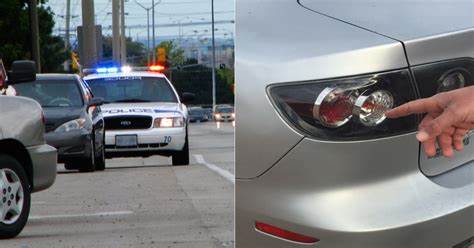
You pull over, and as the officer approaches the car, you hear a quick tap on the back of your car. The officer touches your tail light as he came to your window, and you come to realize that you’ve seen this before. Actually, you’ve seen this quite a bit.
This common cop practice isn’t rooted in superstition, and it isn’t a secret. As it turns out, it’s based in the officer’s well-being.
According to The Law Dictionary, this routine maneuver serves as a sort of bread crumb left to prove that the police officer had approached that particular vehicle. Before dash cams and body cams, the fingerprints left on the tail light served as a primary form of evidence about the traffic stop. If the officer’s safety were to be jeopardized by the driver, investigators could track that hand stamp to the suspect in question.
Additionally, the tap can serve as a means of jarring an intoxicated driver or a driver in possession of illegal materials.
InformationComments Off on Traces Of American Drugs In Pharaohs Could Prove Egyptians Beat Columbus To America
Aug082017
Christopher Columbus was not the first foreigner to discover the Americas, according to new evidence that suggests ancient Egyptians visited the Americas as early as 1,000 BC and traded with locals for tobacco and cocaine.
German scientist Dr Svetla Balabanova was studying the mummified remains of Lady Henut Taui, a member of the ancient Egyptian ruling class, when she made a surprising discovery – the mummy contained traces of nicotine and cocaine.
Suspicion regarding the findings led to alternative hypotheses, for example, that the tests were contaminated or the mummies were modern fakes, but these ideas were disproved and the mummy and the test results were found to be authentic.
The results were particularly surprising considering that tobacco and coca plants, which were only found in the Americas at the time, were not exported overseas until the Victorian era in the 19th century. Could it be that the ancient Egyptians had made it all the way to America 3,000 years ago?
A number of archaeological discoveries have certainly suggested that the Egyptians were masters of the seas. In around 1477 BC, Queen Hatshepsut funded a mysterious overseas expedition to the Land of Punt, which is depicted in a relief at Deir el-Bahri (in modern day Luxor).
It shows five ships, each measuring about 70 feet long, carrying 210 men and loaded with gold, trees and exotic animals which can only be found along the coast of Africa and Arabian Peninsula, indicating that the Egyptians were able to undertake fairly large scale oceanic voyages.
Then, in 2011, a series of remarkable discoveries on a stretch of the Red Sea coast proved the Egyptian’s seafaring abilities. Archaeologists excavating a dried-up lagoon, known as Mersa Gawasis, unearthed traces of an ancient harbour that once launched early voyages like Hatshepsut’s onto the open ocean.
Information, PoliticalComments Off on Energy-saving Light Bulbs More Likely To Give Headaches
Aug042017
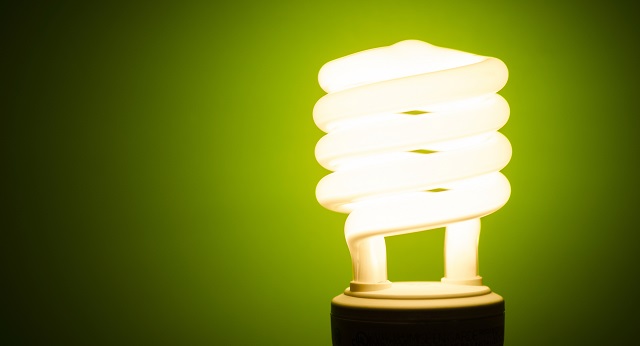
Low energy LED light bulbs could be giving us all HEADACHES because they flicker too much.
Energy-saving light bulbs could be giving us all headaches as they flicker too much.
LED bulbs can bring on feelings of dizziness and pain within just 20 minutes of switching them on, an expert has warned.
Professor Arnold Wilkins, professor of psychology at the University of Essex, said the flickering of the unpopular lights is stronger than for traditional light bulbs.
While fluorescent lights, such as those in offices, dim by around 35 per cent with every flicker, LED lights dim by 100 per cent. It means they effectively turn off and on again hundreds of times every second.
This can cause headaches by disrupting movement control of the eyes, forcing the brain to work harder. Flickering LED bulbs could double the chances of suffering a headache, based on previous research.
The warning comes as Britain is set to ban halogen light bulbs completely next September under EU law. They are currently being phased out, with major retailer IKEA already only offering LED bulbs for sale.
‘People do not like the flicker’
Professor Wilkins said the flicker from the energy-efficient bulbs is putting some people off buying them, adding: ‘People do not like the flicker, it can make them fell dizzy and unwell after about 20 minutes, and can produce disturbing anomalies of perception, such as seeing multiple images of the lamp, every time you move your eyes rapidly.’
Most electric lighting is powered by an alternating current supply, which causes light bulbs to flicker. This particularly affects vision during rapid eye movements called saccades.
A study from 1989 conducted by Professor Wilkins found fluorescent lighting which flickered 100 times a second doubled the chances of office workers experiencing headaches. LED light bulbs can flash 400 times a second – four times as often.
Annoying and distracting
Writing on the website The Conversation, Professor Wilkins said: ‘No similar study has yet been performed for LED lights. But because LED flickering is even more pronounced, with the light dimming by 100 per cent rather than the roughly 35 per cent of fluorescent lamps, there’s a chance that LEDs could be even more likely to cause headaches.
‘At best, it’s likely to put some people off using LED bulbs because of the annoying, distracting effect of the flickering, which we know can be detected during saccades.’
The risk of headaches may be particularly high while reading, when it is important to position the eyes carefully to scan the pages.
Flickering light bulbs disrupt the control of this eye movements, making the brain use more energy to work harder, which has been linked to headaches.
It can also cause people to suffer visual anomalies, such as double or multiple vision. The lamp in front of you may look like two or three lamps because of this visual effect when a bulb flickers.
What are LEDs?
LEDs, or light-emitting diodes, are one of two main types of energy-efficient light bulbs available in the UK, along with compact fluorescent lamps. They can cost more than traditional light bulbs, but are said to be cheaper in the long-term because they last longer.
However they have faced past criticism that they emit a cold, green light and take too long to warm up.
The flickering can be solved by buying a more expensive lamp, with a direct current rather than an alternating current so that the light is constant. But the lamp’s components may not last as long.
Arlene Wilkie, chief executive at the charity The Migraine Trust, said: ‘While we do know there are certain trigger factors for migraine, such as flickering light, there isn’t a lot of evidence that LED flickering lights are bad for migraine/headache.’