The Choices You Make
Information
Comments Off on The Choices You Make
Mar 192018
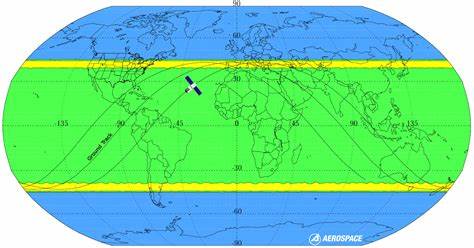
Scientists have an idea where and when China’s free-falling 8.5-ton space station will crash into Earth. In a report by the Aerospace Corporation, Tiangong-1 is predicted to reenter the Earth’s atmosphere on or about April 3, 2018. They identified specific regions on Earth where debris from the space station could fall. A portion of lower Michigan is included on the northern “yellow band” region, which has a “higher probability” of encountering debris from the Chinese spacecraft.
There is a chance that a small amount of Tiangong-1 debris may survive reentry and impact the ground. Should this happen, any surviving debris would fall within a region that is a few hundred kilometers in size and centered along a point on the Earth that the station passes over. The map below shows the relative probabilities of debris landing within a given region. Yellow indicates locations that have a higher probability while green indicates areas of lower probability. Blue areas have zero probability of debris reentry since Tiangong-1 does not fly over these areas (north of 42.7° N latitude or south of 42.7° S latitude). These zero probability areas constitute about a third of the total Earth’s surface area.

When considering the worst-case location (yellow regions of the map) the probability that a specific person (i.e., you) will be struck by Tiangong-1 debris is about one million times smaller than the odds of winning the Powerball jackpot. In the history of spaceflight, no known person has ever been harmed by reentering space debris. Only one person has ever been recorded as being hit by a piece of space debris and, fortunately, she was not injured.
Yet more Chinese materials that may flow into our country without a tariff! 😊
One of the fun things to do with astronomy (and science in general) is to imagine what it would be like if things were different. For example, right now the Moon orbits the Earth at an average distance of about 384,000 kilometers (238,000 miles). Even though that makes it the nearest astronomical object in the Universe, that’s still pretty far—a four-day ride in a space capsule, for example.
But what if it were closer? YouTube user “yeti dynamics” (real name: Nick) is an animator who created a fantastic video showing what it would look like from Earth if the Moon orbited us as the same distance as the International Space Station. The results are pretty amazing! Make it hi-res and fullscreen for the full effect.
Right off the bat, let me give my kudos to the animator! That was very well done, very realistic looking, and—my favorite bit—really cool, so it’s likely to grab people’s attention and get them thinking about the Moon and space.
And given its intent (just showing what it would look like, without any extrapolation on the physics), it’s pretty accurate, too. Indulge me while I dabble in some (fun) math.
Constantly churning inside of you, the digestive system performs a daily marvel: it transforms your food into the vital nutrients that sustain your body and ensure your survival. Emma Bryce traces food’s nine-meter-long, 40-hour journey through the remarkable digestive tract.
Across the planet, humans eat on average between 1 and 2.7 kilograms of food a day, and every last scrap makes its way through the digestive system. Comprised of ten organs covering nine meters, this is one of the most complicated systems in the body.
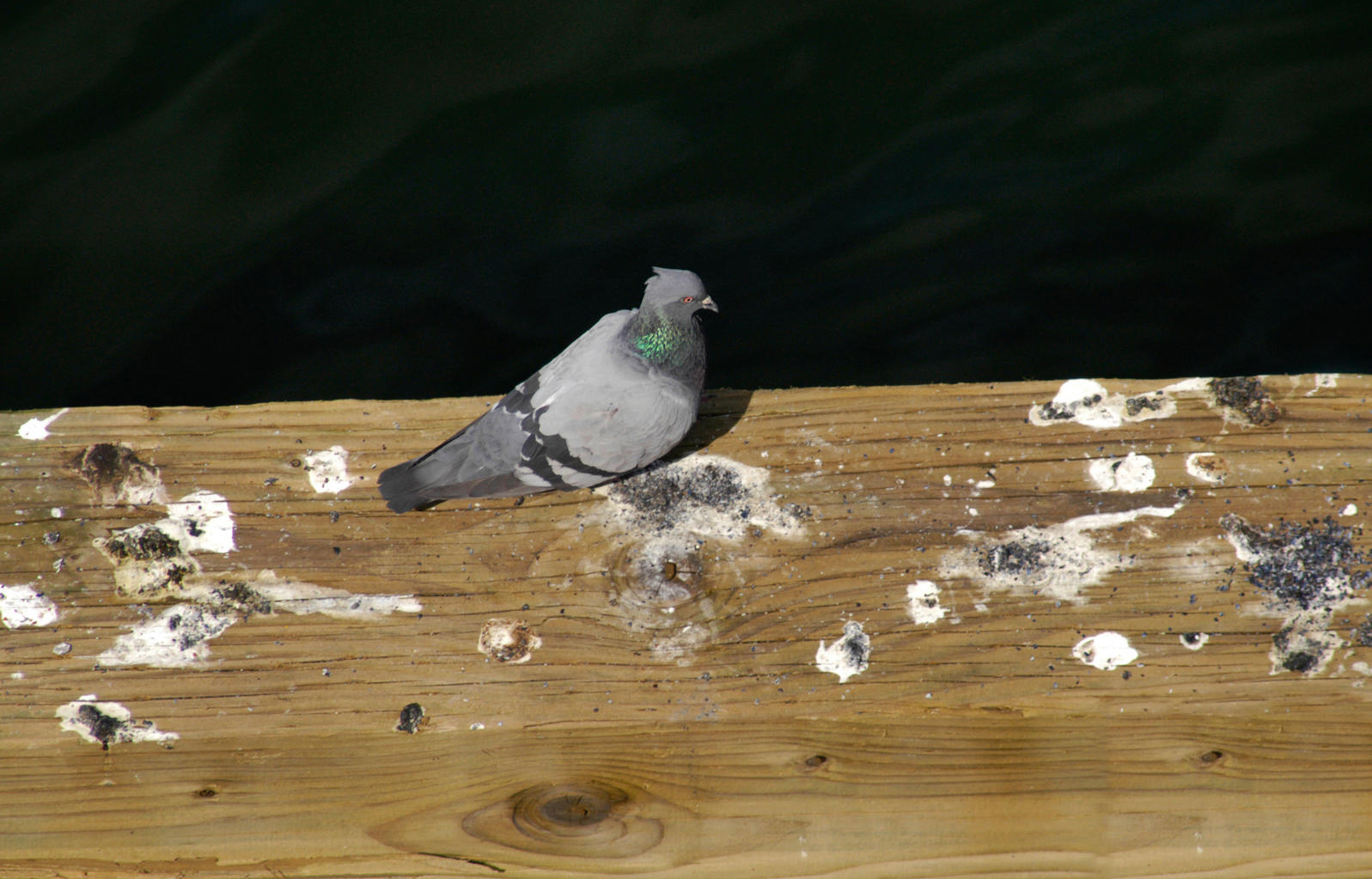
From BirdNote:Birds brighten our lives. We find joy in their songs, inspiration in their soaring flight. They connect us with nature. But sometimes birds connect us a bit too directly with nature. Park under the wrong tree – one where a flock of starlings or grackles comes to roost – and nature may be painted in white on your car so thickly that it takes a trip or two through the carwash just to see through the windshield again. Aside from helping you decide where not to park next time, this messy event raises a scientific question: Why is most of the bird poop we see white? The answer lies in the fact that birds, unlike mammals, don’t produce urine. Instead they excrete nitrogenous wastes in the form of uric acid, which emerges as a white paste. And uric acid doesn’t dissolve in water easily. Hence its ability to stick to your windshield like blobs of white plaster. It appears that drivers of some cars might be asking for trouble. A study in England found that red cars are most likely to be the target of bird droppings, followed by blue and black. Green was the least likely. So be careful where you park. And give that red Mustang a wide berth. Download Transcript
|