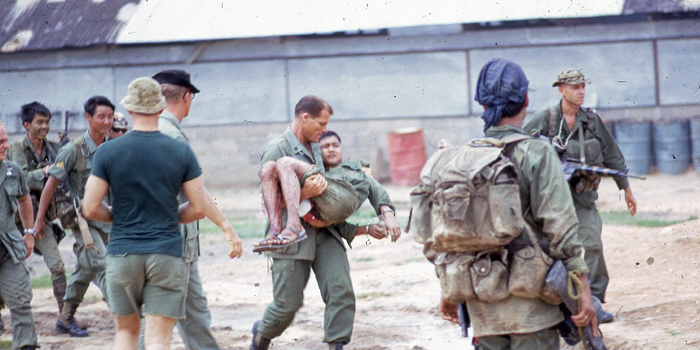
Enjoy!
“How To get to Mars” is a clip from the IMAX documentary “Roving Mars” from 2006. This is an edited short version.
From Wiki : Spirit, MER-A (Mars Exploration Rover — A), is a robotic rover on Mars, active from 2004 to 2010. It was one of two rovers of NASA’s ongoing Mars Exploration Rover Mission. It landed successfully on Mars at 04:35 Ground UTC on January 4, 2004, three weeks before its twin, Opportunity (MER-B), landed on the other side of the planet. Its name was chosen through a NASA-sponsored student essay competition. The rover became stuck in late 2009, and its last communication with Earth was sent on March 22, 2010.
The rover completed its planned 90-sol mission. Aided by cleaning events that resulted in higher power from its solar panels, Spirit went on to function effectively over twenty times longer than NASA planners expected following mission completion. Spirit also logged 7.73 km (4.8 mi) of driving instead of the planned 600 m (0.4 mi), allowing more extensive geological analysis of Martian rocks and planetary surface features. Initial scientific results from the first phase of the mission (the 90-sol prime mission) were published in a special issue of the journal Science.
On May 1, 2009 (5 years, 3 months, 27 Earth days after landing; 21.6 times the planned mission duration), Spirit became stuck in soft soil. This was not the first of the mission’s “embedding events” and for the following eight months NASA carefully analyzed the situation, running Earth-based theoretical and practical simulations, and finally programming the rover to make extrication drives in an attempt to free itself. These efforts continued until January 26, 2010 when NASA officials announced that the rover was likely irrecoverably obstructed by its location in soft soil, though it continued to perform scientific research from its current location.
The rover continued in a stationary science platform role until communication with Spirit stopped on sol 2210 (March 22, 2010). JPL continued to attempt to regain contact until May 24, 2011, when NASA announced that efforts to communicate with the unresponsive rover had ended. A formal farewell was planned at NASA headquarters after the Memorial Day holiday and was televised on NASA TV.

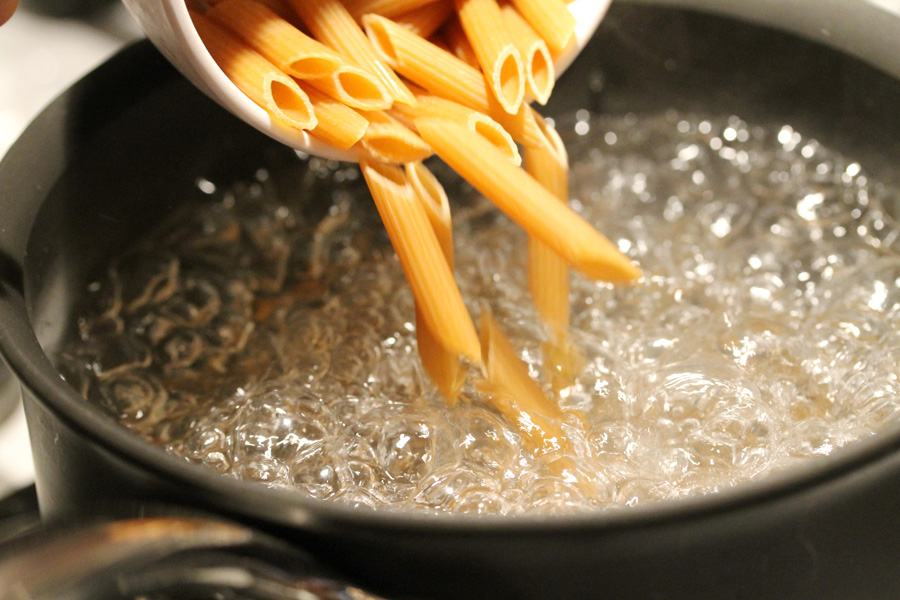
There are more efficient ways to cook pasta besides dropping it into a big pot of boiling, salted water. For example, next time pasta’s on the menu, try turning off the burner once you drop the pasta and letting it cook in the already-hot water.
The folks over at Cook’s Illustrated tried this method out with several different types of pasta including spaghetti, farfalle, shells, and ziti, and it worked like a charm. They explain why:
What Is Low-Temp Pasta?
Most instructions for cooking dried pasta are invariably the same: Drop the noodles into a pot of boiling water, bring it back to a boil, and keep it bubbling vigorously until the pasta is done. We already broke with this conventional wisdom by showing that you can cook pasta in a lot less water than is typically called for, as long as you don’t mind stirring it frequently.
Now we’ve learned that you don’t need to hold your pasta water at a rolling boil either. In fact, you don’t even need to keep the pot on the heat. The pasta will cook just fine if you take the pot off the burner as soon as you add the pasta, cover it immediately, stir once or twice during the first minute, cover again, and leave it to sit for the recommended cooking time. We tested this method with spaghetti, shells, farfalle, and ziti, using the full 4 quarts of water recommended per pound, and we found that the texture was identical to that of pasta we boiled the conventional way.
Here’s why the approach works: Starches absorb water at approximately 180 degrees. As long as the water is at a rolling boil (212 degrees) when you add the pasta and your kitchen is at normal room temperature, the water will remain well above 180 degrees off the heat for longer than the typical 8 to 10 minutes it takes for the pasta to cook through. In our tests, the water temperature had only cooled to about 195 degrees by the time the pasta was al dente. (In a cooler-than-normal kitchen, the pasta might take a minute or two longer to reach the proper texture, and the water temperature might drop a little more.)
Does this mean we’re going to stop boiling our pasta? Maybe not. But it’s nice to know we have the option.
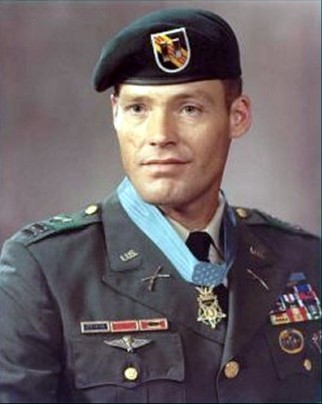
Col. Robert L. Howard (aka The Real Rambo) was the most decorated soldier / veteran in American history. It’s people like him who make this country GREAT!
This guy was a serious war fighter that played no games with the Vietcong. He racked and stacked bodies during The Vietnam War and was about black ops as it gets.
Col. Robert L. Howard
A Staff Sergeant in MACV-SOG which is a highly classified unit. This man was wounded 14 times during his 54 months of combat. He was actually put in for the Medal of Honor three separate times, but he did not receive either of the first 2 Medal of Honors because the actions that he performed took place in countries where the United States was fighting covertly and The President could not award him the Medal of Honor for actions in Cambodia since we were not supposed to be there to begin with. However he was award the Medal of Honor, 8 Purple Hearts, 1 Distinguished Service Cross, 1 Silver Star, and 4 Bronze Stars.
Actual citation for his actions.
FIRST LIEUTENANT
ROBERT L. HOWARD
UNITED STATES ARMYfor service as set forth in the following CITATION:
For conspicuous gallantry and intrepidity in action at the risk of his life above and beyond the call of duty. 1st Lt. Howard (then SFC .), distinguished himself while serving as platoon sergeant of an American-Vietnamese platoon which was on a mission to rescue a missing American soldier in enemy controlled territory in the Republic of Vietnam. The platoon had left its helicopter landing zone and was moving out on its mission when it was attacked by an estimated 2-company force. During the initial engagement, 1st Lt. Howard was wounded and his weapon destroyed by a grenade explosion. 1st Lt. Howard saw his platoon leader had been wounded seriously and was exposed to fire. Although unable to walk, and weaponless, 1st Lt. Howard unhesitatingly crawled through a hail of fire to retrieve his wounded leader. As 1st Lt. Howard was administering first aid and removing the officer’s equipment, an enemy bullet struck 1 of the ammunition pouches on the lieutenant’s belt, detonating several magazines of ammunition. 1st Lt. Howard momentarily sought cover and then realizing that he must rejoin the platoon, which had been disorganized by the enemy attack, he again began dragging the seriously wounded officer toward the platoon area. Through his outstanding example of indomitable courage and bravery, 1st Lt. Howard was able to rally the platoon into an organized defense force. With complete disregard for his safety, 1st Lt. Howard crawled from position to position, administering first aid to the wounded, giving encouragement to the defenders and directing their fire on the encircling enemy. For 31⁄2 hours 1st Lt. Howard’s small force and supporting aircraft successfully repulsed enemy attacks and finally were in sufficient control to permit the landing of rescue helicopters. 1st Lt. Howard personally supervised the loading of his men and did not leave the bullet-swept landing zone until all were aboard safely. 1st Lt. Howard’s gallantry in action, his complete devotion to the welfare of his men at the risk of his life were in keeping with the highest traditions of the military service and reflect great credit on himself, his unit, and the U.S. Army.
Col. Robert Howard died on Dec 23,2009 of pancreatic cancer in Waco, Texas.