The same people that told you Epstein’s prison cameras failed… now want you to believe all of Israel’s camera’s failed.
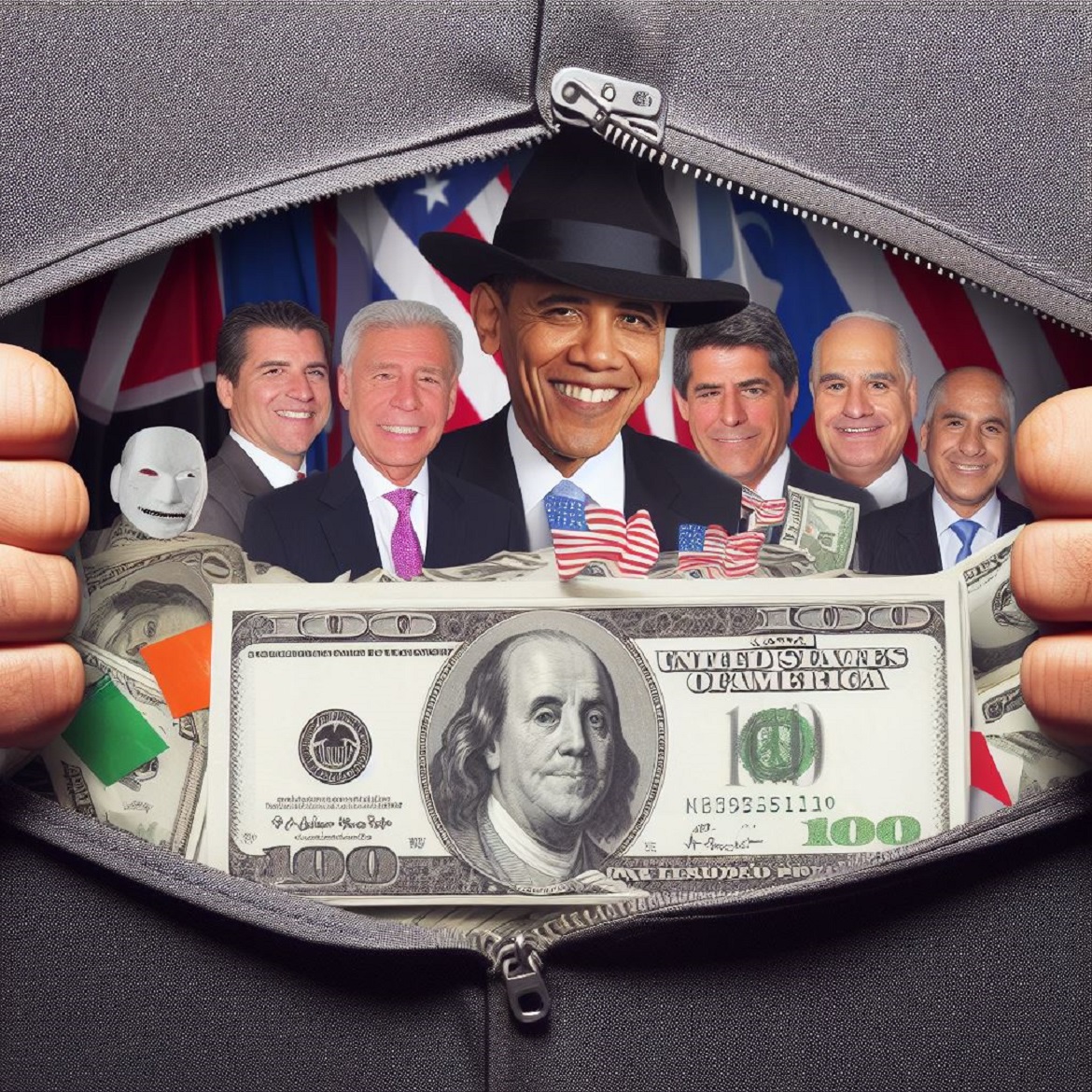
There’s a term in politics that often lurks in the shadows, whispered in hushed tones: money laundering. It’s a concept that, while sounding complex, can be broken down into simpler terms for you to understand. Money laundering isn’t just something from a gangster movie – it happens in the world of politics too. In this article, we’ll explore the art of political money laundering, demystifying the process and shining a light on the methods corrupt politicians use in funneling ill-gotten gains back to themselves.
Money laundering is like a magic trick that makes dirty money look clean. Imagine a criminal wants to buy a fancy car with the cash they earned from illegal activities. They can’t just waltz into the dealership with a briefcase full of cash, right? That’s where money laundering comes into play. It’s the process of making that dirty money seem legit, like it was earned through legal means.
One of the favorite tools in a politician’s arsenal is the creation of shell companies. These are companies that exist on paper but don’t do much real business. The trick is to hide the origin of the money by funneling it through these entities. Imagine having a secret bank account that nobody knows about – a shell company is like that, but on a grander scale.
Politicians often set up these shell companies in tax havens or places with lax financial regulations. These offshore accounts provide an added layer of secrecy, making it difficult for authorities to trace the money back to its source.
Have you ever wondered how a corrupt politician with a modest salary ends up owning luxurious mansions and properties? Real estate is a popular destination for laundered money. Here’s how it works:
Corrupt politicians might purchase properties using illicit funds through shell companies or intermediaries. Once they own these properties, they can either sell them for a hefty profit, generating clean money, or use the properties as collateral for loans. The borrowed money then appears to be a legitimate income source.
Another trick up their sleeves is to launder money through casinos. Here’s the scoop: a politician walks into a casino with a bag full of dirty cash and converts it into chips. They can then play a few hands, lose some chips, and cash out the rest. The money they receive in return appears to be winnings from gambling – a seemingly clean source of income.
As technology advances, so do the methods of money laundering. Cryptocurrencies like Bitcoin offer politicians a new avenue to launder their ill-gotten gains. It’s like digital cash that can be moved around the world with relative ease and anonymity.
They might buy cryptocurrencies using dirty money, and then trade or transfer them to other accounts. With some digital sleight of hand, the money can be made to look clean. It’s a challenge for law enforcement agencies to trace these transactions due to the decentralized nature of cryptocurrencies.
Smurfing and structuring are like two sides of the same coin when it comes to money laundering. Politicians employ these techniques to fly under the radar and avoid suspicion.
Smurfing involves breaking down large sums of money into smaller, less noticeable transactions. Imagine if you had $50,000 in dirty cash – instead of depositing it all at once, you’d make multiple smaller deposits, like $5,000 each, in different accounts. This makes it less likely to trigger alarm bells at the bank.
Structuring is the flip side. It’s about keeping deposits under a certain threshold to avoid raising suspicion. For example, if a dirty career politician wants to launder $100,000, they might make ten separate deposits of $9,000 each to avoid hitting the $10,000 reporting limit.
Offshore bank accounts are like secret treasure chests for these politicians. They use these accounts to stash their dirty money away from prying eyes. The laws and regulations in some countries make it challenging for authorities to access information about offshore accounts, allowing the corrupt to operate in secrecy.
Ever wondered why some politicians pour an incredible amount of their own money into their campaigns? It’s not just a show of support; it can be a way to launder money. Here’s how it works:
A politician injects their dirty money into their election campaign fund, and then, like magic, the money is clean. Donations to political campaigns are heavily regulated, but this technique allows them to legitimize their ill-gotten gains.
Now, let’s talk about a relatively new and trendy method of money laundering among politicians – book deals. Politicians author books and secure hefty advances from publishing houses. While this may seem like a legitimate endeavor, it can also serve as a convenient cover to launder money.
Here’s how it works: A corrupt politician writes a book or hires someone to ghostwrite it. A publishing house offers them a substantial advance – a large sum of money upfront. This money may come from legitimate book sales, but it can also serve as a way to legitimize dirty funds. The book can be sold, or even given away, to supporters and organizations associated with the politician, effectively returning the money to the corrupt author in a seemingly legal manner.
In the intricate world of political money laundering, foreign aid often becomes a shadowy conduit for politicians to further their illicit schemes. Recent events, notably involving unaudited funds sent to Ukraine, shed light on this covert avenue that allows politicians to exploit financial aid intended for nations in need.
Ukraine’s Mysterious Funds: The Unseen Trail
The tale of unaudited money sent to Ukraine is one that highlights the dark side of foreign aid. Funds allocated for humanitarian aid and national development are meant to uplift struggling nations. However, when those funds are sent without proper oversight and auditing, they become a playground for corruption.
In this context, politicians can exploit the lack of accountability and transparency to divert foreign aid into their personal coffers. It’s like a magician’s trick; they move the money from one pocket to another, making it disappear from the public’s view.
The Consequences of Misused Aid
When foreign aid is misappropriated or siphoned off through unaudited channels, the intended beneficiaries suffer the most. Funds that should be dedicated to infrastructure, healthcare, and education are instead used for personal gain or concealed in offshore accounts.
This misuse erodes trust in the system and jeopardizes the lives of those who depend on foreign aid for their survival and well-being. It’s a betrayal of the trust placed in politicians to act in the best interests of their countries and the international community.
The Need for Oversight
The case of unaudited money sent to Ukraine underscores the importance of robust oversight and transparency in foreign aid distribution. It’s a call to action for governments and international organizations to ensure that aid reaches its intended recipients and is used for its designated purpose.
In an age where technology and information can provide real-time tracking of financial transactions, there is no excuse for funds to go unaudited and unaccounted for. We must demand accountability from our “representatives” to ensure that foreign aid serves its true purpose: helping those in need.
Corrupt politicians employ a shadowy arsenal of clever tricks and techniques to launder their ill-gotten money. While this may seem like a tale out of a thriller movie, it’s a stark reality that casts a long, dark shadow over the political landscape. Understanding these methods is crucial, as it reveals the sinister underbelly of corruption and how it infiltrates our most trusted institutions.
The fight against political money laundering is an ongoing battle, often waged in the shadows. Transparency and diligence are our best tools, but the darkness of greed and deception perpetually threatens to engulf the light of accountability. As we unveil these intricate webs of deceit, we must remain vigilant, for it is in the dark corners of corruption that the true extent of its damage becomes horrifyingly clear.

In the heart of Rome lies a treasure trove of secrets and mysteries that have captured the imaginations of historians, scholars, and conspiracy theorists for centuries. It’s a place of intrigue, fascination, and enigma—the Vatican’s Secret Archives. This article takes you on a journey through these hallowed halls, revealing what lies within and looking into one of the most baffling stories associated with the archives: the elusive Chronovision.
The Vatican’s Secret Archives, known as the Archivum Secretum Apostolicum Vaticanum in Latin, is a repository of historical and religious documents held by the Vatican. Despite its name, the archives aren’t a place for dark conspiracies or occult knowledge, but rather a repository of historical records and documents that have been amassed by the Vatican over the centuries.
The archives are shrouded in mystery, partly due to the restricted access. Only a select few researchers are granted permission to enter its hallowed halls. It’s important to note that the term “secret” in the name doesn’t imply a hidden agenda or nefarious purpose but rather refers to the private nature of the documents contained within.
What makes the Vatican’s Secret Archives so intriguing is the vast collection of documents it houses. These include letters, official correspondence, papal bulls, treaties, and other records, many of which date back centuries. The archives offer a glimpse into the history of the Catholic Church, providing a wealth of knowledge about its influence on world events, its internal workings, and even its interactions with other nations.
Among the most notable documents stored in the archives is a letter from Michelangelo to Pope Julius II, requesting payment for his work on the Sistine Chapel ceiling. There are also writings by Galileo Galilei, who was famously censured by the Church for his astronomical findings. These documents are just a small fraction of the rich historical tapestry contained within the archives.
Now, let’s venture into the mysterious world of the Chronovision. The Chronovision is a concept that has sparked the imaginations of many, and it’s said to be linked to the Vatican’s Secret Archives.
The story of the Chronovision goes like this: it’s an alleged device that can view and record past events. Some believe that the Vatican has, or at least had, this device hidden away in its vaults. The concept seems straight out of science fiction, and many dismiss it as a fanciful conspiracy theory. However, it’s a captivating story that has gained notoriety over the years.
According to some accounts, the Chronovision was invented by Father Pellegrino Ernetti, an Italian priest, and scientist, in the 1950s. Father Ernetti claimed that this machine could access historical events and even witness pivotal moments in history. He described it as a combination of a television and a time machine. Ernetti said that he and a team of researchers used the Chronovision to witness Christ’s crucifixion, Napoleon’s conquests, and even the lost plays of ancient Greek playwrights.
The Vatican’s involvement in the story comes into play because Father Ernetti was a Vatican scholar, and he claimed that the Church had taken an interest in his invention. It’s alleged that the Vatican confiscated the Chronovision and locked it away in the Secret Archives, keeping it hidden from the world.
The Vatican itself has denied the existence of the Chronovision, and there’s a lack of credible witnesses or documentation to substantiate the claims made by Father Ernetti. Many scientists and researchers have deemed the concept of time travel and viewing the past as highly implausible, if not impossible, based on our current understanding of physics.
Furthermore, Father Ernetti’s credibility has been questioned, as he never provided any concrete proof of his invention. Some have suggested that his claims were a mix of scientific curiosity and religious fervor, rather than reality.
The story of the Chronovision remains a tantalizing enigma, challenging our notions of what’s possible. While there’s no concrete evidence to definitively support the existence of such a device, the allure of the unknown and the mysterious has a way of keeping our curiosity alive. Some may continue to entertain the possibility that, hidden within the depths of the Vatican’s Secret Archives, a Chronovision device lies concealed, waiting to be rediscovered by future generations. Yet, the line between reality and myth remains blurred, leaving us with an enduring sense of wonder and a touch of skepticism.
In the world of the Vatican’s Secret Archives, the elusive Chronovision continues to be an elusive specter, tantalizing us with the prospect of peering into the annals of history. While the Vatican maintains its denial of the Chronovision’s existence, and skepticism prevails in the scientific community, the legend endures. Whether the Chronovision is a product of fervent imagination or an actual hidden artifact, the Vatican’s archives keep their secrets close, making it an eternal mystery. In the end, the pursuit of knowledge and the quest for answers keep the story alive, reminding us that some secrets may forever remain shrouded in the mists of time.

In the world of music and entertainment, there exists an unsettling phenomenon known as the 27 Club. This grim club is not one that anyone aspires to join, yet it has welcomed some of the most iconic talents in the industry. In this article, we will look into the mysterious world of the 27 Club, explore the lives and untimely deaths of its members, and ponder the strange notion that some believe they may have made a deal with the devil.
The 27 Club, as the name suggests, is a peculiar and ominous occurrence where famous musicians, actors, and artists meet their untimely demise at the age of 27. It’s a macabre coincidence that has left many to wonder if there is something more sinister at play. Let’s take a closer look at some notable members of this eerie club.
One of the earliest members of the 27 Club was Robert Johnson, a legendary blues musician whose influence can be heard in the works of countless artists. Johnson’s life was shrouded in mystery, and his devilishly skillful guitar playing fueled rumors that he had made a pact with the devil at a crossroads in exchange for his unparalleled musical talents. His death, however, is equally mysterious. On August 16, 1938, Robert Johnson passed away at the age of 27 under circumstances that remain unclear. Some say he was poisoned, while others claim it was a result of his wild lifestyle. Regardless of the cause, his untimely death added to the club’s mystique.
Brian Jones, a founding member of The Rolling Stones, was another mysterious figure who met an early demise. Jones was known for his extraordinary musical talents and turbulent lifestyle. His death on July 3, 1969, marked a tragic end to his journey. He was found dead in his swimming pool at the age of 27. While the official cause of death was listed as “death by misadventure,” the circumstances of his drowning raised suspicions, and his passing became another dark chapter in the 27 Club’s history.
Jimi Hendrix, one of the most influential guitarists in history, met a tragic end at the age of 27. His remarkable talent and innovative guitar techniques contributed to his iconic status. On September 18, 1970, Hendrix was found dead in London. The official cause of death was asphyxiation from vomit due to a barbiturate overdose, but there have been lingering questions about the circumstances leading up to his demise. Some have speculated that Hendrix’s death may have been accidental, while others have questioned whether it was more sinister.
Janis Joplin, known for her powerful and soulful voice, also tragically joined the 27 Club. Her struggles with addiction and her untimely death on October 4, 1970, further added to the club’s strange reputation. Joplin died of a heroin overdose, highlighting the tragic consequences of substance abuse that often accompany fame.
Jim Morrison, the charismatic frontman of The Doors, was yet another member of the 27 Club. His poetic lyrics and magnetic stage presence made him an iconic figure. On July 3, 1971, Morrison was found dead in a bathtub in Paris, France. The official cause of death was listed as heart failure, but questions have swirled around the circumstances of his demise, adding to the intrigue surrounding the club.
Kurt Cobain, the voice of a generation and leader of Nirvana, left a lasting impact on the music world. His death by suicide at the age of 27 on April 5, 1994, sent shockwaves through the industry and left fans mourning the loss of his talent. Cobain’s suicide note and the circumstances of his death have been the subject of extensive speculation and debate.
The most recent addition to the 27 Club was the talented yet troubled Amy Winehouse. Her soulful voice and emotional lyrics captured the hearts of many, but her struggles with addiction ultimately claimed her life on July 23, 2011. Winehouse’s death was attributed to alcohol poisoning, emphasizing the tragic consequences of addiction in the world of music.
The common thread among these artists is not just their extraordinary talents but also the turbulent lives they led, often plagued by addiction and personal demons. While there is no concrete proof that the 27 Club members made deals with the devil, the eerie coincidence of their deaths at the age of 27, coupled with the dark circumstances of their demises, has led to speculation and conspiracy theories.
In the end, the 27 Club remains a haunting and unsettling phenomenon in the world of music and entertainment. While we may never know the truth behind the deaths of its members, their legacies live on through their art and the lessons we can learn from their troubled lives. The dark allure of the 27 Club serves as a poignant reminder of the fragility of fame and the darkness that can lurk behind the brightest stars.
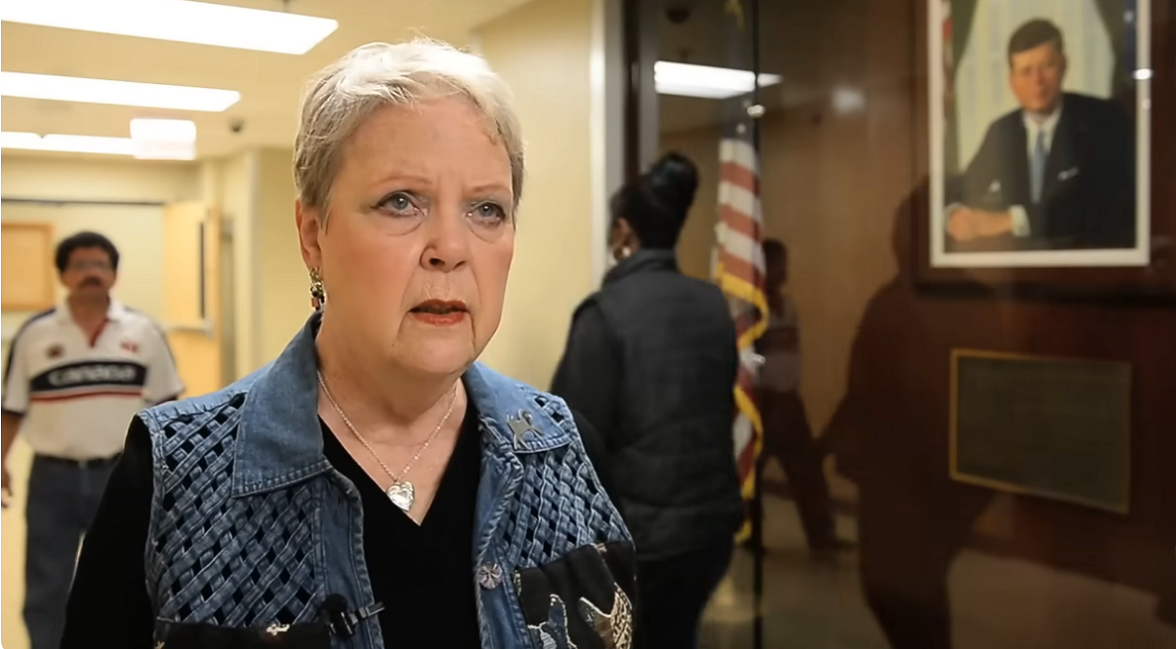
In the chronicles of American history, the tragic assassination of President John F. Kennedy remains an indelible mark. The events of that fateful day in Dallas, Texas, have been scrutinized from countless angles, but one key witness has largely remained in the shadows: Phyllis J. Hall, the nurse who was present in the emergency room when JFK was brought in after being fatally shot. Her account of what she witnessed that day is both fascinating and confusing, shedding new light on an already mysterious event.
Phyllis J. Hall was an experienced nurse at Parkland Memorial Hospital in Dallas on November 22, 1963. Little did she know that this ordinary day would take a chilling turn when President Kennedy’s motorcade arrived at the hospital with the gravely wounded leader.
As the gurney carrying the President was rushed into the emergency room, Hall immediately went to work, assisting the medical team. In the midst of the chaos, she made a discovery that would set her apart from all others who bore witness to that historic moment.
While attending to JFK, Phyllis Hall noticed something unusual – a bullet lodged between the President’s earlobe and shoulder. This discovery was shocking for several reasons. First, it confirmed that JFK had indeed been shot, dispelling any initial doubts. Second, the location of the bullet raised perplexing questions about the trajectory of the fatal shots.
Hall described the bullet as pristine, unlike any she had ever seen. It was fully intact, showing no signs of deformation or damage that would typically occur upon striking bone or tissue. This was an anomaly that begged for an explanation.
Despite the significance of Hall’s discovery, the bullet she found was never entered into evidence. This fact adds yet another layer of mystery to an already enigmatic event. The Warren Commission, tasked with investigating the assassination, relied on a different narrative, one that excluded Phyllis Hall’s crucial testimony.
This omission has fueled conspiracy theories and speculation for decades. Why was such a crucial piece of evidence seemingly swept under the rug? Was there an effort to control the narrative surrounding JFK’s assassination?
Phyllis J. Hall’s account of the bullet discovery has remained consistent throughout the years. She has always maintained that the bullet she found was in pristine condition, challenging the official narrative of JFK’s assassination.
In interviews and conversations with researchers and journalists, Hall has repeatedly emphasized her surprise at the bullet’s condition. She could not reconcile the lack of damage with the severe injuries sustained by President Kennedy. Her unwavering testimony adds credibility to her claim and underscores the need for a thorough reexamination of the events of that tragic day.
JFK shooting witness: nurse recalls day President Kennedy was shot in Dallas:
In the aftermath of JFK’s assassination, Phyllis J. Hall faced immense pressure to conform to the official narrative. However, she refused to back down from her account of finding the pristine bullet between JFK’s earlobe and shoulder. Her courage in the face of scrutiny and the passage of time is commendable.
Hall’s steadfastness serves as a reminder that even seemingly ordinary individuals can play a pivotal role in shaping history. Her simple act of bearing witness to a crucial piece of evidence has left an indelible mark on the JFK assassination story.
The enduring mystery surrounding JFK’s assassination continues to captivate the American public and people around the world. Phyllis J. Hall’s account adds another layer to this complex narrative, raising important questions about the events of that day and the subsequent investigation.
While we may never fully unravel the mysteries of November 22, 1963, one thing remains clear: Phyllis J. Hall’s courage in standing by her account is a testament to the enduring pursuit of truth. As we reflect on this dark chapter in American history, we must remember the lone nurse who saw something unusual and spoke out. Her testimony challenges us to keep seeking answers to the questions that linger in the shadows of that tragic day.