The Red Syndicate – Part 2
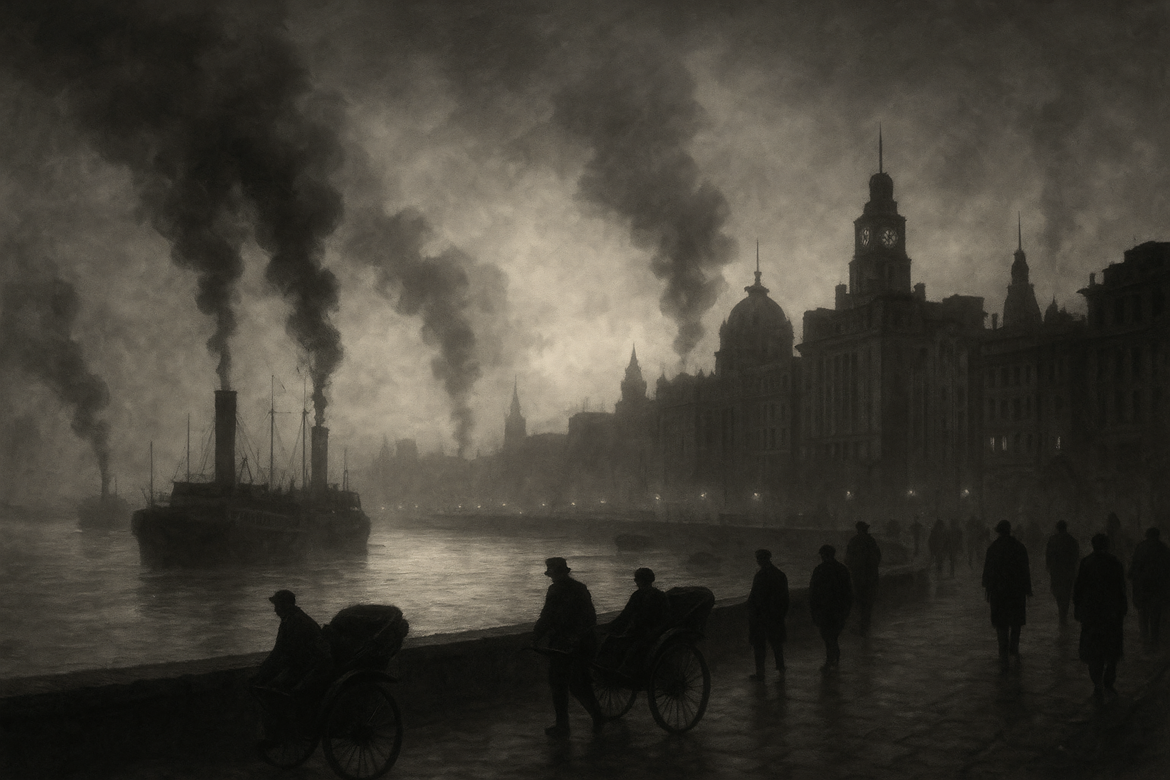
Shanghai, 1932. The city where the revolution learned from the underworld.
Shanghai, 1932: The City That Ate Empires
The city never slept, but sometimes it prowled.
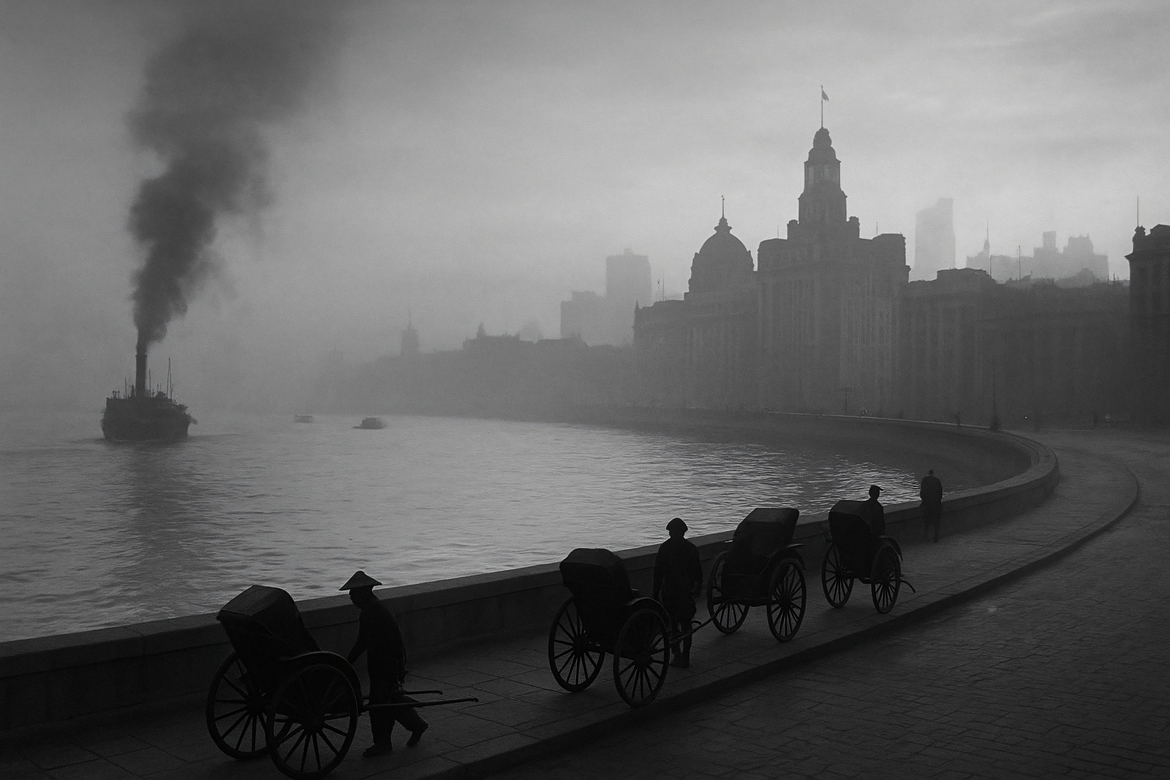
Just before dawn, the streets of Shanghai’s French Concession glowed under a thin fog that turned the gaslights to halos. A convoy of Packards and Buicks crept down Avenue Joffre, their engines low, their windows tinted. Armed guards rode the running boards, coats heavy with hidden pistols. Inside the lead car sat Du Yuesheng, the man foreigners called Big-Eared Du, the quiet sovereign of Shanghai’s underworld.
At the entrance to a mansion draped in ivy, he stepped out. He wore a dark suit and a silk scarf instead of a traditional gown. His shoes were polished, his movements precise. Behind him followed his lieutenants: one carried a cane, another a ledger. The smell of opium clung to their coats.
Across the street, a line of laborers trudged toward the textile mills, faces pale from hunger. They passed the convoy without looking up. They knew who ruled this part of Shanghai. It was not the French police. It was not the mayor. It was the Green Gang.
The Brotherhood of Smoke and Silver
The Green Gang’s origins reached back to the 18th century, when boatmen on the Yangtze formed secret brotherhoods for protection. By the time Shanghai exploded into a treaty port in the late 19th century, those networks had mutated into a criminal syndicate that moved drugs, gold, and people with a precision that outclassed the local bureaucracy.
At the top sat three figures who controlled Shanghai like a boardroom of kings.
Huang Jinrong was the oldest, a former police inspector who had turned his badge into a business license for vice. He ran the city’s gambling dens and brothels under French protection.
Zhang Xiaolin was the muscle. He commanded the street fighters, the strikebreakers, the assassins who could disappear a rival overnight.
And Du Yuesheng, Huang’s protégé, was the strategist. He built the gang into a multinational operation that stretched from Burma’s opium fields to Hong Kong’s banks. He preferred silence to threats and influence to bloodshed. The foreigners trusted him because he spoke their language of contracts and bribes. The Chinese feared him because he understood loyalty as a form of debt.
The Green Gang was not only tolerated; it was indispensable. When the French authorities wanted order, they called Huang. When the bankers wanted a strike broken, they paid Du. The police, customs officials, and port captains all drew a salary from the same account.
Shanghai became a city where legality itself was negotiable.
The General and the Gangsters
In 1926, Chiang Kai-shek arrived in Shanghai with a revolutionary army and a promise to reunify China. He came not as a conqueror but as a client. His Nationalist Party, the Kuomintang, was running out of money and allies. To take Shanghai, he needed the Green Gang’s muscle, money, and information. Du Yuesheng saw the opportunity immediately.
Chiang had soldiers. Du had control of the city. Together they could rule it.
Their alliance was sealed not in a palace but in a teahouse. Huang Jinrong served as intermediary. Du provided funds and arranged intelligence on Communist labor unions that were organizing dockworkers and tram drivers. In return, Chiang granted the gang official protection and honorary military titles. Du became a “Major General,” though his troops were opium runners and enforcers, not soldiers.
When the Nationalists captured Shanghai in 1927, Chiang turned to Du again. Communist unions had risen in celebration, declaring strikes and waving red flags. Within days, Chiang ordered them crushed. The Green Gang executed the command with ruthless efficiency.
On April 12, 1927, the massacre began.
The Purge of Shanghai
Green Gang gunmen flooded the city’s working-class districts. They raided union halls, factories, and dormitories. Men were dragged into alleys and shot. Women were arrested as “agitators.” By nightfall, the streets stank of blood and cordite.
Foreign correspondents wrote that the killings were political. In truth, they were economic. The Communists had threatened the Green Gang’s control of labor rackets, opium routes, and gambling revenues. The massacre was less a war of ideology than a corporate merger by violence.
Chiang’s government rewarded Du with titles and privileges. His companies received monopolies over salt, tobacco, and shipping. The Green Gang became the unofficial enforcement arm of the Kuomintang. It provided money, information, and assassins. In return, it gained legal immunity and access to government contracts.
Shanghai’s new order was built not on revolution but on organized crime.
The Business of Addiction
The Green Gang’s real empire was not politics or gambling. It was opium.
The drug had been illegal since the late Qing dynasty, but enforcement was a fiction. Every year, hundreds of tons of raw opium flowed into Shanghai from Yunnan, Burma, and Afghanistan. The Green Gang controlled the refineries, the distribution networks, and the dens.
Foreign merchants supplied the product through intermediaries in Hong Kong. The Nationalist government collected taxes through “licensing schemes.” Officials condemned the drug trade in public while collecting a share of the profits in private.
In 1932 alone, Shanghai’s opium revenue exceeded the city’s official tax income. It financed public works, elections, and secret police operations. Du Yuesheng even founded the National Anti-Opium Association, which received state funding to combat addiction while quietly managing the supply chain behind it.
The arrangement was elegant in its hypocrisy. The government outlawed vice while profiting from it. The gangsters pretended to be patriots while functioning as the real economic engine of the city. Together, they turned addiction into policy.
Du Yuesheng: The Gentleman of Vice
Du’s power was not built on terror alone. He understood the performance of respectability. His mansion on Route Ferguson was filled with foreign furniture, servants in Western uniforms, and a private chapel for Buddhist meditation. He funded schools, hospitals, and disaster relief. He donated to the Nationalist cause and posed for photographs with diplomats.
When the French ambassador visited, Du served champagne in crystal glasses. When the Chinese poor came begging, he distributed rice from his warehouses. In a city of extremes, he was both philanthropist and parasite.
His influence extended beyond the underworld. He brokered business deals between foreign banks and Chinese officials. He arranged ceasefires between warlords. His phone line connected directly to Chiang Kai-shek’s headquarters.
Foreign journalists called him the “uncrowned king of Shanghai.” The title was not hyperbole. The Green Gang’s headquarters processed more money than the Shanghai Municipal Council. Its security network penetrated deeper than the police. Its leaders dined with generals and negotiated with bankers.
The line between criminal and statesman vanished.
The Shadow Economy
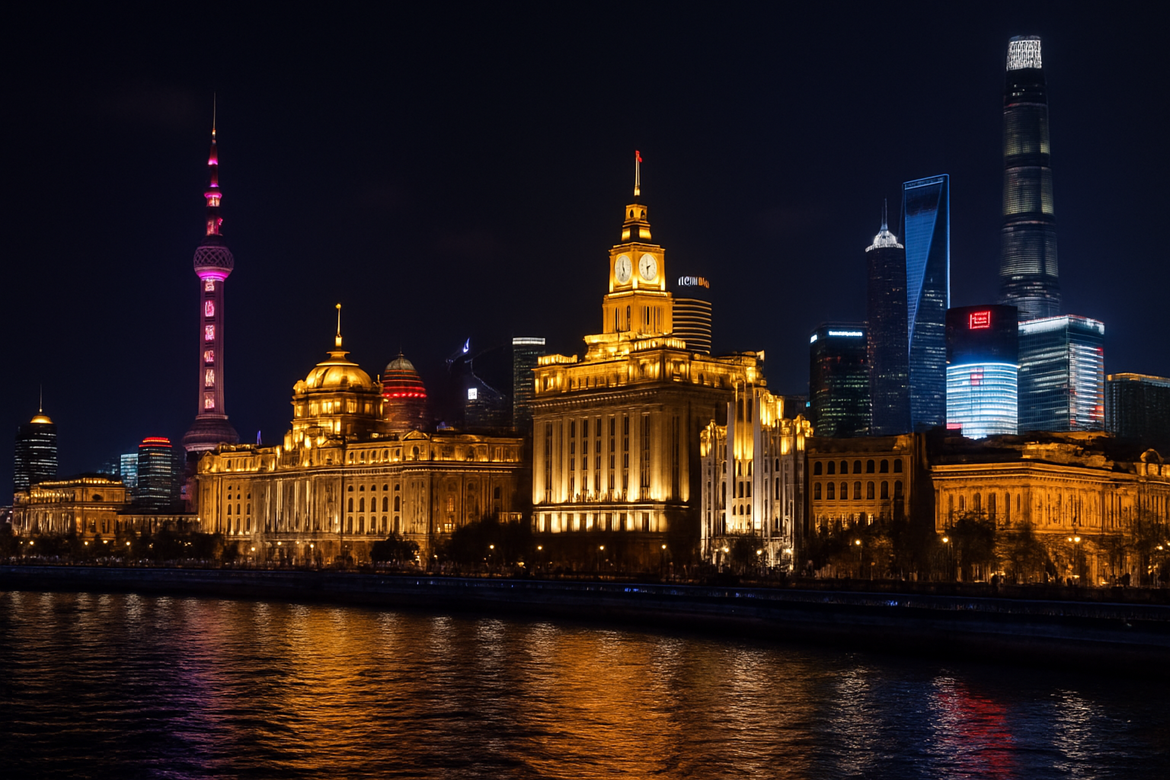
By the mid-1930s, Shanghai had become a machine of contradictions. Its skyline glowed with Art Deco towers and neon lights. Its gutters ran with blood and morphine. For every American investor building a bank, a Green Gang courier carried cash for smuggling. For every preacher who arrived to save souls, a corrupt customs officer opened a new den.
The Green Gang had achieved something unique in modern history: it had privatized politics.
Every government agency was an opportunity for profit. Every regulation was an invitation to negotiate. The gang’s reach extended into stock markets, shipping companies, and even the postal service.
Du Yuesheng’s associates sat on corporate boards. His name appeared in the ledgers of British firms and French syndicates. He had become both a criminal mastermind and a symbol of modern Chinese entrepreneurship.
Behind the illusion of progress lay a system that was indistinguishable from the one the revolutionaries claimed to fight.
The Cracks Begin to Show
As the decade turned, the illusion of stability began to crumble. The Japanese invasion of Manchuria in 1931 shifted the balance of power. Shanghai’s wealth became both a prize and a target. When Japanese forces attacked the city in 1932, the Green Gang tried to defend its interests by funding resistance militias, but its loyalties remained transactional. Du supplied intelligence to both Nationalists and Japanese intermediaries, ensuring that no matter who won, his empire would survive.
The violence exposed the fragility of Shanghai’s golden age. Refugees flooded the city, crime surged, and opium addiction reached epidemic levels. The Green Gang’s grip began to weaken as rival groups and secret police competed for control.
Meanwhile, the Communists, driven underground after the 1927 massacre, studied their enemy. They saw how the Green Gang operated: how it maintained discipline through fear, loyalty through patronage, and secrecy through compartmentalization.
They understood that moral purity could not defeat a machine built on corruption. To win, they would have to become more efficient than the gangsters, more ruthless than the generals, and more secretive than the spies.
The revolution learned its lessons well.
The Gang’s Last Dance
When the Second Sino-Japanese War erupted in 1937, Shanghai’s underworld was thrown into chaos. Du fled first to Hong Kong, then to Chongqing, carrying his fortune with him. His network splintered. Some of his lieutenants collaborated with Japanese occupation authorities. Others joined resistance groups.
After Japan’s surrender, Du returned briefly to a ruined Shanghai. The Nationalists were still in power but hollowed by corruption and inflation. The Communists were advancing from the countryside. The Green Gang’s businesses faltered as opium prices collapsed and the black market turned violent.
By 1949, when Mao’s forces entered Shanghai, Du Yuesheng had already fled to Hong Kong for good. He died there in 1951, a relic of another world.
The Communists seized his properties, arrested his surviving associates, and declared that the age of the gangster was over. But the truth was more complicated. The Green Gang’s methods did not vanish. They were absorbed, refined, and institutionalized.
The new rulers had studied their predecessors too well.
The Legacy of the Green Gang
The Green Gang had demonstrated that power in China could thrive outside formal institutions. It showed that control did not depend on ideology but on the ability to distribute resources, enforce loyalty, and maintain fear.
The Communist Party adopted those principles and built them into its structure. Local cadres replaced enforcers. Party committees replaced crime families. But the functions were identical: protection, control, and silence.
The revolution promised to destroy corruption, yet it inherited its architecture intact. The underworld had not been eliminated. It had been nationalized.
A City Without Memory
Modern Shanghai rarely speaks of the Green Gang. Its history is buried under skyscrapers and slogans. The mansions where Du Yuesheng once dined now house corporate offices. The docks where opium crates arrived now unload containers of electronics. The river still carries the same scent of oil and ambition.
Every empire writes its own myths. Shanghai’s myth is prosperity without guilt. But the ghosts remain. They walk the Bund at night, among the bankers and tourists, whispering the same lesson the city taught a century ago: that power, once intertwined with crime, can never be clean again.
Next in the Series
Part 3 – The Party Learns the Code
How the Chinese Communist movement borrowed the structure of the underworld it once condemned, transforming gang discipline into revolutionary control and secrecy into a governing principle.
Source Notes
- Brian G. Martin, The Shanghai Green Gang: Politics and Organized Crime, 1919–1937 (University of California Press, 1996)
- Frederic Wakeman Jr., Policing Shanghai, 1927–1937 (University of California Press, 1995)
- Jonathan Fenby, Shanghai: The Rise and Fall of a Decadent City (Ebury Press, 2008)
- Shanghai Municipal Police Archives
- U.S. Consular Reports, Shanghai, 1926–1938
© 2025 The Red Syndicate Investigations / Common Sense Evaluation. All rights reserved.