Why You Should Always Put A Coin In The Freezer Before You Leave Home

 Information  Comments Off on Why You Should Always Put A Coin In The Freezer Before You Leave Home
Mar 292017
 
Simple, effective – and definitely a money saver, because you don’t have to toss loads of food unnecessarily.

Why You Should Always Put A Coin In The Freezer Before You Leave Home

Have you ever come home from vacation, business trip or maybe a weekend away with the family – and noticed your digital clocks flashing the wrong time?You quickly realize that you had a power outage while you were away, but it’s basically impossible to tell when it occurred or how long it lasted. It’s therefore also impossible to tell just how long the food in your freezer may have thawed, gotten destroyred, and then frozen again.

Or is it?

In connection with Hurricane Matthews which swept over parts of the United States, a woman named Sheila Pulanco Russell shared a clever trick on her Facebook wall with anyone who was forced to evacuate their home.

But the trick is certainly also good to know in case of any prolonged departure from your home – and will ease your mind about whether or not the food in your freezer is good to eat – or best be thrown out right away.

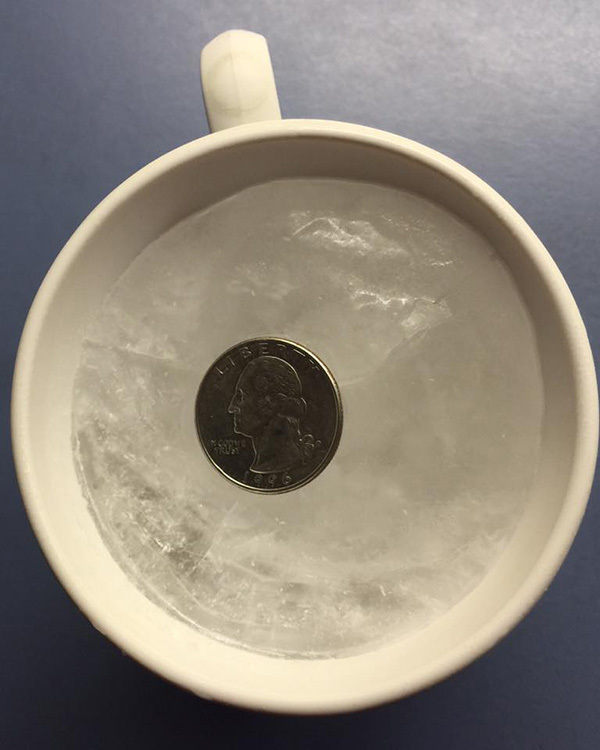
The trick lies in the magical combination of three simple but effective tools everyone already has at home: a mug, a coin and some tap water.

In a Facebook post which quickly received hundreds of thousands of reactions and shares, Sheila explains how to proceed. She writes:

“For those of you that are evacuating from the coast, I just heard a great tip. It’s called the one cup tip. You put a cup of water in your freezer. Freeze it solid and then put a quarter on top of it and leave it in your freezer. That way when you come back after you’ve been evacuated you can tell if your food went completely bad and just refroze or if it stayed frozen while you were gone.

If the quarter has fallen to the bottom of the cup that means all the food defrosted and you should throw it out. But if the quarter is either on the top or in the middle of the cup then your food may still be ok. It would also be a great idea to leave this in your freezer all the time and if you lose power for any reason you will have this tip to fall back on.

If you don’t feel good about your food, just throw it out. The main thing is for all to be safe. Please SHARE this on your page. 😀”

Please share this nifty trick on to all your friends!


How To Of The Day: How To Survive An Earthquake

 How To  Comments Off on How To Of The Day: How To Survive An Earthquake
Mar 282017
 

how-to-survive-an-earthquake

The Gulf Coast and East Coast have hurricanes, the Midwest and South have tornados, and the West Coast faces tsunami threats. No area of the country is without their own special brand of natural disaster to worry about. Earthquakes, however, span state lines, cross mountain ranges, and traverse climates. With the increased practice of deep wastewater disposal in the oil and gas industry, even the typically stable Midwest and central areas of the country are seeing an exponential rise in the number of earthquakes strong enough to get your house shaking (e.g., before 2009 there were an average of two magnitude 3+ earthquakes in Oklahoma; last year there were 907).

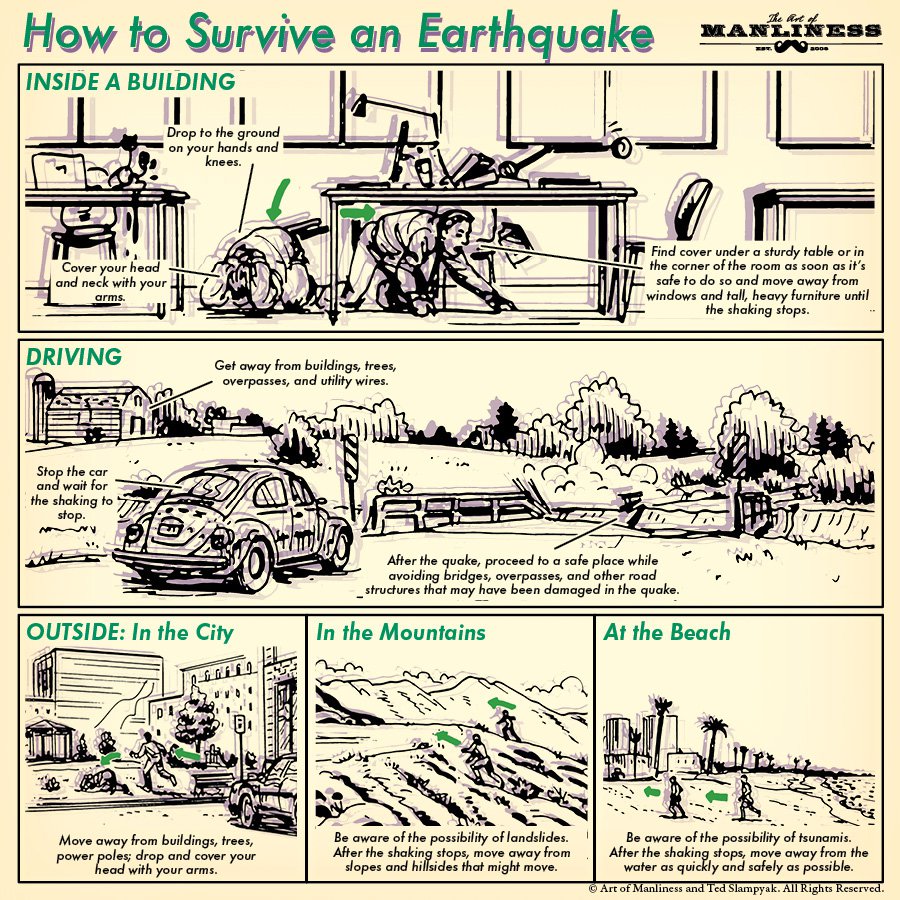
Surviving an earthquake starts far before the tremors begin, with careful preparation and planning. You should have enough food and water (a gallon per person per day) to last a minimum of three days, and communicate to friends and family where to meet and how to contact each other after an earthquake, assuming phone lines and electricity are down. Finally, take time to go through your house and secure tall, heavy pieces of furniture and appliances that might topple over. After an earthquake, be prepared to experience powerful aftershocks, and try to get to an open area as soon as it’s safe to do so. During an earthquake, the best survival techniques depend on your surroundings, so heed the tips above.

Illustration by Ted Slampyak

Source…


The Easiest Way To Escape A Sinking Car And Save Yourself

 How To  Comments Off on The Easiest Way To Escape A Sinking Car And Save Yourself
Mar 212017
 
This is the easiest way to escape your sinking car, according to the pros.

The Easiest Way To Escape A Sinking Car And Save Yourself

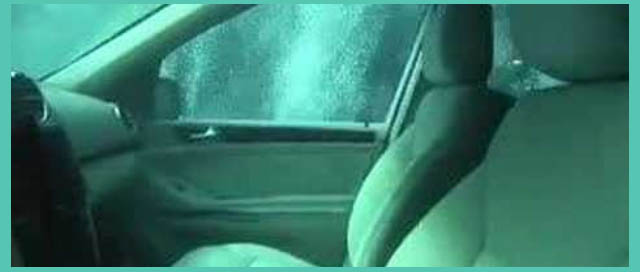
Any professional who knows what to do when a car is sinking will say the same thing: get out before the car sinks. This may seem scary, but what’s more is that the window of opportunity lasts less for less than a minute, with only 30-40 seconds of optimal time to make it out using this method.

Approximately 400 people in North America alone die in sinking cars each year, and many of these people are victims during the season of flash floods. That’s why it’s so important for people to know exactly what they should do if they ever find themselves in this situation.
The basic steps are as follows: take off your seatbelt, roll down the window you are closest to, and slide your way out and into the water. This may seem easy, but even the professional divers who were employed to demonstrate the method found the task more difficult than they anticipated.

One of the divers said, “It was very intimidating. The car went down quicker than I thought it would. I had a real inflow of water that I had to work against to get out, but it can be done.”

As another diver points out, all 4 divers were able to get out in 20 seconds because they knew exactly what to do. For most, this isn’t the case, and that’s why more people need to be informed about what to do. The instructional video also covers how to handle the situation if there are children in the car.

One more important thing that drivers should know is not to waste time with calling 911 while you’re still in the car. There are just a matter of seconds between when you hit the water and when the car sinks, and it’s crucial to escape the car during this time.

Watch the video below to get the full scoop on how to properly escape your car.

 
via

The End Is Near: Doomsday, Would You Survive?

 Infographics  Comments Off on The End Is Near: Doomsday, Would You Survive?
Feb 172017
 

Although it is highly unlikely for a zombie epidemic to occur, it is likely for floods, strong winds, or hurricanes to wipe out your power for weeks at a time. This infographic provides handy tips and facts on how to survive natural disasters. It states that less than 55% of Americans have less than a three-day supply of food stocked in their homes. Three days worth of non-perishable food is what FEMA recommends everyone have prepared for emergency situations. Before food, however, having a sufficient amount of water is the top priority in any natural disaster or post-apocalyptic catastrophe. Like the infographic, FEMA also recommends face masks to filter contaminated air and a basic emergency supply kit filled with road flares, waterproof matches, flashlight, batteries, and more. And like the infographic shows, it may be helpful to surround yourself with others who have valuable professional experience, like doctors or farmers.

By the time the public is hit by a natural disaster or learns about an epidemic, chaos soon follows. By then, it is too late to make preparations. So, be sure to stock up and be prepared for any situation that may occur.

The End Is Near: Doomsday, Would You Survive?

 
Source...