What is Aging?

 Funny, Information  Comments Off on What is Aging?
Jan 212015
 

Why do we grow old? Integrative Biologist Joao Pedro de Magalhaes explains what aging is and how we can extend our lifespan.

You don’t have to get older. There’s a traditional alternative, but it’s unpleasant.

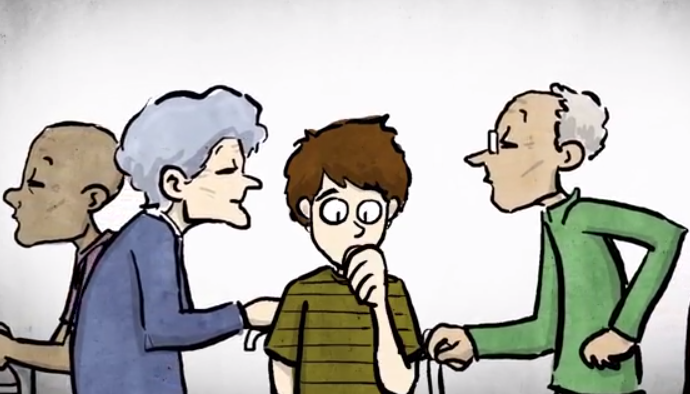
Aging may appear to be inevitable, but Dr. João Pedro de Magalhães, a biologist at the University of Liverpool, disputes that. He’s devoted his scholarly life to studying the process of aging.

The artists behind Ph.D. Comics, a funny webcomic about the graduate school lifestyle, produced this video. They illustrate a talk by Dr. Magalhães on the subject of aging. What is the process of aging at the cellular level? We don’t know for sure, but Dr. Magalhães explains three major hypotheses. He also describes what we may be able to learn from age-resistant animals, such as the naked mole rat.

Source…


What is Aging


What Causes Garlic Breath?

 Amusing, Information  Comments Off on What Causes Garlic Breath?
Jan 172015
 

This video explains why you get garlic breath, and how to get rid of it.

Enjoy!

Garlic is good for your body, great for your taste buds, but terrible for your breath. This episode looks at the plant beloved by chefs and feared by vampires. Once again we teamed up with the Compound Interest blog to break down the chemistry of garlic, and how to beat the bad breath it causes.

There are four main volatile organic compounds that contribute to garlic breath. None of them are actually present until garlic is crushed or chopped. These compounds also contain sulfur, which can penetrate bacteria cell membranes, making garlic an antibacterial assassin.


What Causes Garlic Breath


Where Does The Smell Of Rain Come From?

 Amusing, Information  Comments Off on Where Does The Smell Of Rain Come From?
Jan 162015
 

It’s Okay to Be Smart, host Joe Hanson explains where the pleasant smell of rain comes from.

Enjoy!

Most people can detect the distinctive fresh, earthy aroma of an approaching rain storm, but now scientists have worked out why.

Researchers using high speed cameras have found that drops of water release clouds of tiny particles when they hit surfaces like soil and leaves.

Their study showed that a raindrop hitting an uneven surface, they trap bubbles of air that shoot upwards and burst from the top of the water droplet like fizz in a champagne glass.

These tiny bubbles carry minute amounts of aromatic particles of oil and dust from the surface that can then be blown for miles by gusts of wind ahead of rain storms.

This, the scientists say, explains why it is possible to smell a rain storm long before it arrives, even when it has been dry for several days.

The effect, known as Petrichor, is often most pronounced during the summer, accompanying the first rain after a long dry smell when more dust and oils have accumulated on plants and on the ground.

The new research, which was conducted by scientists at the Massachusetts Institute of Technology, found that different types of rainfall could alter the smell.

The scientists found that light showers and moderate seemed to trigger more aerosols compared with heavy rain that might accompany thunder storms.

They also found that the type of soil could also influence how many aerosols were released and was particularly pronounced on clay or sandy soil.

Dr Youngsoo Joung, one of the scientists at MIT’s department of engineering who conducted the research, said the findings could also help to explain how some soil-based bacteria can spread disease.

He said: ‘Until now, people didn’t know that aerosols could be generated from raindrops on soil.

‘When moderate or light rain hits sandy or clay soils, you can observe lots of aerosols, because sandy clay has medium wetting properties.

‘Heavy rain (which has a high) impact speed, means there’s not enough time to make bubbles inside the droplet.

Read more…
 

Where Does The Smell Of Rain Come From?


Cooking Frozen Steaks

 Information  Comments Off on Cooking Frozen Steaks
Jan 152015
 

Conventional wisdom holds that frozen steaks should be thawed before cooking, but what if steaks can be cooked straight from the freezer.

Enjoy!

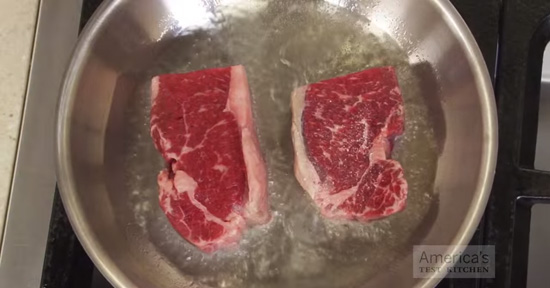
Perhaps you’ve been taught to take your steaks out of the freezer and let them thaw overnight in the fridge before cooking. This is wrong, according to Cook’s Illustrated Senior Editor Dan Souza. In a side-by-side experiment for America’s Test Kitchen, Souza finds that frozen meat takes a bit longer to cook than the thawed variety. But, the quality of the finished product is so much better. In the video below, Souza demonstrates how to properly freeze the meat and later prepare it straight from the freezer. It’s not the same as cooking with fresh beef, mind you, but it’s quite possiby the next best thing.

Source…

Cooking Frozen Steaks