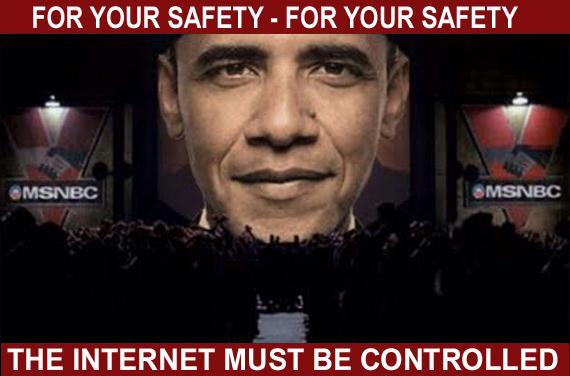
Obama envies Russia, China and North Korea’s ability to control the internet. Those that think this is ridiculous need only look at how the Department Of Justice, the IRS and other government agencies have been used to target and harass opponents of Obama’s far left policies.
The Federal Communications Commission’s decision Thursday to regulate the Internet as a public utility is a depressing moment for American innovation and economic liberty. The FCC is grabbing political control over a vibrant market that until now has been driven by inventors and consumers. Welcome to the Obamanet.
President Obama demanded this result in a November speech, and FCC Chairman Tom Wheeler and Democrats Mignon Clyburn and Jessica Rosenworcel have now dutifully voted to apply last century’s monopoly telephone rules to Internet service providers. They have in the process made a mockery of the agency’s supposed independence.
The rules are ostensibly to prevent Internet companies from blocking customer access to particular websites or slowing down service. But the FCC has presented no evidence that this is occurring, so the power grab is being justified by some theoretical future harm.
By the way, the FCC hasn’t released the text it has now approved as a final rule, which according to dissenting Republican Commissioner Ajit Pai runs to more than 300 pages. It’s not clear when the public will be permitted to see what Washington has done, and the normal comment period has been bypassed on a plan that is vastly different than what Mr. Wheeler has previously proposed.
Meantime, Mr. Wheeler will exercise what FCC lawyers call “editorial privileges,” allowing him to craft his arguments after reading the two dissents. Taxpayers might prefer that regulators analyze the pros and cons before voting to impose something on the whole country, and we hope judges feel the same way when the rules are challenged in court.
But based on an FCC summary, it’s clear that the agency has done administratively what Congress has always refused to do: make the old telephone and broadcasting overseer the general regulator of the Internet. Providers of broadband services will be barred from employing any “unjust or unreasonable practices,” whatever FCC bureaucrats decide those words mean. The FCC release also makes clear that government attorneys—not engineers—will decide what “reasonable network management” is.
And while “net neutrality,” the fuzzy concept used to justify these rules, was originally sold as a way to ensure that consumers are treated well, the rules will go well beyond those customers. Digital communications networks that exchange Internet traffic will also have to be “just and reasonable” with each other. The bureaucrats will exercise their discretion to define those words case-by-case, always listening to the best-paid lobbyists.
It’s hard to imagine a more just and reasonable market than today’s Internet. According to the website DrPeering, which tracks the agreements among communications companies to move information, the price of moving data across the Internet has been falling roughly 30% a year since the late 1990s. That collapsing cost per bit is a big reason Internet usage has skyrocketed. Consumers downloading huge volumes of video are paying bills not much different than when they were mainly visiting static websites.