Shanghai: The Birthplace of the Red Underworld

 Conspiracy, Featured, Political  Comments Off on Shanghai: The Birthplace of the Red Underworld
Nov 182025
 

The Red Syndicate – Part 1
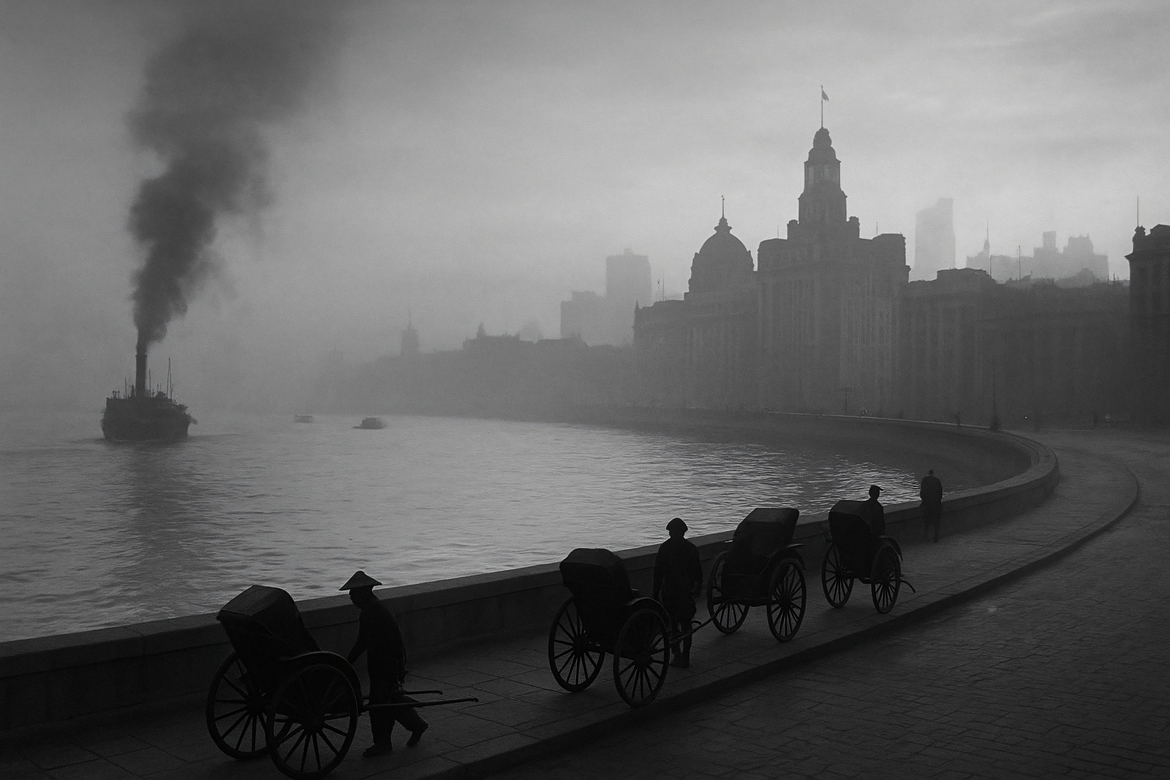
In the 1920s, Shanghai was the richest and dirtiest city in Asia, a place where foreign empires ruled the skyline and Chinese gangsters ruled the streets. This is where the story of modern Chinese power begins, not in Beijing’s palaces but in the backrooms of the Green Gang, where opium smoke and revolution mixed in the same air.

At dawn, Shanghai does not wake so much as stir, like something enormous turning in its sleep. In the gray light, the Huangpu River looks metallic, coiling through a forest of chimneys and domes. Steam whistles from the docks. Bells ring from the Bund’s banks. Foreign flags hang limp in the wet air. The city smells of coal smoke, sweat, and spilled opium.

In 1920 Shanghai was the richest, dirtiest, and most divided city in Asia. Britain, France, America, and Japan had carved it into “concessions,” each a small colony run by its own police and courts. Chinese authorities ruled only the Native City, and even there, power flowed through gangs and brokers instead of magistrates. It was capitalism without conscience, imperialism without order, a place where every vice could be purchased and every principle betrayed.


The Marketplace of Vice

The engine of this chaos was the Green Gang, a secret brotherhood that had evolved from 19th-century boatmen’s guilds into the most sophisticated criminal enterprise in the East. Its bosses, Du Yuesheng, Huang Jinrong, and Zhang Xiaolin, ran opium dens, gambling halls, and brothels by the thousands. They owned warehouses, docks, and banks. Even the French police captain dined at Du’s mansion.

Du Yuesheng, known across the city as Big Ears Du, embodied the new Shanghai elite: part gangster, part patriot, part financier. He dressed in tailored Western suits, gave to charities, and kept a private army larger than the municipal police. When he crossed the Bund, rickshaw drivers stopped mid-stride. In a city where law was for sale, Du Yuesheng was the highest bidder.

But Du was more than a criminal; he was a connector. Between the foreign powers who ruled the concessions and the Chinese warlords who ruled the hinterland, there yawned a gap of language, culture, and trust. The Green Gang filled it. Its enforcers collected debts, laundered money, and smuggled everything from opium to weapons. It was the oil in Shanghai’s economic engine and the poison in its bloodstream.


Revolution in the Backrooms

At the same time, another underground was forming in the narrow lanes behind the textile mills. Students and intellectuals met in teahouses and print shops to discuss Marx and Lenin. They called themselves Communists, though their organization was fragile, their literature mimeographed, and their funds almost nonexistent.

One of the movement’s drifters, a Hunanese librarian named Mao Zedong, passed briefly through this world of smoke and slogans. He was not yet a leader but an observer, watching how Shanghai’s unions, gangsters, and merchants negotiated power. The young radicals believed they were building a movement of moral purity. The city around them taught the opposite lesson: that ideals survive only when backed by money and muscle.

The first cell meetings of the Chinese Communist Party took place in a small house on Rue Wantz in the French Concession in 1921. Outside that modest room, the Green Gang controlled the streets, the docks, and the police. The Party’s founders dreamed of cleansing China’s corruption, yet their revolution was born in its capital.


Chiang Kai-shek and the Gangsters

The line between politics and organized crime blurred completely during the 1920s. Chiang Kai-shek, a military officer with nationalist ambitions, recognized that whoever commanded Shanghai’s gangs commanded Shanghai itself. He forged a personal alliance with Du Yuesheng and Huang Jinrong. In return for protection and funding, the gangsters received legitimacy and access to state contracts. They supplied strikebreakers, assassins, and intelligence. When Chiang needed to seize Shanghai from his rivals, Green Gang gunmen rode at the front of his columns.

Their partnership climaxed in April 1927, when Chiang ordered a purge of the city’s Communist unions. Green Gang enforcers, armed with pistols and bamboo cudgels, swept through working-class neighborhoods. Within days, thousands of suspected leftists were executed or disappeared. The massacre broke the fragile alliance between the Nationalists and Communists and cemented the model of gangster politics. Violence outsourced, loyalty purchased, deniability preserved.


Lessons in Power

The Communists learned from the catastrophe. Forced underground, they built their own secret networks, borrowing the gangs’ methods of discipline and compartmentalization. Cells replaced families; code words replaced handshakes. The revolutionaries copied the syndicate’s structure even as they condemned its greed. When Mao later forged his own movement in the countryside, he enforced the same lessons Shanghai had taught him: control the flow of money, information, and fear.

Meanwhile, Du Yuesheng became one of the richest men in China, presiding over a city that was both the jewel and the ulcer of the nation. His opium empire stretched from Burma to Manchuria. Yet he also served on civic committees, funded schools, and was decorated by the Nationalist government for “public service.” To foreigners, he was the face of modern China, cosmopolitan, pragmatic, and utterly transactional.


City of Contradictions

By the 1930s, Shanghai glowed like a fever dream. Jazz drifted from dance halls while refugees slept under bridges. American millionaires built Art Deco mansions next to alleys filled with beggars. The Green Gang controlled half the city’s police, the French controlled the rest, and everyone else paid protection. Opium smoke wafted through parlors where revolutionaries plotted over cheap tea.

Here was China’s future in miniature: ideology colliding with commerce, foreign power intertwined with native corruption. When Japanese troops invaded in 1937, Shanghai’s underworld scattered, but its spirit endured. The logic of the Green Gang, profit through politics and loyalty through fear, would outlive the city’s gilded age and seep into the fabric of the new state that emerged after 1949.


The Legacy of Shanghai

Every great empire begins in a marketplace. For modern China, that marketplace was Shanghai between the wars, a city where the boundaries between state, business, and crime dissolved. The alliances forged there between soldiers, bureaucrats, and gangsters became the DNA of power that still defines Chinese politics: opaque, transactional, and ruthlessly pragmatic.

The men who ruled Shanghai taught a generation of revolutionaries that corruption was not a weakness but a tool, and that moral authority could coexist with moral compromise. The Party that would one day claim to have eradicated vice was born in a city run by vice lords. The state that promised to end exploitation learned its first lessons from the exploiters.

When the Communists eventually triumphed, they did not destroy the underworld. They nationalized it.


Next in the Series

Part 2 – The Green Gang and the Revolution
How Shanghai’s gangsters became kingmakers, how the Kuomintang and early CCP mirrored each other’s corruption, and how a generation of revolutionaries turned the lessons of the streets into the machinery of state power.


Source Notes

  • Brian G. Martin, The Shanghai Green Gang: Politics and Organized Crime, 1919–1937 (University of California Press, 1996)
  • Frederic Wakeman Jr., Policing Shanghai, 1927–1937 (University of California Press, 1995)
  • Jonathan Fenby, Shanghai: The Rise and Fall of a Decadent City (Ebury Press, 2008)
  • Rhoads Murphey, Shanghai: Key to Modern China (Harvard University Press, 1953)
  • Primary materials: Shanghai Municipal Police archives; period newspapers from the International Settlement.

© 2025 The Red Syndicate Investigations / Common Sense Evaluation. All rights reserved.
 

Why They Want You Ashamed of America

 Conspiracy, Featured, Political  Comments Off on Why They Want You Ashamed of America
Aug 262025
 

A breakdown of cultural demoralization tactics and why national pride is essential to preserving freedom.
Why They Want You Ashamed of America – Uncover tactics eroding American pride & why national unity defends freedom. Reject shame, embrace constructive patriotism.

Think about the last time you watched the news or scrolled through social media. How often did you hear about America’s failures compared to its successes? Wars, political scandals, systemic injustices—these stories dominate the conversation. But what happens when the same narratives repeat endlessly, while the quieter, everyday victories of communities, innovators, and ordinary people go ignored?

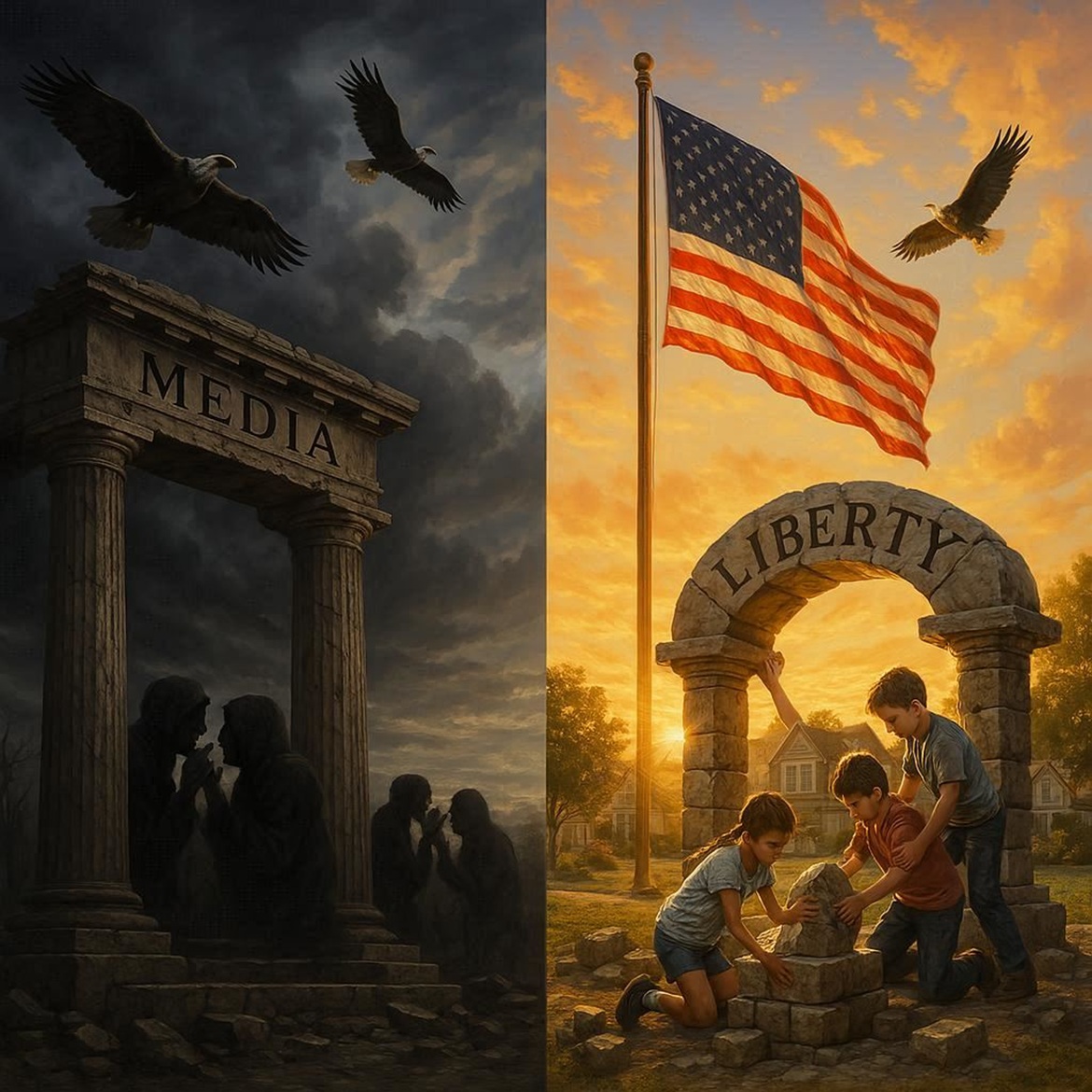
It’s no accident. When institutions—media, schools, even entertainment—focus disproportionately on flaws, they shape a worldview where shame overshadows pride. Over time, this conditions people to distrust the foundations of their own society. Historians once taught students to analyze both triumphs and mistakes. Now, textbooks often reduce complex figures like Thomas Jefferson or Woodrow Wilson to their worst deeds, erasing their contributions to democracy. The goal isn’t balanced debate. It’s to make you question whether anything about America deserves admiration.

Art and culture play a role, too. Museums revise exhibits to emphasize oppression over resilience. Movies frame the American Dream as a myth, not a flawed but aspirational ideal. This isn’t about honest critique—it’s about rewriting the story of who we are.


Rewriting History, One Story at a Time

History isn’t static. It’s a battleground of ideas. For example, consider how the Founding Fathers are discussed today. Yes, many owned slaves—a horrific reality that should never be minimized. But focusing only on that fact, while ignoring their radical experiment in self-governance, creates a lopsided narrative. It frames the entire American project as corrupt from the start, rather than a work-in-progress shaped by both noble ideals and human failings.

The same pattern repeats with events like World War II or the Civil Rights Movement. These moments are recast as hypocritical power grabs, rather than hard-fought struggles to expand freedom. When a Vietnam veteran is remembered solely for his role in a controversial war—not his bravery or sacrifice—the message is clear: Your heritage is shameful. Your heroes aren’t heroes.

This isn’t education. It’s demolition.


The Weaponization of Guilt

Guilt is a powerful tool. It paralyzes. It silences. And right now, it’s being leveraged in ways that go far beyond holding individuals accountable. Have you noticed how terms like “privilege” or “colonialism” aren’t just used to explain inequality? They’re brandished like moral verdicts, demanding that entire groups apologize for crimes they didn’t commit.

Ask yourself: Why are kids in middle school taught to “deconstruct” their racial identity before they’ve read the Constitution? Why do corporations suddenly champion social justice while dodging taxes or exploiting overseas labor? It’s not about fairness. It’s about convincing you that America’s past is so irredeemable, its future must be dismantled.

Guilt breeds complacency. If you believe your nation is inherently wicked, why defend it? Why push for reform? You’ll surrender to whoever claims the mantle of “progress.”


Why Pride Isn’t a Dirty Word

Critics call national pride dangerous. They say it fuels jingoism or ignores injustice. But strip away pride, and what’s left? A country with no compass. Pride isn’t about blind loyalty—it’s about believing in the values that could unite us: equality under the law, free speech, the right to self-determination.

Take the Civil Rights Movement. Activists like Martin Luther King Jr. didn’t reject America. They appealed to its founding principles, arguing the nation had strayed from its own promise. Their pride in what America could be gave their demands moral force. Without that shared belief in progress, dissent becomes cynical, not constructive.

Pride also fuels resilience. During the Great Depression, families survived by leaning on community and ingenuity. Apollo 11 didn’t happen because engineers were ashamed of their country—they were inspired to prove what it could achieve.


The Playbook of Division

Divide and conquer. It’s the oldest strategy in the book. Today, it looks like this: Reduce people to categories—race, gender, politics. Pit them against each other. Amplify the loudest, angriest voices on every side. Suddenly, no one’s debating ideas; they’re defending tribes.

Media algorithms feed this. Controversy gets clicks. Nuance doesn’t. Ever notice how social media platforms push content that outrages you? Or how politicians suddenly care about niche cultural issues right before elections? Chaos distracts. When citizens see neighbors as enemies, they stop asking tough questions about who’s really in charge.

History shows unified societies thrive. The New Deal. The Interstate Highway System. These weren’t built by fractured populations. They required collective buy-in. Without it, big problems—like inflation or border security—get stuck in rhetorical wars, never solved.


How to Push Back

First, question the narrative. If a news story or viral post makes you feel hopeless about America, dig deeper. Who benefits from that hopelessness? Follow the money. Follow the power.

Second, reclaim your history. Visit a local monument. Read the Declaration of Independence. Talk to a WWII veteran. Understand that every nation has dark chapters, but America’s story is unique because its people constantly fight to live up to their own ideals.

Finally, practice constructive pride. Celebrate what works. Fix what doesn’t. Support schools that teach critical thinking, not self-loathing. Vote for leaders who inspire instead of manipulate.

National pride isn’t about waving a flag. It’s about refusing to let anyone—foreign or domestic—define your country’s worth for you. The moment we stop believing in America’s capacity for good is the moment freedom loses.

Don’t hand them that victory.

The Part of History

 Featured, Political, View Point  Comments Off on The Part of History
Jul 182025
 

This is the part of history that makes school kids ask, why didn't anyone do anything to stop them?


This is the part of history that makes school kids ask, why didn’t anyone do anything to stop them?

A History Lesson

 Featured, Political, View Point  Comments Off on A History Lesson
Mar 202025
 

Those who don't learn from history are doomed to repeat it. Those who prevent history from being taught fully intend to repeat it.


Those who don’t learn from history are doomed to repeat it.

Those who prevent history from being taught fully intend to repeat it.

Times the Government Lied: Lessons from the Past They Don’t Want You to Remember

 Conspiracy, Featured, Political  Comments Off on Times the Government Lied: Lessons from the Past They Don’t Want You to Remember
Jan 282025
 

Times the Government Lied - Explore the hidden truths of history as we uncover moments when governments lied and the lessons we can't afford to forget

History is riddled with examples where governments have bent the truth, omitted crucial facts, or outright lied to their citizens. These moments often start small, with promises of protection or prosperity, but unravel into events that reveal the cracks in trust between the governed and those who govern. If history is a mirror, then these lessons are warnings—and it’s up to us to pay attention.

The Gulf of Tonkin Incident

In 1964, the United States government reported that North Vietnamese forces attacked a U.S. naval vessel in the Gulf of Tonkin. This event was used to justify escalating American involvement in Vietnam, a conflict that would last over a decade and claim millions of lives.

Years later, declassified documents revealed that the incident was, at best, grossly exaggerated and, at worst, fabricated entirely. The second attack, which was reported as definitive, never happened. Yet, it became the foundation for a war that divided a nation and led to untold suffering.

The lesson? Public trust was manipulated to serve larger agendas. This story underscores how governments may sometimes exploit fear to achieve political or military goals.

Operation Northwoods

Few people know about Operation Northwoods, a Cold War-era plan proposed by the U.S. Department of Defense. The idea was to stage fake terrorist attacks on American soil and blame them on Cuba, creating a pretext for military action.

Fortunately, the plan was never approved, but its existence raises troubling questions. If such ideas were proposed once, could they be considered again? More importantly, what else has been swept under the rug?

This episode reminds us to question narratives that seem too convenient or align too perfectly with political objectives.

The Tuskegee Syphilis Experiment

From 1932 to 1972, the U.S. Public Health Service conducted a study on 600 African American men in Alabama, many of whom had syphilis. These men were told they were receiving free healthcare, but in reality, they were left untreated, so researchers could study the progression of the disease.

When the experiment was exposed, it became a symbol of the deep betrayal of public trust. The fallout led to changes in research ethics and compensation for the survivors, but the scars remain.

This case illustrates how easily vulnerable populations can be exploited under the guise of “scientific progress.” It’s a sobering reminder that oversight and transparency are not just ideals—they’re necessities.

The Watergate Scandal

Sometimes the lies don’t start big. Sometimes they begin as small deceptions meant to cover up minor misdeeds. The Watergate scandal, which led to the resignation of President Richard Nixon, started with a break-in at the Democratic National Committee headquarters.

The cover-up that followed was the real scandal. When the truth came out, it revealed a pattern of abuse of power, illegal activities, and efforts to undermine democratic processes.

Watergate serves as a reminder that no one, not even the most powerful, is above scrutiny. It also shows how lies, no matter how small, can snowball into consequences that shake entire systems.

Lies About Weapons of Mass Destruction

In the lead-up to the Iraq War in 2003, the U.S. government presented intelligence claiming Iraq possessed weapons of mass destruction (WMDs). These claims were used to justify military action.

When no such weapons were found, it became clear that the intelligence was either deeply flawed or manipulated. The war destabilized the region, cost trillions of dollars, and led to a loss of countless lives.

The takeaway here is that governments may act on incomplete information or spin narratives to fit their objectives. It’s crucial to demand evidence, ask hard questions, and hold leaders accountable before decisions are made that cannot be undone.

The Pentagon Papers

In 1971, a whistleblower leaked classified documents showing that the U.S. government had misled the public about the Vietnam War. The Pentagon Papers revealed that leaders had privately acknowledged the war was unwinnable while publicly assuring citizens of imminent victory.

This deception led to widespread protests and a further erosion of trust in government. The incident highlights the importance of transparency and the role of whistleblowers in exposing hidden truths.

What These Lies Teach Us

History shows us that lies, whether told to protect an image, justify a war, or cover up mistakes, have real consequences. They erode trust, destabilize societies, and often harm the very people governments claim to serve.

The question isn’t whether governments will lie—it’s when. And when they do, it’s up to informed citizens to push back, ask questions, and demand accountability.

Governments wield incredible power, but that power comes from the people. The more we educate ourselves about the past, the better equipped we are to spot patterns and resist manipulation.

How to Stay Vigilant

  1. Question Everything: Just because something is officially stated doesn’t mean it’s the whole truth. Look for independent sources, scrutinize claims, and dig deeper.
  2. Follow the Money: Many decisions, policies, and narratives can be traced back to financial or political interests. Understanding these motivations can offer a clearer picture of why certain stories are told.
  3. Support Whistleblowers: Individuals who risk everything to expose corruption or lies deserve our support. Their courage often brings hidden truths to light.
  4. Learn From History: The events above are not isolated incidents. They are part of a larger pattern. Understanding this can help us recognize the signs when it happens again.

The Bottom Line

Governments are not infallible, and history proves that they can and do lie. But the antidote to deception is knowledge. By staying informed and questioning the narratives we’re presented with, we can hold those in power accountable and protect the principles that matter most.

Because if history teaches us one thing, it’s this: the truth doesn’t stay buried forever—it’s just waiting for someone to uncover it.