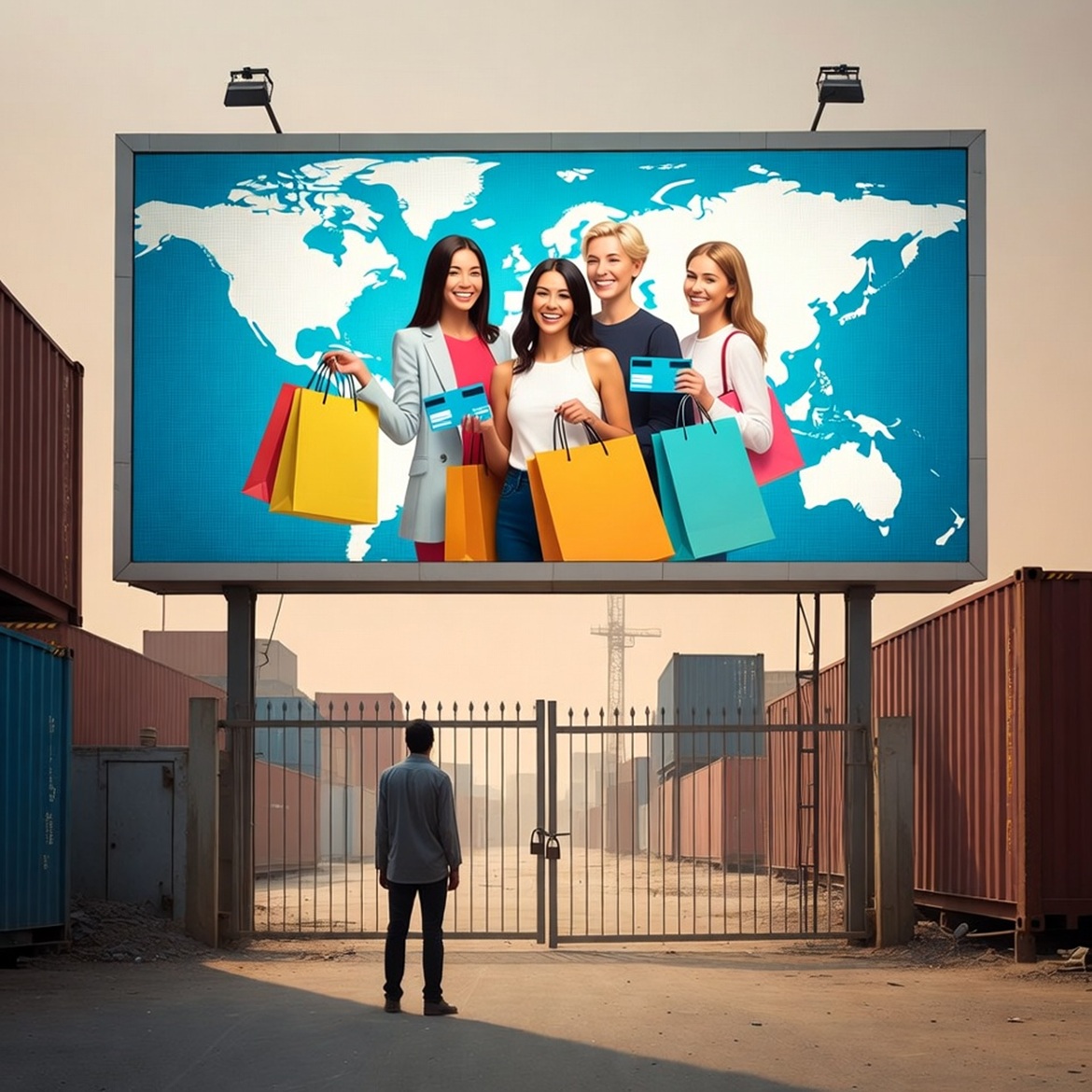
Imagine a world where factories stand empty, jobs vanish into thin air, and the only role left for most people is to buy things. This isn’t some far-off dream or nightmare. It’s the quiet shift happening right now under the banner of globalism. For years, we’ve heard promises of a connected world bringing prosperity to all. But peel back the layers, and you see a different picture: a system designed to turn nations into giant shopping malls, where workers become obsolete and consumers rule the day. In this article, we’ll explore how this endgame plays out, why it’s gaining speed, and what it means for you and your family.
What if the promise of endless growth hides a plan to strip away our independence?
Globalism started with good intentions, or so they say. It was about linking countries through trade, sharing ideas, and lifting everyone up. But over time, it morphed into something else. Powerful interests pushed for open borders not just for goods, but for labor and capital too. The result? A race to the bottom where jobs move to places with the cheapest workers, leaving behind hollowed-out towns and frustrated families.
Take manufacturing as an example. Once the backbone of strong economies, it’s now outsourced to distant lands. Why pay fair wages here when you can find someone overseas willing to work for pennies? This isn’t about efficiency; it’s about control. When production leaves, so does the power of the people who build things. We’re left dependent on faraway suppliers, vulnerable to disruptions like we’ve seen in recent years with supply chains breaking down.
The Hidden Agenda Behind Free Trade Deals
Free trade sounds great on paper. It promises lower prices and more choices. But look closer at these massive agreements signed by governments around the world. They’re often crafted in secret rooms by unelected officials and corporate giants. These deals don’t just open markets; they rewrite rules to favor big players over small ones.
For instance, protections for local industries get stripped away. Small farms can’t compete with subsidized imports, so they shut down. Family-owned businesses fold under the pressure of cheap foreign goods. And who benefits? The same handful of multinational companies that dominate everything from food to tech. Governments go along with it, claiming it’s for the greater good. But ask yourself: whose good? Not the worker who’s now flipping burgers instead of building cars.
When jobs cross borders, dreams stay behind, trapped in empty factories.
These deals also push for intellectual property rules that lock up knowledge. Innovations that could help local economies get patented and controlled by outsiders. It’s a clever way to ensure that real wealth creation stays in the hands of a few. Meanwhile, the rest of us are nudged toward service jobs that don’t produce anything tangible. Think retail, delivery, or gig work. These roles keep the economy humming, but they don’t build lasting security.
Turning Citizens into Lifelong Shoppers
At the heart of this shift is a simple idea: make everyone a consumer first and foremost. Why? Because consumers drive demand, and demand keeps the money flowing upward. Governments and big businesses encourage this through endless advertising, easy credit, and policies that prioritize spending over saving.
Remember when saving money was a virtue? Now, it’s all about buy now, pay later. Credit cards, loans, and apps make it simple to spend what you don’t have. This creates a cycle where people work just to consume, never building real wealth. And when jobs dry up due to automation or offshoring, what’s left? Government handouts, perhaps, but those come with strings attached. You’re no longer a producer contributing to society; you’re a dependent, reliant on the system.
Education plays a role here too. Schools focus more on preparing kids for a “global economy” than teaching practical skills. Critical thinking takes a back seat to compliance. The goal? A workforce that’s flexible, meaning disposable. Train them to adapt to whatever low-wage job is available, but don’t empower them to challenge the status quo.
In a world of endless consumption, true freedom slips away like sand through your fingers.
Look at the rise of e-commerce giants. They promise convenience, but at what cost? Local stores close, communities weaken, and all the profits funnel to distant headquarters. These companies don’t just sell products; they collect data on your every move, predicting and shaping your desires. It’s a subtle form of control, making sure you keep buying to fill the void left by meaningful work.
Governments: Partners or Pawns in the Game?
You might think governments would step in to protect their people. After all, they’re supposed to represent us. But time and again, they side with global interests over national ones. Why? Because leaders get swayed by lobbyists, campaign funds, and the allure of international prestige.
Take immigration policies. Open borders aren’t just about compassion; they’re about flooding the labor market to keep wages low. Skilled workers from abroad compete with locals, driving down pay and benefits. Governments tout diversity and growth, but the real winners are employers who cut costs. And when tensions rise, they blame the people, not the policies.
Environmental rules get twisted too. Global agreements on climate sound noble, but they often burden small nations while letting big polluters off the hook. Factories move to places with lax standards, and the cycle continues. It’s not about saving the planet; it’s about reshaping economies to fit a consumer-driven model.
Trust in leaders fades when their actions speak louder than words.
Even welfare systems evolve to support this vision. Instead of investing in job creation, governments offer basic income trials or subsidies that encourage staying home. It sounds helpful, but it risks creating a class of permanent consumers, detached from production. Independence erodes, and reliance on the state grows.
The Human Cost: Stories from the Front Lines
This isn’t abstract theory. Real people feel the pain. In rust belt towns, once-thriving communities now struggle with unemployment and despair. Fathers who built machines now drive for ride-sharing apps, barely making ends meet. Mothers juggle multiple gigs, with no time for family.
Health suffers too. Stress from financial insecurity leads to higher rates of illness and shorter lives. Mental health crises spike as purpose fades. When work loses meaning, so does life. And inequality widens: the top 1% amass fortunes while the middle class shrinks.
Young people face the brunt. Saddled with debt from education that doesn’t lead to stable jobs, they delay starting families or buying homes. The dream of upward mobility feels like a relic from the past.
Behind every statistic is a story of lost potential and broken promises.
Yet, amid the gloom, sparks of resistance emerge. Communities band together to support local businesses. People learn trades that can’t be outsourced, like plumbing or farming. It’s a reminder that we don’t have to accept this path.
Breaking Free: Steps Toward a Better Future
So, what can you do? Start by questioning the narrative. Don’t take official stories at face value. Seek out independent voices and dig into the details of policies affecting your life.
Support local economies. Buy from small shops, eat at family restaurants, and invest in community projects. This builds resilience and keeps money circulating where it matters.
Learn skills that endure. Focus on hands-on abilities like gardening, repairing, or coding for real-world problems. These can’t be easily replaced or shipped away.
Advocate for change. Vote for leaders who prioritize national interests over global ones. Push for fair trade that protects workers, not just profits.
Finally, build networks. Connect with like-minded people to share ideas and resources. Strength comes from unity, not isolation.
Change begins when individuals refuse to play by rigged rules.
In the end, globalism’s endgame aims for a world of passive consumers, stripped of the dignity of work. But we have the power to rewrite the script. By reclaiming our roles as producers and citizens, we can forge a future that’s truly prosperous for all. It’s time to act before it’s too late.