A Marxist system is recognized by the fact that it spares the criminals and criminalizes political opponents.

If you’ve ever felt like something isn’t quite right about how decisions are made in the United States, you’re not alone. From left to right, Americans have a nagging suspicion that the promises of “We the People” ring a little hollow in practice. The banners of democracy wave high, but beneath the surface, is there something else pulling the strings?
Let’s start with a fact that many overlook: America is not a democracy. It’s a Constitutional Republic. That distinction matters. A democracy operates on majority rule, where the 51% can dictate terms to the 49%. In a Constitutional Republic, the rights of the individual are safeguarded from the whims of a majority, thanks to the rule of law. So why do so many people—especially those on the Left—insist on calling America a democracy?
It might not be a simple mislabeling. Some argue that this persistent framing serves a purpose: to concentrate power in the hands of a few while cloaking it in the language of collective choice. It’s not just semantics; it’s a battle over the narrative of what America is and should be.
The Founding Fathers didn’t just stumble upon the idea of a Constitutional Republic—they chose it deliberately. They understood the dangers of unrestrained democracy. James Madison warned in The Federalist Papers about the tyranny of the majority. Thomas Jefferson spoke of the need for eternal vigilance to preserve liberty.
Fast-forward to today, and those warnings feel more relevant than ever. Think about it: How often do you hear politicians, pundits, and media personalities lamenting “threats to democracy”? It’s the rallying cry of our time. But what kind of democracy are they defending?
When the will of the majority can override constitutional safeguards, it stops being a system of freedom and becomes one of control. The problem isn’t democracy per se—it’s the illusion of democracy.
Ask yourself this: Do you feel like your vote matters? Really matters? Every four years, millions of Americans head to the polls, casting their ballots for candidates who promise change. Yet, year after year, the same problems persist. Why?
The answer might lie in the idea of a “shadow government”—a concept suggesting that real power doesn’t rest in the hands of elected officials but in unelected bureaucracies, corporate elites, and global institutions. It’s not the ballot box that dictates policy; it’s the boardroom.
Take, for example, the revolving door between government and industry. High-ranking officials from regulatory agencies often land lucrative jobs in the private sector, and vice versa. This creates a system where the fox guards the hen house. Policies that seem to benefit the public often favor a select few, leaving ordinary Americans wondering whose interests are being served.
The media plays a critical role in shaping perceptions, and that’s not by accident. Today’s media landscape is concentrated into the hands of just a few powerful corporations. With such control, narratives can be tightly managed, dissenting voices sidelined, and public opinion swayed to align with specific agendas.
How often do we see major stories buried or re-framed? For instance, issues like lobbying, government overreach, or corporate monopolies rarely get the spotlight they deserve. Instead, we’re fed an endless stream of sensationalism designed to keep us distracted and divided.
If democracy is supposed to be about an informed populace making choices, what happens when the information we’re given is carefully curated?
One of the most troubling aspects of modern American politics is the illusion of choice. Red or blue. Left or right. Democrat or Republican. Yet, no matter which side claims victory, the trajectory of the nation rarely changes in meaningful ways. Wars continue, debt increases, and liberties erode.
This isn’t about partisan politics; it’s about a system that seems designed to keep the public fighting over scraps while the real decisions are made behind closed doors. The two-party system often feels like two sides of the same coin, both beholden to the same interests that exist far beyond the voting booth.
The good news is that all is not lost. America’s strength lies in its foundations, which were designed to withstand the corruption of power. The Constitution is more than just an old document—it’s a safeguard against tyranny, provided we’re willing to fight for it.
One step toward reclaiming control is recognizing the importance of decentralization. The Founders believed in limiting federal power and empowering states and communities. This principle is as relevant today as it was in 1776.
Another is demanding accountability. Transparency in government, reforming lobbying practices, and breaking up media conglomerates would go a long way in restoring trust. These changes won’t happen overnight, but the first step is acknowledging the problem.
America’s identity as a Constitutional Republic is not just a historical detail—it’s a blueprint for freedom. But freedom isn’t guaranteed. It requires vigilance, participation, and the courage to question what we’re told.
Is American democracy an illusion? Perhaps the better question is: Who benefits when we believe it’s real? If the answer leads you to look deeper, you’re already on the path to uncovering the truth.
The choice is ours: Will we settle for the illusion, or will we demand the Republic that was promised?
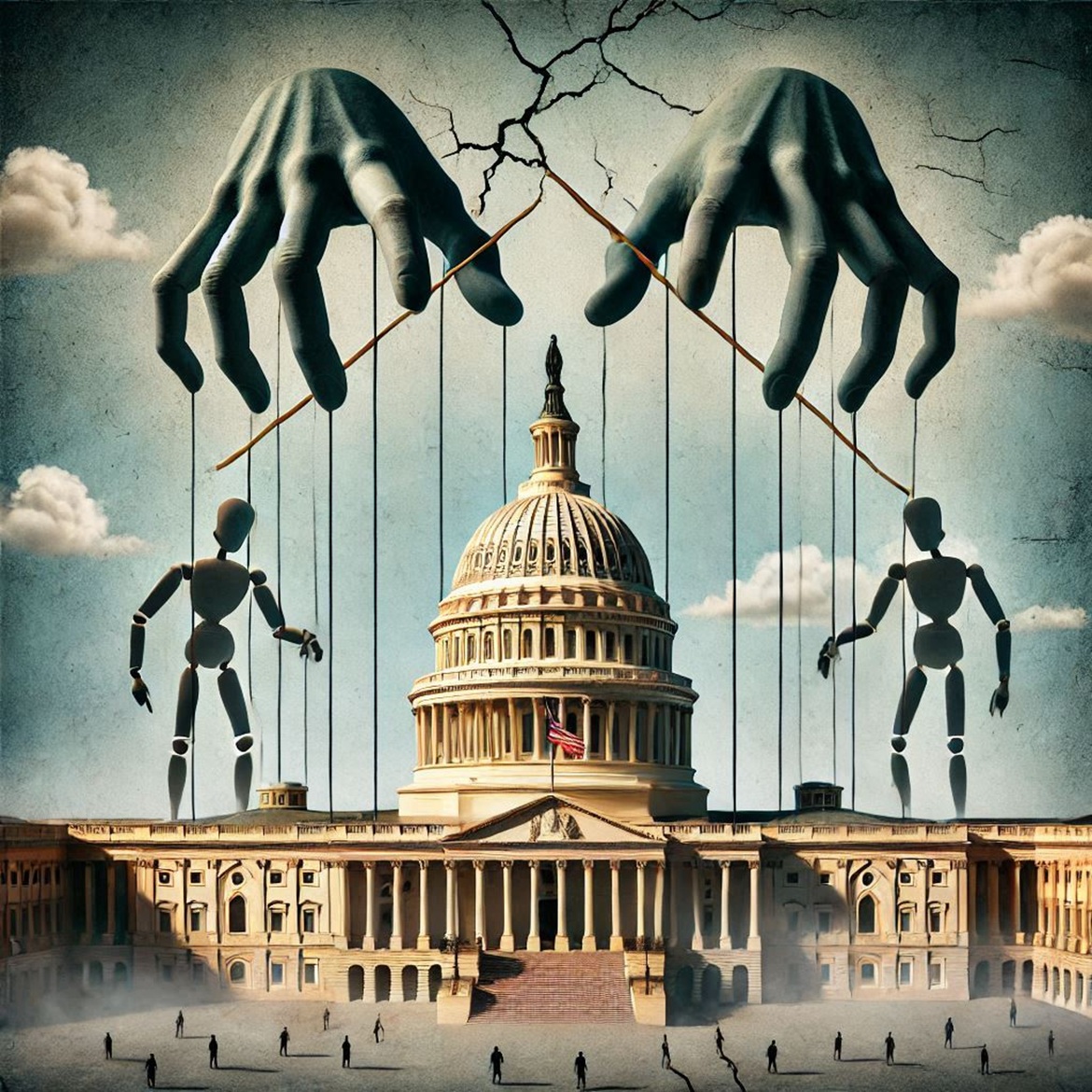
In the halls of power, where national policies are crafted and debated, most of us assume our elected officials are hard at work representing the will of the people. But what if that assumption is flawed? What if, instead, the real decisions are being influenced—or outright dictated—by unseen forces with their own agendas? The influence of lobbyists on national policy raises serious questions about who is really in charge of shaping our nation’s future.
On the surface, lobbying sounds innocent enough. It’s simply the act of influencing decisions made by officials in government. Lobbyists represent specific interests, ranging from industries like pharmaceuticals and energy to unions, nonprofits, and other organizations. They meet with lawmakers, provide research, and advocate for policies that align with their employers’ or clients’ goals.
But here’s the catch: lobbying isn’t just about presenting facts or making compelling arguments. It’s about power. And often, it’s about money.
Lobbyists operate in a world where financial resources can amplify a voice so loudly that it drowns out everything else—including the voices of everyday citizens. When a corporation or special interest group pours millions into lobbying efforts, they can gain access to lawmakers that ordinary people could never dream of. They fund campaigns, host lavish fundraisers, and offer promises of post-political career opportunities. All of this creates a dangerous imbalance: the interests of a well-funded minority can overshadow the needs of the majority.
One of the clearest signs of lobbying’s outsized influence is the sheer amount of money involved. In the United States alone, companies and organizations spend billions of dollars annually on lobbying efforts. To put this into perspective, in 2023, lobbying expenditures topped $4 billion—an all-time high.
This isn’t a small side activity; it’s a full-blown industry. Lobbying firms are staffed with former lawmakers, high-level aides, and policy experts who know the system inside and out. They aren’t just influencing policy—they’re shaping it.
Take, for example, the pharmaceutical industry. In 2022, drug companies spent over $375 million on lobbying. That investment bought them access to lawmakers as they debated drug pricing legislation. The result? Policies that, more often than not, favor the industry’s bottom line over public health.
And it’s not just Big Pharma. Oil and gas, tech giants, defense contractors, and financial institutions all have deep pockets and an agenda. Their interests are advanced through carefully targeted lobbying campaigns, leaving ordinary citizens to wonder: who’s representing us?
One of the most troubling aspects of lobbying is what’s known as the “revolving door.” This term describes the back-and-forth movement of individuals between government positions and lobbying jobs.
Here’s how it works: a senator or representative leaves office and immediately takes a high-paying job at a lobbying firm. Why? Because their insider knowledge, connections, and influence are worth a fortune. Alternatively, a lobbyist might join a government agency, where they can directly influence policy from the inside.
The revolving door creates a system where lines between public service and private gain blur. Lawmakers and bureaucrats, consciously or not, may start making decisions with an eye toward their next career move. This cozy relationship erodes trust in the system and raises questions about whose interests are really being served.
One of the least discussed but most shocking truths about lobbying is that lobbyists often draft legislation. That’s right—the laws that govern your life may have been written, in part or in whole, by people working for private interests.
Consider this scenario: a lobbying group presents a policy proposal to a legislator. Along with it, they offer pre-written language for the bill itself. For an overworked lawmaker or staffer, accepting this “help” can be tempting. After all, it saves time and effort.
But this convenience comes at a cost. When lobbyists draft legislation, they aren’t prioritizing public welfare. They’re looking out for their clients. And when lawmakers sign off on these bills, they’re essentially outsourcing their responsibility to represent the people.
The influence of lobbyists isn’t just a political issue—it’s a national crisis. When policy is dictated by special interests, the consequences ripple through every aspect of our lives.
The result is a system where the public pays the price, both literally and figuratively, for decisions made in smoke-filled back rooms.
The first step toward change is awareness. Understanding the outsized influence of lobbyists is essential for anyone who cares about the future of democracy. But awareness isn’t enough—we need action.
At its core, the issue of lobbying is about power: who has it, how it’s used, and who gets left behind. The current system, dominated by corporate interests, is eroding trust in government and leaving ordinary citizens feeling powerless.
But here’s the thing: power can shift. It starts with asking questions, challenging assumptions, and demanding accountability. The more we shine a light on the hidden mechanisms of influence, the harder it becomes for those mechanisms to operate in the shadows.
The fight for a government that truly represents the people is far from over. But it’s a fight worth having—because the stakes couldn’t be higher.