Shanghai: The Birthplace of the Red Underworld

 Conspiracy, Featured, Political  Comments Off on Shanghai: The Birthplace of the Red Underworld
Nov 182025
 

The Red Syndicate – Part 1
In the 1920s, Shanghai was the richest and dirtiest city in Asia, a place where foreign empires ruled the skyline and Chinese gangsters ruled the streets. This is where the story of modern Chinese power begins, not in Beijing’s palaces but in the backrooms of the Green Gang, where opium smoke and revolution mixed in the same air.

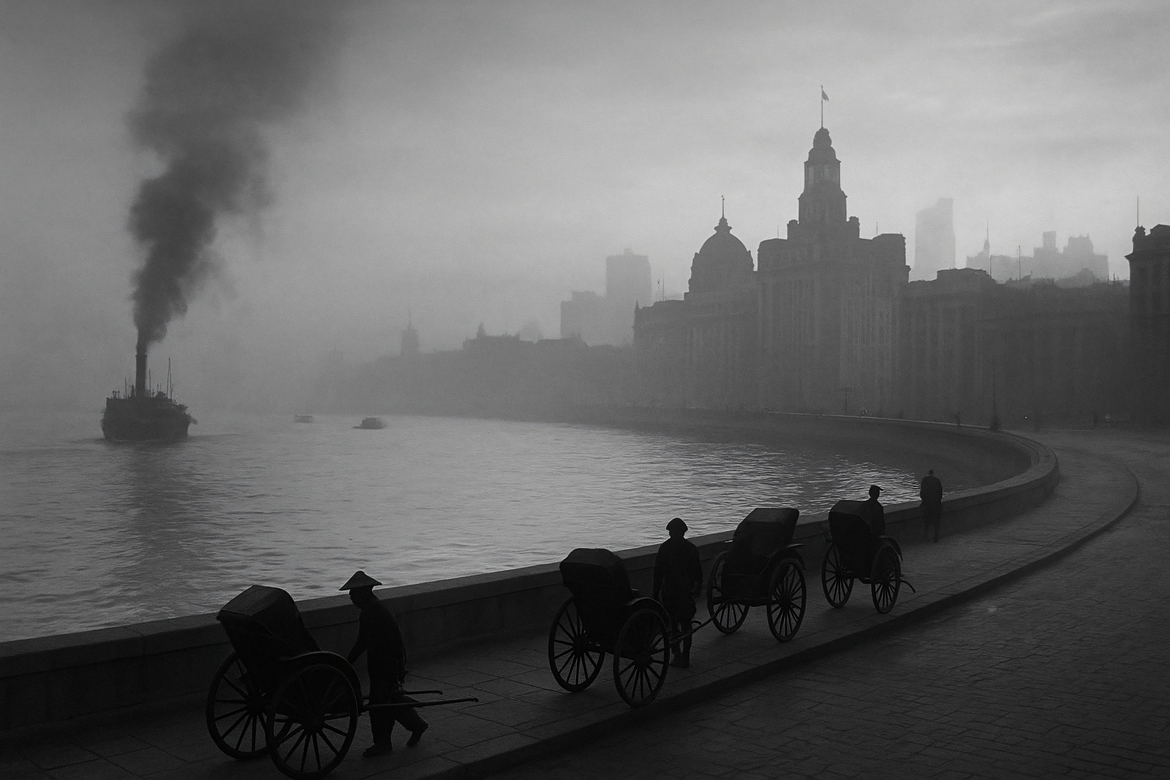
At dawn, Shanghai does not wake so much as stir, like something enormous turning in its sleep. In the gray light, the Huangpu River looks metallic, coiling through a forest of chimneys and domes. Steam whistles from the docks. Bells ring from the Bund’s banks. Foreign flags hang limp in the wet air. The city smells of coal smoke, sweat, and spilled opium.

In 1920 Shanghai was the richest, dirtiest, and most divided city in Asia. Britain, France, America, and Japan had carved it into “concessions,” each a small colony run by its own police and courts. Chinese authorities ruled only the Native City, and even there, power flowed through gangs and brokers instead of magistrates. It was capitalism without conscience, imperialism without order, a place where every vice could be purchased and every principle betrayed.


The Marketplace of Vice

The engine of this chaos was the Green Gang, a secret brotherhood that had evolved from 19th-century boatmen’s guilds into the most sophisticated criminal enterprise in the East. Its bosses, Du Yuesheng, Huang Jinrong, and Zhang Xiaolin, ran opium dens, gambling halls, and brothels by the thousands. They owned warehouses, docks, and banks. Even the French police captain dined at Du’s mansion.

Du Yuesheng, known across the city as Big Ears Du, embodied the new Shanghai elite: part gangster, part patriot, part financier. He dressed in tailored Western suits, gave to charities, and kept a private army larger than the municipal police. When he crossed the Bund, rickshaw drivers stopped mid-stride. In a city where law was for sale, Du Yuesheng was the highest bidder.

But Du was more than a criminal; he was a connector. Between the foreign powers who ruled the concessions and the Chinese warlords who ruled the hinterland, there yawned a gap of language, culture, and trust. The Green Gang filled it. Its enforcers collected debts, laundered money, and smuggled everything from opium to weapons. It was the oil in Shanghai’s economic engine and the poison in its bloodstream.


Revolution in the Backrooms

At the same time, another underground was forming in the narrow lanes behind the textile mills. Students and intellectuals met in teahouses and print shops to discuss Marx and Lenin. They called themselves Communists, though their organization was fragile, their literature mimeographed, and their funds almost nonexistent.

One of the movement’s drifters, a Hunanese librarian named Mao Zedong, passed briefly through this world of smoke and slogans. He was not yet a leader but an observer, watching how Shanghai’s unions, gangsters, and merchants negotiated power. The young radicals believed they were building a movement of moral purity. The city around them taught the opposite lesson: that ideals survive only when backed by money and muscle.

The first cell meetings of the Chinese Communist Party took place in a small house on Rue Wantz in the French Concession in 1921. Outside that modest room, the Green Gang controlled the streets, the docks, and the police. The Party’s founders dreamed of cleansing China’s corruption, yet their revolution was born in its capital.


Chiang Kai-shek and the Gangsters

The line between politics and organized crime blurred completely during the 1920s. Chiang Kai-shek, a military officer with nationalist ambitions, recognized that whoever commanded Shanghai’s gangs commanded Shanghai itself. He forged a personal alliance with Du Yuesheng and Huang Jinrong. In return for protection and funding, the gangsters received legitimacy and access to state contracts. They supplied strikebreakers, assassins, and intelligence. When Chiang needed to seize Shanghai from his rivals, Green Gang gunmen rode at the front of his columns.

Their partnership climaxed in April 1927, when Chiang ordered a purge of the city’s Communist unions. Green Gang enforcers, armed with pistols and bamboo cudgels, swept through working-class neighborhoods. Within days, thousands of suspected leftists were executed or disappeared. The massacre broke the fragile alliance between the Nationalists and Communists and cemented the model of gangster politics. Violence outsourced, loyalty purchased, deniability preserved.


Lessons in Power

The Communists learned from the catastrophe. Forced underground, they built their own secret networks, borrowing the gangs’ methods of discipline and compartmentalization. Cells replaced families; code words replaced handshakes. The revolutionaries copied the syndicate’s structure even as they condemned its greed. When Mao later forged his own movement in the countryside, he enforced the same lessons Shanghai had taught him: control the flow of money, information, and fear.

Meanwhile, Du Yuesheng became one of the richest men in China, presiding over a city that was both the jewel and the ulcer of the nation. His opium empire stretched from Burma to Manchuria. Yet he also served on civic committees, funded schools, and was decorated by the Nationalist government for “public service.” To foreigners, he was the face of modern China, cosmopolitan, pragmatic, and utterly transactional.


City of Contradictions

By the 1930s, Shanghai glowed like a fever dream. Jazz drifted from dance halls while refugees slept under bridges. American millionaires built Art Deco mansions next to alleys filled with beggars. The Green Gang controlled half the city’s police, the French controlled the rest, and everyone else paid protection. Opium smoke wafted through parlors where revolutionaries plotted over cheap tea.

Here was China’s future in miniature: ideology colliding with commerce, foreign power intertwined with native corruption. When Japanese troops invaded in 1937, Shanghai’s underworld scattered, but its spirit endured. The logic of the Green Gang, profit through politics and loyalty through fear, would outlive the city’s gilded age and seep into the fabric of the new state that emerged after 1949.


The Legacy of Shanghai

Every great empire begins in a marketplace. For modern China, that marketplace was Shanghai between the wars, a city where the boundaries between state, business, and crime dissolved. The alliances forged there between soldiers, bureaucrats, and gangsters became the DNA of power that still defines Chinese politics: opaque, transactional, and ruthlessly pragmatic.

The men who ruled Shanghai taught a generation of revolutionaries that corruption was not a weakness but a tool, and that moral authority could coexist with moral compromise. The Party that would one day claim to have eradicated vice was born in a city run by vice lords. The state that promised to end exploitation learned its first lessons from the exploiters.

When the Communists eventually triumphed, they did not destroy the underworld. They nationalized it.


Next in the Series

Part 2 – The Green Gang and the Revolution
How Shanghai’s gangsters became kingmakers, how the Kuomintang and early CCP mirrored each other’s corruption, and how a generation of revolutionaries turned the lessons of the streets into the machinery of state power.


Source Notes

  • Brian G. Martin, The Shanghai Green Gang: Politics and Organized Crime, 1919–1937 (University of California Press, 1996)
  • Frederic Wakeman Jr., Policing Shanghai, 1927–1937 (University of California Press, 1995)
  • Jonathan Fenby, Shanghai: The Rise and Fall of a Decadent City (Ebury Press, 2008)
  • Rhoads Murphey, Shanghai: Key to Modern China (Harvard University Press, 1953)
  • Primary materials: Shanghai Municipal Police archives; period newspapers from the International Settlement.

© 2025 The Red Syndicate Investigations / Common Sense Evaluation. All rights reserved.
 

The Makers and the Takers

 Featured, Political, View Point  Comments Off on The Makers and the Takers
Nov 062025
 

NYC used to be built by dreamers. Now it’s going to be drained by demands. The Makers—those who fund the city—will flee. The Takers will arrive with open hands and no plan to contribute. When the backbone leaves, the burden breaks everyone.


NYC used to be built by dreamers. Now it’s going to be drained by demands. The Makers—those who fund the city—will flee. The Takers will arrive with open hands and no plan to contribute. When the backbone leaves, the burden breaks everyone.

The Surrender is Silent

 Featured, Political, View Point  Comments Off on The Surrender is Silent
Nov 052025
 

A nation isn't conquered by armies anymore. It's done slowly, from the inside, by those who write the laws and control the culture. They don't need to break down the gates when they're already in charge of the institutions. The surrender is silent.


A nation isn’t conquered by armies anymore. It’s done slowly, from the inside, by those who write the laws and control the culture. They don’t need to break down the gates when they’re already in charge of the institutions. The surrender is silent.

How ‘Disinformation’ Became the Ruling Class’s Favorite Word

 Conspiracy, Featured, Political  Comments Off on How ‘Disinformation’ Became the Ruling Class’s Favorite Word
Nov 042025
 

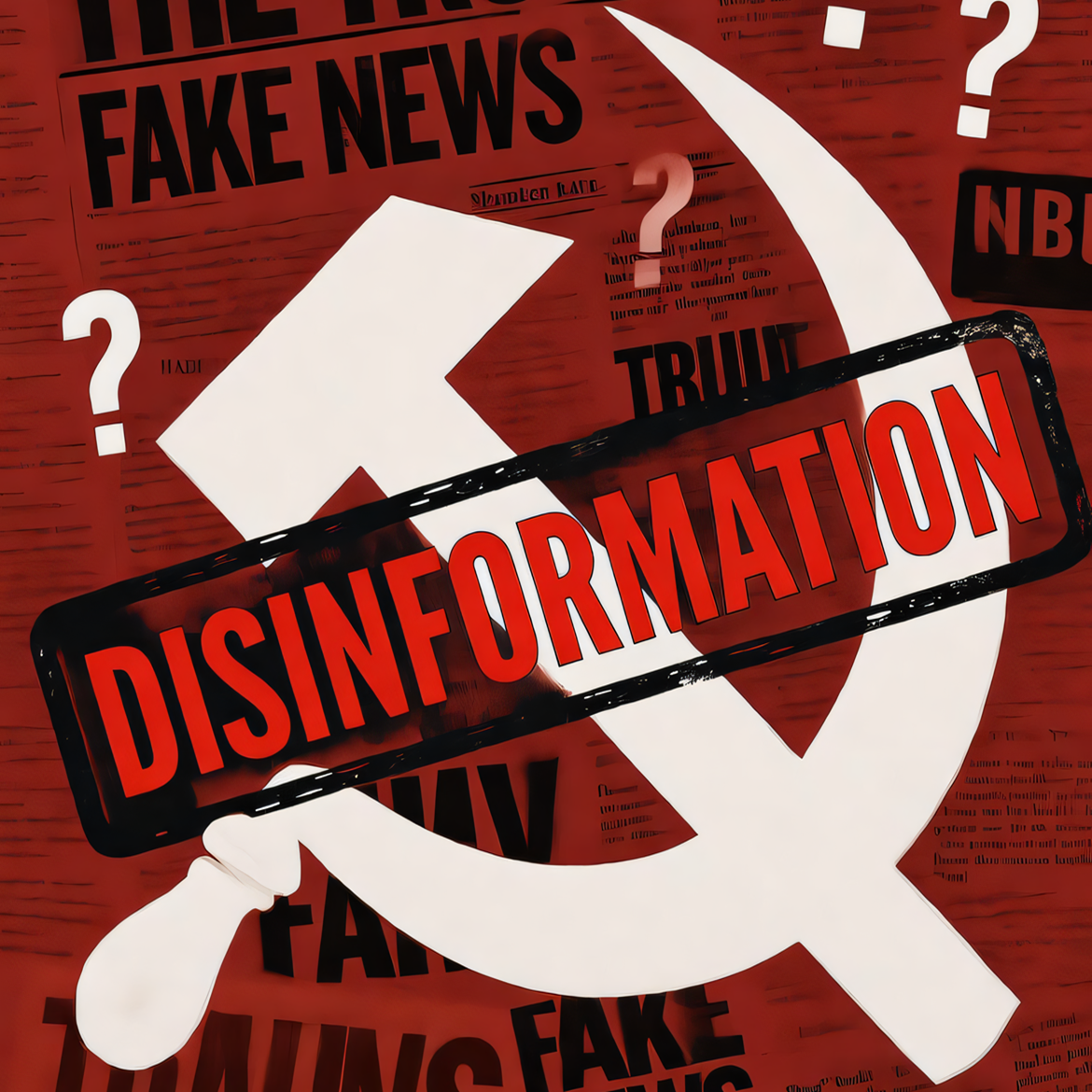
“Disinformation” isn't about truth. It's a control mechanism. Discover how the ruling class uses this word to decide which ideas you can hear.

Think about the last time you had a strong opinion about a major news story.

Maybe it was about a virus, an election, or a foreign conflict. You went online, shared your view, and then it happened. Someone, possibly a journalist, perhaps a politician, maybe a random commenter, slapped a label on it.

Disinformation.

The word feels final. It sounds scientific, like a doctor’s diagnosis. Once it’s attached to an idea, the conversation is over. That idea is quarantined. The person who shared it is now suspect.

But have you ever stopped to wonder who gets to decide what ‘disinformation’ is? And more importantly, why this specific word exploded into our daily lives right when public trust was falling apart?

Let’s pull back the curtain.


The Sudden Need for a New Word

Not long ago, we had simpler words for this sort of thing. We’d say something was a “lie,” which is straightforward and personal. Or we’d call it “propaganda,” a word that hints at a clumsy government effort. We might even say something was “misleading” or “not true.”

These words were clunky. They were too easy to challenge. Calling someone a liar starts a fight. Saying something is propaganda requires a lot of explaining.

What the people in charge needed was a cleaner, more powerful word. A word that did the work of silencing all by itself.

Disinformation.

It sounds technical. It sounds like something only experts with high-level security clearances can properly identify. It doesn’t accuse a person of lying; it frames their thoughts as a contagion. And what do you do with a contagion? You contain it. You eliminate it. You protect the public from it.

This wasn’t an accident. The word was chosen carefully. It moved the power from the people having the debate to the people who get to define the terms of the debate.

The goal was never just to correct the record. The goal was to own the record.

Suddenly, a whole class of “experts” appeared. They were the arbiters of truth. Their full-time job was to decide which ideas were safe for you to hear and which were dangerous ‘disinformation.’ They became the immune system for the body politic, and they decided what got treated as a virus.


The Magic Trick of Fact-Checking

Now, let’s talk about the machinery they built around this word: the fact-checking industry.

On the surface, it sounds wonderful. Who could be against facts? But watch the magician’s right hand so you don’t see what the left hand is doing.

The problem is rarely the fact itself. It’s the context that gets stripped away. A fact-checker can look at a statement, find one technically inaccurate detail, and brand the entire argument as ‘disinformation.’ The core truth of the argument is drowned out by a single, minor error.

More importantly, these fact-checkers are not robots. They are people who work for large, powerful institutions. These institutions have relationships with governments and billion-dollar corporations. They have advertisers. They have political preferences.

Do you really believe they are neutral?

Think about the last major story that was labeled ‘disinformation’ only to be quietly confirmed as true months later. The pattern is always the same:

  1. An inconvenient story emerges.
  2. It is rapidly labeled ‘disinformation’ by official sources and their media partners.
  3. Anyone who questions this label is called a conspiracy theorist or a threat to democracy.
  4. Weeks or months later, the story is revealed to be substantially true.
  5. There is no apology. The label is just quietly forgotten.

By the time the truth comes out, the public has moved on. The damage is done. The goal was never to be right; the goal was to control the narrative during the critical window when public opinion was being formed.

This isn’t about truth. It’s about control.


Your Thoughts Are Now a National Security Issue

This is where the strategy becomes truly brilliant. They successfully merged the idea of ‘disinformation’ with national security.

A question about vaccine side effects is no longer a medical debate; it’s a threat to public health.
A question about election integrity is no longer a political concern; it’s an attack on democracy itself.

By framing certain ideas as security threats, they give themselves permission to use extraordinary power. They can pressure social media companies to remove content. They can suggest that dissenting voices should be de-banked or de-platformed. All in the name of protecting you.

Ask yourself: when has a powerful group ever asked for more control to protect you, and that actually worked out in your favor?

History tells a different story. The most common reason given for taking away rights is always, always, for your own safety. It’s a classic playbook. Create a monster, then present yourself as the only one who can slay it.

They created the ‘disinformation’ monster. Now they demand more power to fight it.


How to Break Free from the Word Game

So, what can you do? How do you opt out of a system designed to make you doubt your own mind?

The solution isn’t to find a new set of ‘approved’ experts to follow. The solution is to rebuild your own mental framework for processing information.

Here is a simple way to start:

1. Follow the Silence. Pay close attention to what is not being discussed. The stories the mainstream news ignores are often more important than the ones they scream about. Their silence is a signal.

2. Question the Labellers. When you see a story labeled ‘disinformation,’ don’t just accept it. Ask: Who is doing the labeling? What organizations do they work for? What do they have to gain by having this idea discredited? Follow the money. Follow the power.

3. Seek Primary Sources. The truth is often buried in boring, raw data. Instead of reading a news article about a government report, try to find the actual report. Look at the raw numbers. Listen to the full, unedited speech, not the 10-second clip they play on a loop. It takes more work, but it’s the only way to see what’s really there.

4. Trust Your Pattern Recognition. You are not stupid. You have a lifetime of experience. When you see a pattern—like stories being labeled false and then later proven true—trust that instinct. They call this “anecdotal,” but it’s just basic observation. Your brain is the best fact-checker you will ever have.

The word ‘disinformation’ is a tool. It was built in a workshop you were never invited to. Its purpose is to make you stop thinking and start obeying.

Don’t let it.

The next time someone tries to use that word to end a conversation, see it for what it is: a sign that you are asking the right questions. That you are getting close to something they don’t want you to see.

Keep asking. Keep digging. And never, ever let them do your thinking for you.

Real Socialism Fact

 Featured, Political, View Point  Comments Off on Real Socialism Fact
Sep 012025
 

They don't want to help you. They want to own you. Socialism is just the pretty label on the bottle. The goal is total dependency. Control your money, your food, your energy. Then they own your silence and your obedience.


They don’t want to help you. They want to own you. Socialism is just the pretty label on the bottle. The goal is total dependency. Control your money, your food, your energy. Then they own your silence and your obedience.