Countries With The Most Venomous Animals

 Amusing, Information  Comments Off on Countries With The Most Venomous Animals
May 172015
 

Which country has the most venomous animals?
Which country has the most venomous animals

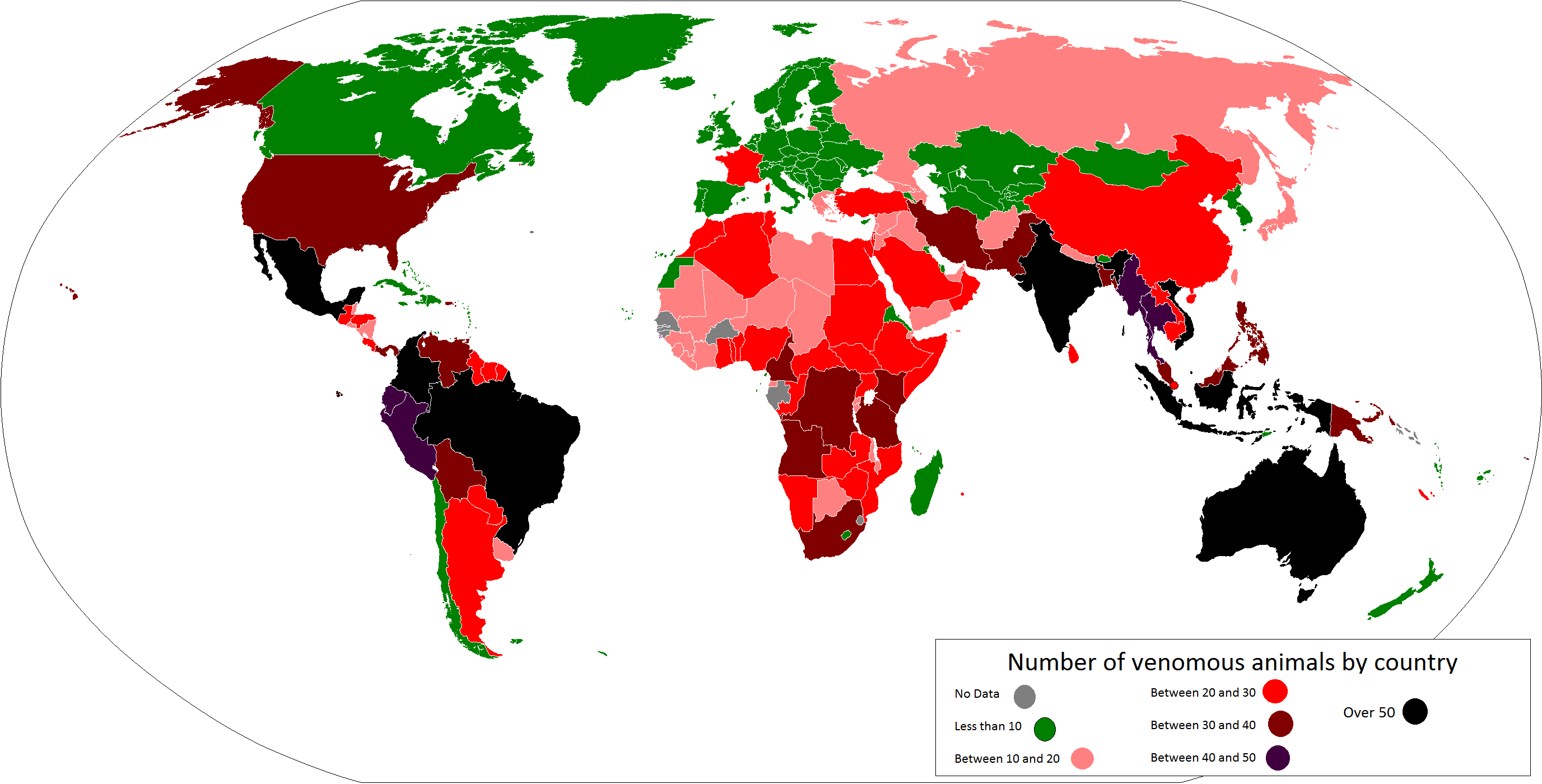
Surprisingly, it’s not Australia but Mexico with 80, followed by Brazil with 79 and then Australia with just 66 (they just happen to be more potent). So how is venomous defined here?

Reddit user lanson15 used the Living Hazards Database from the Armed Forces Pest Management Board, which “… is a comprehensive compilation of more than 500 species worldwide, which are reported to cause serious injury or death of humans.”

In addition to the top 3 countries above, Colombia, India, Indonesia and Vietnam all have over 50 different species apiece. Europe, Central Asia and Canada are at the other extreme, with fewer than 10 species per country. And if you’re wondering about France, it’s because it includes French Guiana, which is considered an overseas department of France.

Generally speaking warmer places have more venomous species than colder places, although there are some interesting exceptions to this rule such as the Caribbean, Western Sahara, Madagascar, Bhutan and Lesotho, to name a few.

So if you make your travel plans based around how likely you are to get bitten by a snake or spider, you now have a map of which countries to visit and which to avoid.

Source…


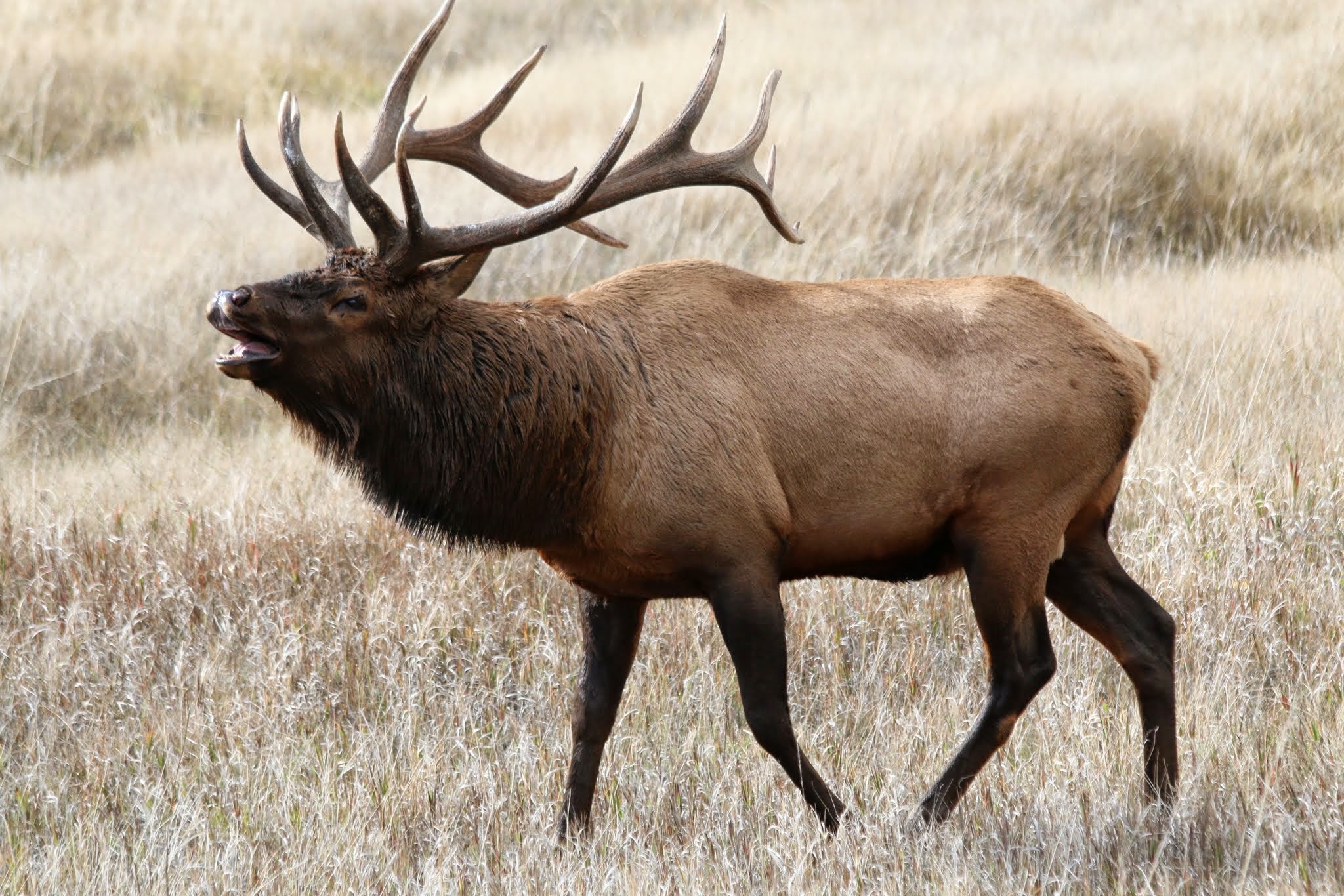
Wallpaper Of The Day: Wapiti Bull

 Wallpaper  Comments Off on Wallpaper Of The Day: Wapiti Bull
Apr 222015
 

Wapiti bull near Jaspers

The elk or wapiti (Cervus canadensis) is one of the largest species of the Cervidae or deer family in the world, and one of the largest land mammals in North America and eastern Asia. It was long believed to be a subspecies of the European red deer (Cervus elaphus), but evidence from a number of mitochondrial DNA genetic studies beginning in 1998 indicate that the two are distinct species. Key morphological differences that distinguish C. canadensis from C. elaphus are the former’s wider rump patch and paler-hued antlers.

This animal should not be confused with the larger moose (Alces alces), to which the name “elk” applies in the British Isles and Eurasia. Apart from the moose, the only other member of the deer family to rival the elk in size is the south Asian sambar (Rusa unicolor). Male elk have large antlers which are shed each year. Males also engage in ritualized mating behaviors during the rut, including posturing, antler wrestling (sparring), and bugling, a loud series of vocalizations which establishes dominance over other males and attracts females.

Elk range in forest and forest-edge habitat, feeding on grasses, plants, leaves and bark. Although native to North America and eastern Asia, they have adapted well to countries where they have been introduced, including Argentina, Australia and New Zealand. Their great adaptability may threaten endemic species and ecosystems into which they have been introduced. Elk are susceptible to a number of infectious diseases, some of which can be transmitted to livestock. Efforts to eliminate infectious diseases from elk populations, largely through vaccination, have had mixed success.
Some cultures revere the elk as a spiritual force. In parts of Asia, antlers and their velvet are used in traditional medicines. Elk are hunted as a game species; the meat is leaner and higher in protein than beef or chicken.

Source…

via

The White Lion

 Information, Wallpaper  Comments Off on The White Lion
Apr 102015
 

White Lion

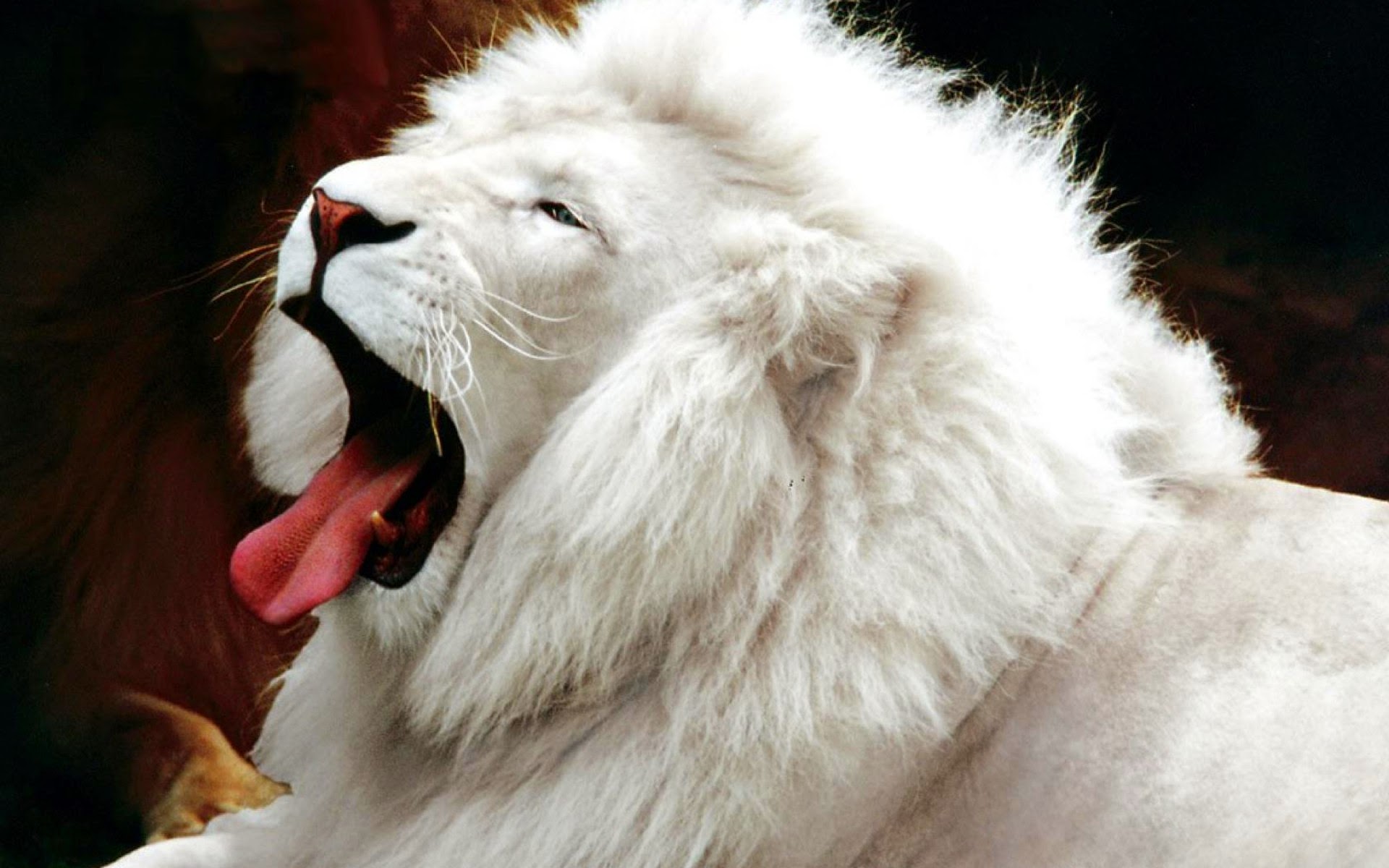
The white lion is a rare color mutation of the Timbavati area. White lions are the same as the tawny African Lion (Panthera leo krugeri) found in some wildlife reserves in South Africa and in zoos around the world. White lions are not a separate subspecies and are thought to be indigenous to the Timbavati region of South Africa for centuries, although the earliest recorded sighting in this region was in 1938. Regarded as divine by locals, white lions first came to public attention in the 1970s in Chris McBride’s book The White Lions of Timbavati. Up until 2009, when the first pride of white lions was reintroduced to the wild, it was widely believed that the white lion could not survive in the wild. It is for this reason that a large part of the population of white lions now reside in zoos.

White lions of Mazanie are not albinos. Their white colour is caused by a recessive trait derived from a less-severe mutation in the same gene that causes albinism, distinct from the gene responsible for white tigers. They vary from blonde to near-white. This coloration does not appear to disadvantage their survival. The white lions of the Global White Lion Protection Trust (GWLPT) have been reintroduced into their natural habitat and have been hunting and breeding successfully without human intervention for a significant amount of time.

Source…


Chick Sexing

 Amusing  Comments Off on Chick Sexing
Mar 102015
 

Chicken Sexer

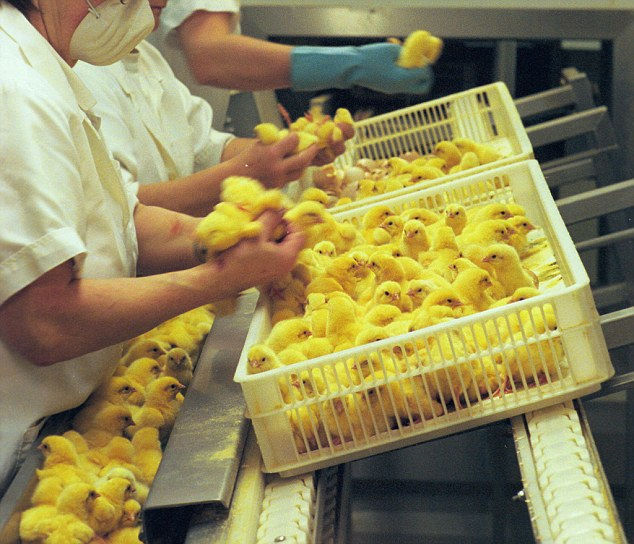
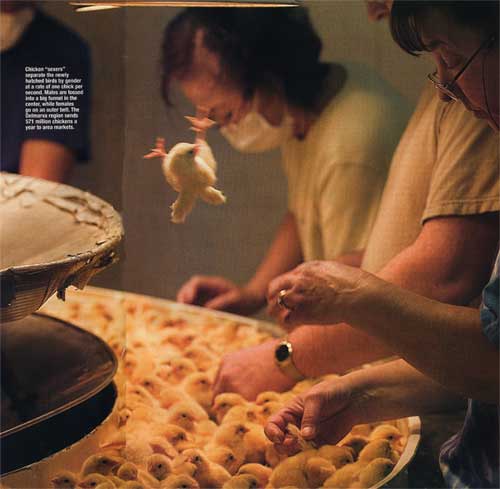
Chicks of different sexes can appear quite similar. Chick sexing is the method of distinguishing the sex of chicken and other hatchlings by a trained person called a Chick Sexer or Chicken Sexer. It’s a job that pays pays $60,000 a year and nobody seems to want to do it.

Enjoy!

Believe it or not, ‘chick sexer’ is a real job, and it pays quite handsomely. For over $60,000 a year, a chick sexer has to look at chicks’ backsides all day to determine if they are male or female.

The process, known as ‘vent sexing’ involves squeezing the faeces out of the chick and opening up the its anal vent, to check for a small ‘bump’ that indicates it is male. Understandably, the job doesn’t have many takers, and British poultry farmers are struggling to attract employees to fill the position.

Although it sounds easy, chick sexing is quite complicated and requires an incredible amount of skill. Workers are specially trained on how to spot ‘miniscule differences’ in the size and shape of a chick’s genitalia to ascertain whether it will grow up to be a rooster or a hen.

Chick sexers are expected to sort 800-1,200 chicks an hour, with a 97-98 percent accuracy – that’s just three seconds per bird. “It takes three years to train someone so they develop the sensitivity and dexterity to reliably sex the bird and a lot of people don’t want to spend that amount of time training,” said Andrew Large, chief executive of the British Poultry Council.

Read more…

Chicken Sexer 2