 |
People usually laugh about burping, hiccups and farting. Sometimes, even they are embarrassed and annoyed about these body functions.
Yes they sound interesting and smell weird, come out from the bum but how much do you actually know about these farts? Here are 12 facts about farting that you probably never heard about.
How many times they do it in front of others will determine exactly how “human”—actually, “inhumane”—they are.
The average human toots about 700ml of flatus daily—enough to blow up a birthday balloon!
Farts exit the anus and enter the world at a speed of 10 feet per second, or slightly less than seven miles per hour.
Truth be told, only 1% or less of the gas in your average, everyday, run-of-the-mill fart has any odor whatsoever. The main culprit is hydrogen sulfide, which generates those rancid “rotten egg” notes that make farts the bane of the world’s nostrils.
Sure, there’s a certain breed of male idiot who thinks it’s funny to fart in front of others, and to be fair, women don’t tend to be afflicted with that special strain of sadism. But before they start getting all high and mighty, they should realize that female farts have a higher hydrogen sulfide concentration than male ones and thus, fart-for-fart, they’re smellier than dude farts.
The word “fart” is considered a “vulgarism” and—just like farting itself—is not recommended for use in polite company. The polite noun is “flatus,” even though almost no one uses it. The word “fart” is said to have been coined in 1632 and defined as “to send forth wind from the anus.” “Fart” is derived from the Old English word “feortan,” which means “to break wind.”
Roman Emperor Claudius declared that “all Roman citizens should be allowed to pass gas whenever necessary,” which is an ancient variant of the modern maxim, “Wherever you be, let the wind blow free.” The ancient Japanese were said to have held “farting contests” to see who could break wind the loudest and longest. The Greek physician Hippocrates decreed that “Passing gas is necessary to well-being.”
Professor Paul McDonald of the University of Wolverhampton tags a Sumerian joke from 1900 BC as the world’s oldest recorded one-liner. The joke:
Something which has never occurred since time immemorial; a young woman did not fart in her husband’s lap.
Despite our modern revulsion for human flatulence—it is a topic so unspeakable, it may qualify as a form of pornography—literary masters of antiquity suffered no such hangups. Literary luminaries who mentioned farting include William Shakespeare (flatulence is mentioned five times in his plays), Jonathan Swift (who penned a 1722 essay titled “The Benefit of Farting Explain’d”), Geoffrey Chaucer (whose Canterbury Tales include a line about a man who “let fly a fart as loud as it had been a thunder-clap”), Dante Alighieri (whose Inferno mentions a demon who used “his ass as a trumpet”), and Founding Father Ben Franklin, who wrote a whole essay titled “Fart Proudly.”
Not only was the infamous Nazi dictator a speed freak, he also suffered from hepatitis and gastrointestinal cramps, which led to a condition of chronic flatulence for which he took 28 different medications. It is almost certain that no one complained to Hitler about the smell.
Flatulence—which occurs in nearly all living organisms—is a mixture of hydrogen, nitrogen, oxygen, carbon dioxide, sulfur dioxide, and in some cases, methane. These gases are produced as the byproduct of the trillions of bacteria that break down food during the digestive process.
Yes, indeed, they can—using a “rectal catheter,” researchers are able to shove a tube up a patient’s poop chute to determine the volume of gas that is produced during the sacred act of farting.
Whether it’s curing a throat tickle, resolving your headache in minutes or experiencing supersonic hearing, these body tricks are proven methods of fooling your body to achieve a desired result, whether that’s relieving pain or just having fun.
When you were 9, playing your armpit was a cool trick. Now, as an adult, you can still appreciate a good body-based feat, especially if it serves as a health remedy. Take that tickle in your throat: It’s not worth gagging over. Here’s a better way to scratch your itch: Scratch your ear. “When the nerves in the ear are stimulated, it creates a reflex in the throat that can cause a muscle spasm,” says Scott Schaffer, M.D., president of an ear, nose, and throat specialty center in Gibbsboro, New Jersey. “This spasm relieves the tickle.”
If you’re stuck chatting up a mumbler at a cocktail party, lean in with your right ear. It’s better than your left at following the rapid rhythms of speech, according to researchers at the UCLA David Geffen School of Medicine. If, on the other hand, you’re trying to identify that song playing softly in the elevator, turn your left ear toward the sound. The left ear is better at picking up music tones.
Nerves getting the best of you. Take a deep breath and spash cold water on your face. This triggers the mammalian diving reflex that is genetically in all animals including humans. The lower temperature of the water and you holding your breath also causes your body to think it’s diving into cold water. This reflex allows you to use oxygen more efficiently.
Need to pee? No bathroom nearby? Fantasize about what ever turns you on. Thinking about sex and arousing fantasies preoccupies your brain, so you won’t feel as much discomfort, says Larry Lipshultz, M.D., chief of male reproductive medicine at the Baylor College of Medicine.
Love donating blood but hate the needle prick? German researchers have discovered that coughing during a needle stick can lessen the pain. According to Taras Usichenko, author of a study on the phenomenon, the trick causes a sudden, temporary rise in pressure in the chest and spinal canal, inhibiting the pain-conducting structures of the spinal cord.
Those huge health supplements are sometimes a pain to swallow. Want to swallow more than one at a time without gagging? Try this trick to get them down: take a drink of water, and tilt your head forward instead of backward. The capsule should float, and will be at the back of your throat, ready to swallow.
Forget Sudafed. Here’s an easier, quicker, and cheaper remedy to relieve sinus pressure: Alternate thrusting your tongue against the roof of your mouth, then pressing between your eyebrows with one finger. This causes the vomer bone, which runs through the nasal passages to the mouth, to rock back and forth, says Lisa DeStefano, D.O., an assistant professor at the Michigan State University college of osteopathic medicine. The motion loosens congestion; after 20 seconds, you’ll feel your sinuses start to drain.
Worried that chili will repeat on you tonight? Try this preventive remedy: “Sleep on your left side,” says Anthony A. Starpoli, M.D., a New York City gastroenterologist and assistant professor of medicine at New York Medical College. Studies have shown that patients who sleep on their left sides are less likely to suffer from acid reflux. The esophagus and stomach connect at an angle. When you sleep on your right, the stomach is higher than the esophagus, allowing food and stomach acid to slide up your throat. When you’re on your left, the stomach is lower than the esophagus, so gravity’s in your favor.
Just rub ice on the back of your hand, on the V-shaped webbed area between your thumb and index finger. A Canadian study found that this technique reduces toothache pain by as much as 50 percent compared with using no ice. The nerve pathways at the base of that V stimulate an area of the brain that blocks pain signals from the face and hands.
Feeling dizzy? Put your hand on something stable. The part of your ear responsible for balance–the cupula– floats in a fluid of the same density as blood. “As alcohol dilutes blood in the cupula, the cupula becomes less dense and rises,” says Dr. Schaffer. This confuses your brain. The tactile input from a stable object gives the brain a second opinion, and you feel more in balance. Because the nerves in the hand are so sensitive, this works better than the conventional foot-on-the-floor wisdom.
If you’re like most people, when you run, you exhale as your right foot hits the ground. This puts downward pressure on your liver (which lives on your right side), which then tugs at the diaphragm and creates a side stitch, according to The Doctors Book of Home Remedies for Men. The fix: Exhale as your left foot strikes the ground.
Put some cotton on your upper gums–just behind that small dent below your nose–and press against it, hard. “Most bleeds come from the front of the septum, the cartilage wall that divides the nose,” says Peter Desmarais, M.D., an ear, nose, and throat specialist at Entabeni Hospital, in Durban, South Africa. “Pressing here helps stop them.”
Press your tongue flat against the roof of your mouth, covering as much as you can. “Since the nerves in the roof of your mouth get extremely cold, your body thinks your brain is freezing, too,” says Abo. “In compensating, it overheats, causing an ice-cream headache.” The more pressure you apply to the roof of your mouth, the faster your headache will subside.
If your hand falls asleep while you’re driving or sitting in an odd position, rock your head from side to side. It’ll painlessly banish your pins and needles in less than a minute, says Dr. DeStefano. A tingly hand or arm is often the result of compression in the bundle of nerves in your neck; loosening your neck muscles releases the pressure. Compressed nerves lower in the body govern the feet, so stand up and walk around if they fail you.
“If you’re giving a speech the next day, review it before falling asleep,” says Candi Heimgartner, an instructor of biological sciences at the University of Idaho. Since most memory consolidation happens during sleep, anything you read right before bed is more likely to be encoded as long-term memory.
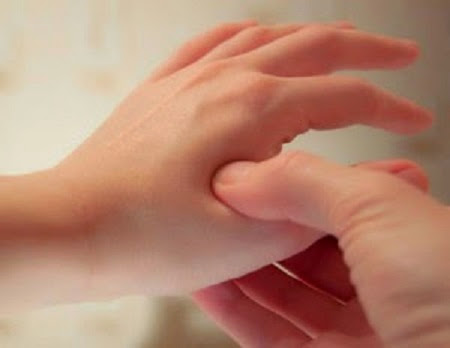
The next time you are about to reach for some pills to get rid of your headache, use your thumb and forefinger and pinch down on the muscle on the web of your hand (thumb on the back of your hand and forefinger underneath) and press for 2 minutes. Repeat. Most headaches and migraines will ease after just 4 minutes. This shiatsu point addresses headaches by dispersing stagnant Ki (i.e. blocked energy) and moving blood in the head, neck, and other parts of the body.