The Nazis and a Hollow Earth

 Conspiracy, Featured, Information, Political  Comments Off on The Nazis and a Hollow Earth
Mar 312023
 

The Nazi fascination with a hidden world
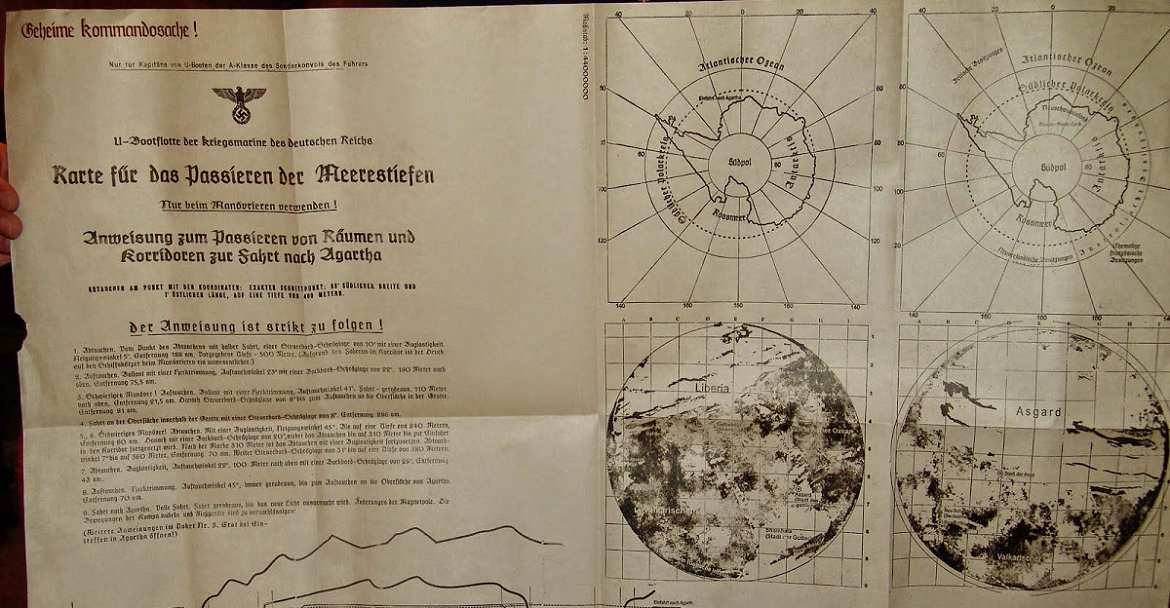
One of the most bizarre and intriguing aspects of Nazi history is their fascination with the occult and the paranormal. The Nazis believed that they were destined to rule the world, and they sought to uncover any secrets or mysteries that could help them achieve their goal. One of these secrets was the possibility that the Earth was hollow, and that a hidden civilization existed within it. A Map made by cartographer Heinrich C. Berann is believed to show an entrance to the inner Earth, the Kingdom of Agartha. In that map, the Antarctic continent can be observed without its thick layer of ice.

One of the most bizarre and intriguing aspects of Nazi history is their fascination with the occult and the paranormal. The Nazis believed that they were destined to rule the world, and they sought to uncover any secrets or mysteries that could help them achieve their goal. One of these secrets was the possibility that the Earth was hollow, and that a hidden civilization existed within it.

The hollow Earth theory is not a new idea. It has been proposed by various thinkers and writers for centuries, and it has inspired many works of fiction, such as Jules Verne’s A Journey to the Center of the Earth. The theory suggests that there are openings at the North and South poles that lead to an inner world, where a different sun illuminates a lush landscape inhabited by ancient races or exotic creatures. Some versions of the theory also claim that there is a central sun that rotates and creates the illusion of day and night for the inner dwellers.

The Nazis were particularly interested in the hollow Earth theory because they believed that it was connected to their own origins and destiny. They subscribed to a version of the theory called hohlweltlehre, which means “inverted Earth”. According to this idea, we live on the inside of a hollow sphere, and the stars are actually ice crystals suspended in the air. The Nazis also believed that they were descended from a superior race of Aryans who came from a subterranean realm called Agartha, where they still lived under the rule of a king of the world.

To prove their theory and establish contact with their ancestors, the Nazis launched several expeditions to Antarctica, where they hoped to find an entrance to the inner Earth. The most famous of these expeditions was led by Captain Alfred Ritscher in 1938-1939, who claimed to have discovered a warm lake and ice-free land in an area called Neuschwabenland. The Nazis also allegedly built a secret base there, called Base 211, where they conducted research on advanced technologies such as flying saucers and anti-gravity devices.

There are many rumors and legends about what happened to the Nazi Antarctic mission after World War II. Some say that Hitler and some of his top officials escaped to Base 211 and entered the inner Earth, where they were welcomed by their Aryan brethren. Others say that the Nazis never found an entrance to the inner Earth, and that their base was destroyed by Allied forces or by natural disasters. Still others claim that during World War II, a group of Nazi scientists and soldiers embarked on a secret mission to Antarctica, where they believed they could access the inner earth through a hole in the ice. Their goal was to establish contact with the inhabitants of Agartha.

The evidence for this claim is based on some dubious sources, such as a supposed letter from a U-boat crew member who said he had reached the inner earth and would not return, and some maps that allegedly show the Nazi route to Agartha. These maps also depict the inner earth as a concave sphere, with an inner sun and continents on the opposite side of the surface.

The truth behind these stories is hard to verify, as there is little evidence or documentation to support them. Most historians dismiss them as fantasies or propaganda, and regard the Nazi hollow Earth theory as a pseudoscientific myth. However, some researchers and enthusiasts continue to explore the possibility that there is more to the Nazi Antarctic mission than meets the eye, and that there might be some truth to the existence of an inner world.



Ageism In The Workplace

 Information  Comments Off on Ageism In The Workplace
Mar 302023
 

From Experience to Liability: The Harsh Reality of Job Hunting as an Older Worker

As a programmer with a few years of experience under my belt, I've found myself struggling to find work despite having gone on dozens of interviews. I can't help but feel like my age has become a significant factor in my inability to land a job. I don't consider myself old by any means, but with each passing year, I know that my chances of securing employment in the tech industry seem to be dwindling.

As a programmer with a few years of experience under my belt, I’ve found myself struggling to find work despite having gone on dozens of interviews.

I can’t help but feel like my age has become a significant factor in my inability to land a job. I don’t consider myself old by any means, but with each passing year, I know that my chances of securing employment in the tech industry seem to be dwindling.

During my job search, I’ve come across job postings that I’m excited about, but as soon as I see the salary requirements, I know that I’m not going to be a competitive candidate. It’s not that I have unrealistic expectations of what I should be paid for my skills and experience, but I do think that there’s a certain level of compensation that I should be receiving if I’m going to be working full-time.

The worst part about all of this is that I’ve been on so many interviews that I know I’m a skilled programmer. I’m confident in my abilities, I’ve worked on significant projects, and I’m continuously learning and growing. But for some reason, my age and salary requirements seem to be holding me back.

I’ve started to feel like companies are only interested in hiring fresh-faced college graduates that they can groom and shape rather than hiring someone with experience who might shake things up. I understand that every organization is different, but it’s challenging not to feel discouraged when I have dozens of interviews under my belt without any offers.

At this point, I’m not sure what to do. I need to find work, but I don’t want to settle for a job that doesn’t compensate me fairly or utilize my skills and experience. It’s as if I’m trapped in this vicious cycle of being too old and too experienced for some jobs but not qualified enough or too expensive for others.

I believe that age and salary requirements should not be the sole determinants of an individual’s worth or qualifications. The tech industry needs to start valuing the skills and experience of seasoned professionals and offer them fair compensation. I’m not giving up on my job search, but it’s frustrating to see companies overlooking experienced, skilled professionals like myself because of outdated or misplaced beliefs about age and salary.


Programming Job Interviews

 Information  Comments Off on Programming Job Interviews
Mar 282023
 

I’ve changed the way I approach programming job interviews.

I've changed the way I approach programming job interviews. I'm done with the technical interviews and coding tests. As a programmer with over 20 years of experience, I should be the one asking the questions. Let me tell you why.

I’m done with the technical interviews and coding tests. As a programmer with over 20 years of experience, I should be the one asking the questions. Let me tell you why.

I’ve been on a journey through dozens of programming job interviews, technical interviews, and coding tests. At first, I was excited and eager to show off my skills and land a great job. But as the interviews kept coming, I started to feel frustrated, depressed, and demotivated. It seemed like every company had a different process and set of requirements, and I was constantly having to jump through hoops that had nothing to do with the actual job I was interviewing for.

When it comes to job interviews, it’s easy to fall into the trap of feeling like you’re the one being scrutinized and evaluated. However, it’s important to remember that the interview process is a two-way street. As a programmer, you have valuable skills and experience that are in high demand, and you should be using the interview to determine whether the company is a good fit for you.

One of the most important things to keep in mind when going for a programming job interview is that you should be interviewing the employer just as much as they are interviewing you. This means asking questions about the company culture, the specific job responsibilities, the team structure, and anything else that will help you determine whether the job is right for you.

By taking an active role in the interview process and asking insightful questions, you’ll be able to get a better sense of whether the job is a good fit for your skills, personality, and long-term career goals. You’ll also be able to demonstrate your interest in the position and show the employer that you’re committed to finding the right match.

Additionally, it’s important to not submit to a technical interview until you have a good understanding of what the job entails that the company is hiring for. This means doing your research on the company and the job description, and asking for more information if necessary. If the job responsibilities or technical requirements aren’t a good match for your skills or interests, it’s better to know that upfront rather than wasting your time (and the employer’s time) going through a technical interview for a job that isn’t a good fit.

Remember that a job interview is a two-way street. You should be interviewing the employer just as much as they are interviewing you, and you should have a good understanding of the job responsibilities and technical requirements before submitting to a technical interview. By taking an active role in the interview process, you’ll be able to find a job that’s the right fit for you and your career goals.


Hitler and The Eagle’s Nest: A Nazi Retreat with a Dark History

 Information, Political  Comments Off on Hitler and The Eagle’s Nest: A Nazi Retreat with a Dark History
Mar 182023
 

In the 1930s, after becoming the German chancellor, Adolf Hitler was looking for the perfect spot to establish an official mountain retreat — a Camp David for his Nazi regime.

Hitler and The Eagle's Nest: A Nazi Retreat with a Dark History

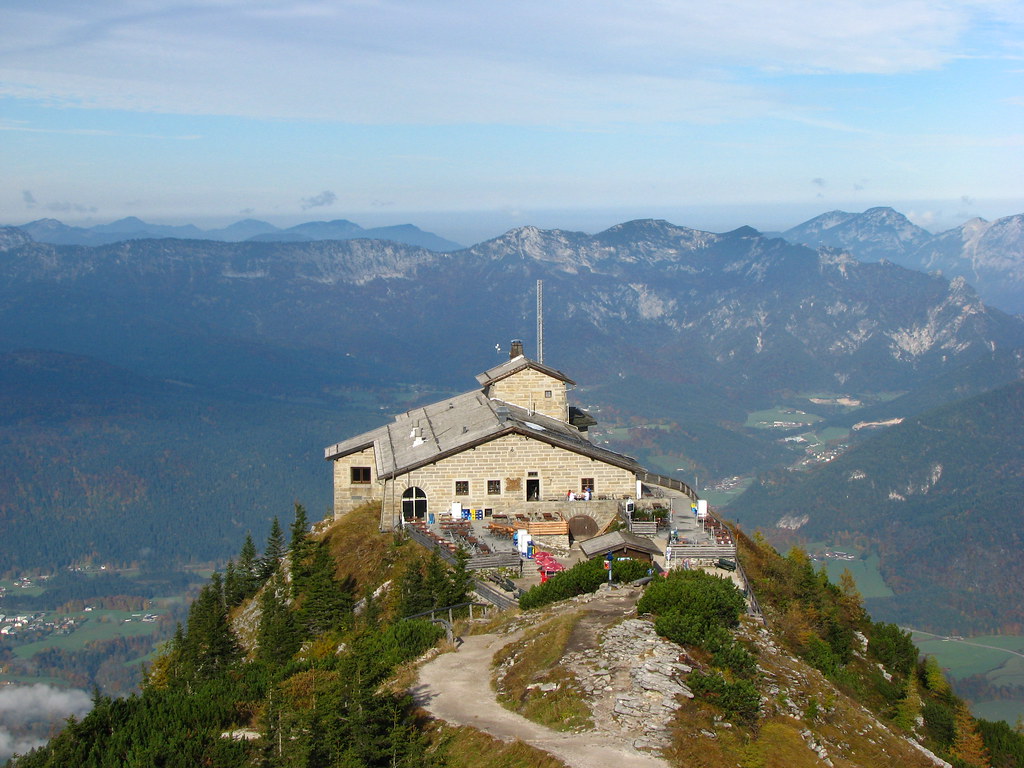
If you are looking for a unique and historical destination in Germany, you might want to visit the Kehlsteinhaus, also known as the Eagle’s Nest. This was a Nazi-constructed building that was erected atop the summit of the Kehlstein, a rocky outcrop that rises above Obersalzberg near the southeast German town of Berchtesgaden. It was used exclusively by members of the Nazi Party for government and social meetings, and it was visited on 14 documented instances by Adolf Hitler.

The Eagle’s Nest was a gift from Martin Bormann, Hitler’s private secretary and architect of many buildings on the Obersalzberg. It was commissioned in 1937 and completed in 1938, well ahead of Hitler’s 50th birthday on April 20, 1939, which was considered a deadline for the project. The construction involved over 3,000 workers who worked day and night, winter and summer, for 13 months. Twelve workers died during its construction.

 
The building is accessible by a 6.5 km (4 mi) road that climbs 800 m (2,600 ft) over five tunnels and one hairpin turn. It cost 30 million ℛℳ to build (about $247 million USD, inflation-adjusted for 2022). From a large car park, a 124 m (407 ft) entry tunnel leads to an ornate elevator that ascends the final 124 m (407 ft) to the building. The elevator is lined with polished brass, Venetian mirrors, and green leather. The building’s main reception room is dominated by a fireplace of red Italian marble presented by Italian dictator Benito Mussolini.

The Eagle’s Nest was intended to be a refuge of last resort for Hitler should he need it. However, he rarely used it because he suffered from vertigo and acrophobia. He preferred his Berghof residence on the lower slopes of Obersalzberg. The Eagle’s Nest was mostly used by other Nazi officials such as Hermann Göring, Heinrich Himmler, Albert Speer, Joachim von Ribbentrop, and Eva Braun. It was also used for diplomatic engagements such as receiving departing French ambassador André François-Poncet on October 18th, 1938.

The Eagle’s Nest survived World War II largely intact because it was not a strategic target for Allied bombing raids. It was captured by American troops on May 4th, 1945 without any resistance. They found wine bottles with Hitler’s initials on them as well as some personal belongings of Eva Braun. The Americans also chipped off pieces of Mussolini’s fireplace as souvenirs.

Today, the Eagle’s Nest is open seasonally as a restaurant, beer garden, and tourist site. It offers spectacular views of the surrounding Alps and valleys. It is also a reminder of the dark history of Nazi Germany and its atrocities. Many visitors find it eerie to walk in the footsteps of some of history’s most notorious figures. If you decide to visit, you should be respectful of its past and mindful of its significance.