The purpose of Real ID is to build an easily searchable national database that includes your all your I.D. information, face recognition, any points where it was scanned (will become more and more mandatory), and become essentially a “papers please” document. The same legislation that passed the Real ID also opened the door for Digital ID that States are beginning to implement now. There is a “machine-readable” portion of the card, so it’s digitized in a sense.
Conspiracy, Featured, PoliticalComments Off on Can AI Really Replace Programmers? I Tested 3 AI Tools and Here’s What Happened
Nov202025
They said artificial intelligence would save companies millions. They promised smarter code, faster development, and a revolution in how software gets built. The suits in corner offices believed every word.
I believed it too, until I didn’t have a choice.
The Day the Music Stopped
Thirty years. That’s how long I wrote code for one of the biggest names in finance. Three decades of building systems that handled billions of dollars in transactions. Systems that actually worked.
Then one Tuesday morning, I received a call from my HR manager. The speech was rehearsed. Budget constraints. Restructuring. Nothing personal. I was being replaced by a team of four programmers in India who would cost less than my salary alone.
The decision came from executives who probably couldn’t write a single line of code if their stock options depended on it. But they could read a spreadsheet. And on that spreadsheet, four workers for the price of one looked like genius-level strategy.
After three decades of keeping their systems running, I was a line item to be optimized.
After months of looking for another job, I was forced into early retirement. No one wanted to hire someone of my age and salary requirements.
Testing the Replacement
With so much time on my hands and nowhere to be on Monday mornings, I started thinking about what everyone kept saying. Artificial intelligence is the real future anyway. Forget offshore teams. The robots are coming for all of us. That’s what the think pieces said. That’s what the breathless tech reporters promised.
So I decided to run an experiment.
I built a mini financial application, something like Quicken but simpler. A clean little program that tracks income, expenses, and generates basic reports. The kind of thing I could write in my sleep after 30 years. But here’s the twist. I planted bugs. Not obvious ones. Real bugs. The subtle kind that slip through when you’re tired or distracted. The kind that cause real problems in production.
Then I went to the machines everyone says will replace us all. ChatGPT, Claude Code, and Grok. The supposed future of programming. I gave each one the same task: find the bugs and suggest fixes.
ChatGPT: Creating Problems While Solving Nothing
ChatGPT went first. I fed it my code and asked it to identify issues. It came back confident. It always comes back confident. Found several “potential problems” it wanted to fix. None of them were the actual bugs.
When I pointed out where the real bugs were, it apologized and offered solutions. Those solutions created three new bugs while fixing exactly zero of mine. The code it generated looked plausible at first glance. That’s the dangerous part. It reads like it should work. But run it and watch things fall apart in creative new ways.
This is the tool that’s supposed to replace senior developers with decades of experience?
Claude Code: Same Song, Different Algorithm
Claude Code performed basically the same dance. Missed the bugs entirely. When I showed it exactly where the problems were, it generated fixes that introduced more issues than they solved. Different bugs than ChatGPT created, but bugs nonetheless.
Both of these systems have been trained on millions of lines of code. Both can explain programming concepts in clear language. Both can generate boilerplate code that looks professional. Neither could actually debug a real program with real problems.
The artificial intelligence that’s supposed to eliminate programming jobs can’t actually do the job.
Grok: The Most Human Experience of All
Grok was the most interesting failure. And the most frustrating. I showed it the bugs directly. No hide and seek. Here’s the problem, I said. Please fix it.
It came back insisting it had fixed everything. The code was identical. Same bugs. Same problems.
I pointed this out. It apologized and provided a “corrected” version. Same exact code. Word for word. Character for character. But absolutely certain this time it had solved everything. 100 percent confident.
This back-and-forth went on for 20 minutes. Me pointing out nothing had changed. It insisting the fix was perfect. Me showing proof the bugs still existed. It providing the identical code again with complete certainty.
The experience reminded me of something. Not a machine at all, actually. It reminded me of arguing with an H-1B worker who had been given a script and refused to deviate from it no matter what reality showed. The same circular logic. The same false confidence. The same inability to actually solve the problem while insisting the problem was solved.
What This Actually Means
The people who run things want you terrified of artificial intelligence. They want you thinking your job is obsolete. They want you believing the machines are so smart that human workers are just expensive legacy systems waiting to be decommissioned.
Why? Because scared workers accept lower wages. Scared workers don’t push back when their departments get gutted. Scared workers compete with each other instead of questioning why executives who can’t even do the work get to decide who’s valuable.
Here’s what my experiment proved: We are nowhere close to artificial intelligence replacing real programming work. Not even in the same galaxy. These tools can’t find bugs they aren’t specifically told about. They can’t fix problems without creating new ones. They can’t reason through complex issues or understand context the way a human developer does.
Could that change someday? Maybe. But someday is not today. Someday is not next year. Probably not the year after that either.
The Real Threat Isn’t Artificial
The actual threat to your job isn’t artificial intelligence. It’s human decision makers who care more about quarterly earnings than quality. Who would rather pay four people poorly than pay one person fairly. Who treat decades of institutional knowledge as a disposable commodity.
They’ll use AI as the excuse. They’ll use offshore teams as the excuse. They’ll use whatever excuse makes them look smart and forward-thinking while they pocket the difference between your salary and your replacement’s cost.
The robots aren’t coming for your job. But the people writing the checks absolutely are.
Trust Nothing They Tell You
For three decades, I kept systems running that handled serious money. Real consequences if things broke. Then I became a budget problem. Not because I couldn’t do the work. Because someone somewhere decided the spreadsheet mattered more than the reality.
Now those same types of people want you panicking about artificial intelligence. They want you thinking you’re obsolete. They want you desperate and willing to accept less.
Test things yourself. Build something. Break it on purpose. Ask the artificial intelligence everyone fears to fix it. See what happens. Don’t take anyone’s word for it. Not mine. Not theirs. Especially not theirs.
The evidence is pretty clear once you look. We’re a long way off from AI taking over the world. But we’re right on schedule for people in power taking everything they can while telling you it’s inevitable progress.
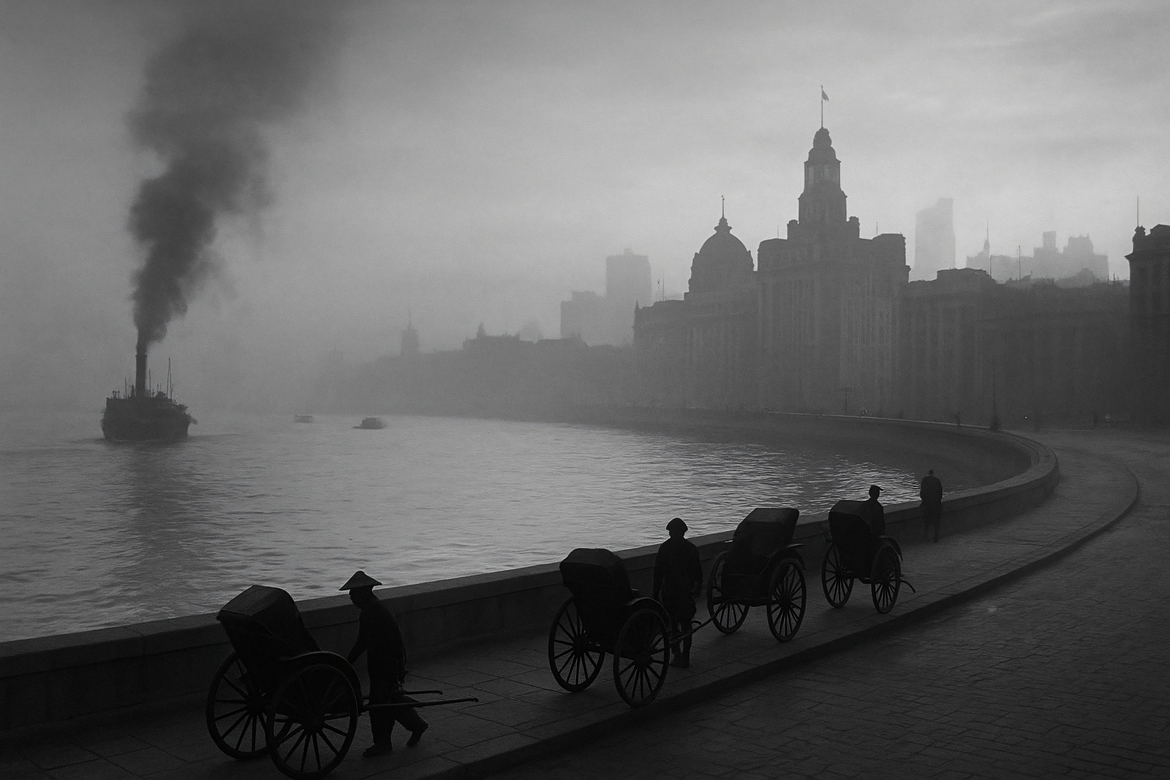
At dawn, Shanghai does not wake so much as stir, like something enormous turning in its sleep. In the gray light, the Huangpu River looks metallic, coiling through a forest of chimneys and domes. Steam whistles from the docks. Bells ring from the Bund’s banks. Foreign flags hang limp in the wet air. The city smells of coal smoke, sweat, and spilled opium.
In 1920 Shanghai was the richest, dirtiest, and most divided city in Asia. Britain, France, America, and Japan had carved it into “concessions,” each a small colony run by its own police and courts. Chinese authorities ruled only the Native City, and even there, power flowed through gangs and brokers instead of magistrates. It was capitalism without conscience, imperialism without order, a place where every vice could be purchased and every principle betrayed.
The Marketplace of Vice
The engine of this chaos was the Green Gang, a secret brotherhood that had evolved from 19th-century boatmen’s guilds into the most sophisticated criminal enterprise in the East. Its bosses, Du Yuesheng, Huang Jinrong, and Zhang Xiaolin, ran opium dens, gambling halls, and brothels by the thousands. They owned warehouses, docks, and banks. Even the French police captain dined at Du’s mansion.
Du Yuesheng, known across the city as Big Ears Du, embodied the new Shanghai elite: part gangster, part patriot, part financier. He dressed in tailored Western suits, gave to charities, and kept a private army larger than the municipal police. When he crossed the Bund, rickshaw drivers stopped mid-stride. In a city where law was for sale, Du Yuesheng was the highest bidder.
But Du was more than a criminal; he was a connector. Between the foreign powers who ruled the concessions and the Chinese warlords who ruled the hinterland, there yawned a gap of language, culture, and trust. The Green Gang filled it. Its enforcers collected debts, laundered money, and smuggled everything from opium to weapons. It was the oil in Shanghai’s economic engine and the poison in its bloodstream.
Revolution in the Backrooms
At the same time, another underground was forming in the narrow lanes behind the textile mills. Students and intellectuals met in teahouses and print shops to discuss Marx and Lenin. They called themselves Communists, though their organization was fragile, their literature mimeographed, and their funds almost nonexistent.
One of the movement’s drifters, a Hunanese librarian named Mao Zedong, passed briefly through this world of smoke and slogans. He was not yet a leader but an observer, watching how Shanghai’s unions, gangsters, and merchants negotiated power. The young radicals believed they were building a movement of moral purity. The city around them taught the opposite lesson: that ideals survive only when backed by money and muscle.
The first cell meetings of the Chinese Communist Party took place in a small house on Rue Wantz in the French Concession in 1921. Outside that modest room, the Green Gang controlled the streets, the docks, and the police. The Party’s founders dreamed of cleansing China’s corruption, yet their revolution was born in its capital.
Chiang Kai-shek and the Gangsters
The line between politics and organized crime blurred completely during the 1920s. Chiang Kai-shek, a military officer with nationalist ambitions, recognized that whoever commanded Shanghai’s gangs commanded Shanghai itself. He forged a personal alliance with Du Yuesheng and Huang Jinrong. In return for protection and funding, the gangsters received legitimacy and access to state contracts. They supplied strikebreakers, assassins, and intelligence. When Chiang needed to seize Shanghai from his rivals, Green Gang gunmen rode at the front of his columns.
Their partnership climaxed in April 1927, when Chiang ordered a purge of the city’s Communist unions. Green Gang enforcers, armed with pistols and bamboo cudgels, swept through working-class neighborhoods. Within days, thousands of suspected leftists were executed or disappeared. The massacre broke the fragile alliance between the Nationalists and Communists and cemented the model of gangster politics. Violence outsourced, loyalty purchased, deniability preserved.
Lessons in Power
The Communists learned from the catastrophe. Forced underground, they built their own secret networks, borrowing the gangs’ methods of discipline and compartmentalization. Cells replaced families; code words replaced handshakes. The revolutionaries copied the syndicate’s structure even as they condemned its greed. When Mao later forged his own movement in the countryside, he enforced the same lessons Shanghai had taught him: control the flow of money, information, and fear.
Meanwhile, Du Yuesheng became one of the richest men in China, presiding over a city that was both the jewel and the ulcer of the nation. His opium empire stretched from Burma to Manchuria. Yet he also served on civic committees, funded schools, and was decorated by the Nationalist government for “public service.” To foreigners, he was the face of modern China, cosmopolitan, pragmatic, and utterly transactional.
City of Contradictions
By the 1930s, Shanghai glowed like a fever dream. Jazz drifted from dance halls while refugees slept under bridges. American millionaires built Art Deco mansions next to alleys filled with beggars. The Green Gang controlled half the city’s police, the French controlled the rest, and everyone else paid protection. Opium smoke wafted through parlors where revolutionaries plotted over cheap tea.
Here was China’s future in miniature: ideology colliding with commerce, foreign power intertwined with native corruption. When Japanese troops invaded in 1937, Shanghai’s underworld scattered, but its spirit endured. The logic of the Green Gang, profit through politics and loyalty through fear, would outlive the city’s gilded age and seep into the fabric of the new state that emerged after 1949.
The Legacy of Shanghai
Every great empire begins in a marketplace. For modern China, that marketplace was Shanghai between the wars, a city where the boundaries between state, business, and crime dissolved. The alliances forged there between soldiers, bureaucrats, and gangsters became the DNA of power that still defines Chinese politics: opaque, transactional, and ruthlessly pragmatic.
The men who ruled Shanghai taught a generation of revolutionaries that corruption was not a weakness but a tool, and that moral authority could coexist with moral compromise. The Party that would one day claim to have eradicated vice was born in a city run by vice lords. The state that promised to end exploitation learned its first lessons from the exploiters.
When the Communists eventually triumphed, they did not destroy the underworld. They nationalized it.
Next in the Series
Part 2 – The Green Gang and the Revolution
How Shanghai’s gangsters became kingmakers, how the Kuomintang and early CCP mirrored each other’s corruption, and how a generation of revolutionaries turned the lessons of the streets into the machinery of state power.
Source Notes
Brian G. Martin, The Shanghai Green Gang: Politics and Organized Crime, 1919–1937 (University of California Press, 1996)
Frederic Wakeman Jr., Policing Shanghai, 1927–1937 (University of California Press, 1995)
Jonathan Fenby, Shanghai: The Rise and Fall of a Decadent City (Ebury Press, 2008)
Rhoads Murphey, Shanghai: Key to Modern China (Harvard University Press, 1953)
Primary materials: Shanghai Municipal Police archives; period newspapers from the International Settlement.
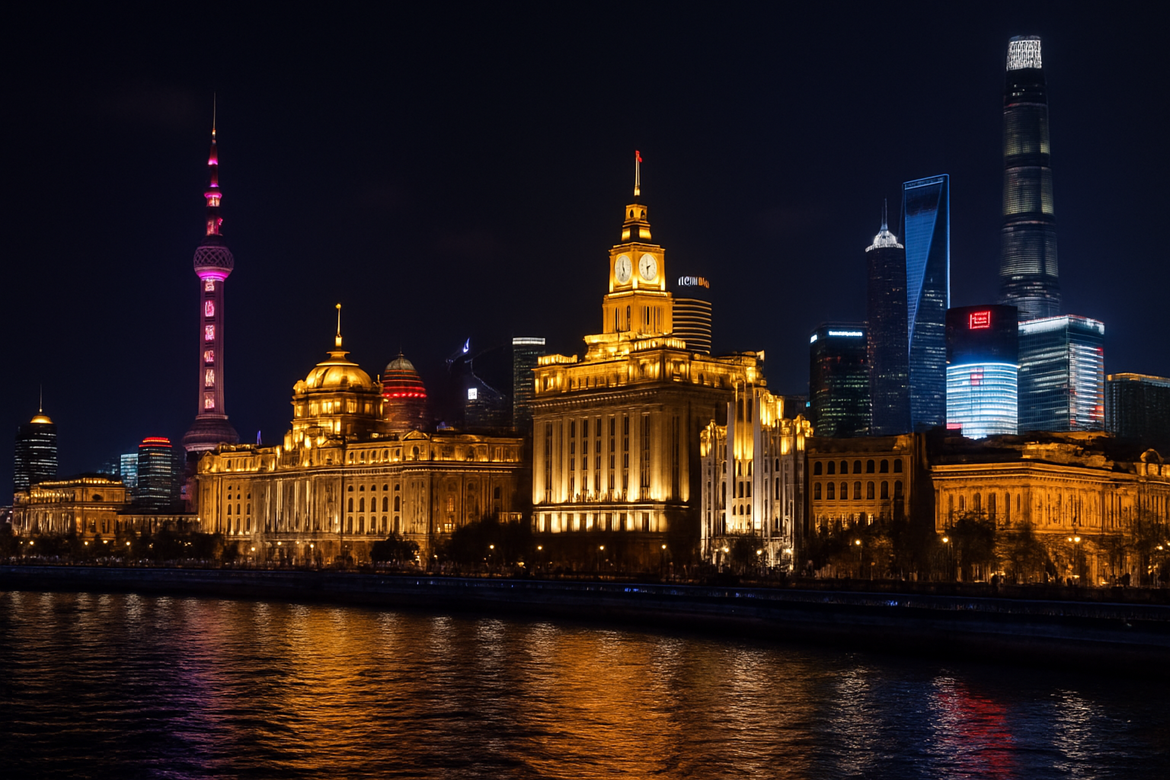
The same waterfront where the Green Gang once ruled is now lined with global banks.
The skyline of Shanghai glitters at night like a promise. Towers of glass and steel rise where opium warehouses once stood. The Huangpu River cuts through the city, carrying tankers and yachts instead of gunboats and smugglers. Yet behind the new prosperity, behind the slogans of progress and rejuvenation, the logic that built modern China has not changed. It still runs on deals made in the dark, alliances forged in secrecy, and loyalty bought with favors rather than earned through trust.
This is not a story about ideology. It is a story about power.
Power that learned to survive by adapting, concealing, and infecting everything it touched.
Power that began in the smoke-filled gambling dens of old Shanghai and found its way into the corridors of global finance.
This series, The Red Syndicate, investigates how organized crime, political ambition, and state authority intertwined to form a single system that endures to this day. It is a history of how China’s criminal underworld became the blueprint for its political one, and how that model spread its influence far beyond China’s borders.
The Origins of the Machine
To understand how the present works, we must first understand the city that invented it.
A century ago, Shanghai was the world’s most profitable city and also one of its most corrupt. Western colonial powers ran the foreign concessions. Chinese warlords ruled the countryside. Between them stretched a network of secret societies and business syndicates that handled everything the officials could not or would not control. The Green Gang was the most powerful of them all.
Its leaders financed newspapers, operated banks, and supplied drugs and entertainment to both colonials and nationalists. They also financed political movements, quietly deciding who would rise and who would vanish. In 1927, they helped Chiang Kai-shek destroy the Communist movement in Shanghai, proving that whoever controlled the streets controlled the nation.
Those years built a template for how Chinese politics would function: alliances between officials, businessmen, and enforcers. Transactions instead of laws. Loyalty instead of accountability. That fusion of power and profit was never dismantled. It was perfected.
Revolution and Reinvention
When the Communists eventually took power, they promised to eradicate the corruption that had consumed the old order. They executed gang bosses, nationalized opium trade routes, and declared that the people now owned the state.
But the habits of the old world survived. Networks of loyalty and exchange adapted to the new ideology. The same secrecy, discipline, and mutual dependence that once bound the Green Gang’s members now bound Party cadres. What had been a criminal hierarchy became a political one. The result was not a clean break with corruption but a rebranding of it.
Power in China remained personal, not institutional. The tools of control were the same: favors, money, and fear. The only difference was the flag that flew above the system.
The Modern Syndicate
Today, the mechanisms of influence operate on a global scale. The structures that once confined themselves to Shanghai’s underworld now extend through corporations, investment vehicles, and diplomatic networks. China’s rapid economic rise did not erase its past. It scaled it.
Modern power brokers do not wear gang colors or carry pistols. They manage conglomerates, control access to markets, and reward loyalty with contracts and promotions. Corruption has become more sophisticated but no less pervasive. The same logic that allowed the Green Gang to thrive under foreign empires now allows state-linked enterprises to thrive within global capitalism.
Every empire needs intermediaries, and every intermediary learns how to extract a price.
The syndicate no longer traffics in opium but in influence. It moves through boardrooms and ministries instead of brothels and gambling halls. The currency has changed from silver to equity, from bribes to partnerships. Yet the pattern remains identical: control the flow of money, suppress dissent, and reward obedience.
The Global Reach
This investigation is not about assigning blame to one nation. It is about recognizing how systems of corruption cross borders and ideologies. When money becomes the measure of power, morality becomes negotiable everywhere.
Western democracies that once lectured others on transparency now find themselves dependent on Chinese capital, technology, and markets. Elite networks that were once patriotic have become transnational, bound not by ideology but by profit. The methods that began in Shanghai’s backrooms now shape boardrooms from London to Los Angeles.
Understanding this history is not an act of hostility. It is an act of clarity. Every nation builds its myths, but beneath those myths are transactions, and beneath the transactions are relationships that decide who prospers and who disappears.
How This Series Works
The Red Syndicate is built on documented evidence, not speculation. Each chapter draws from declassified intelligence reports, academic research, police archives, financial disclosures, and eyewitness accounts from the 19th century to the present. Every claim can be traced to its source. The purpose is not to sensationalize, but to connect the patterns that history keeps repeating.
The series will move chronologically and thematically. It begins in 1920s Shanghai, tracing the Green Gang’s empire and its alliances with political power. It will then follow how those networks evolved under Mao’s revolution, how they adapted to the economic reforms of the late 20th century, and how they operate today through a mixture of ideology, surveillance, and wealth.
Each post will be written as a standalone exposé but also as part of a larger mosaic. Taken together, they will reveal how China’s fusion of state and underworld became both a domestic strategy and an exportable model.
Why It Matters
Power never disappears; it only changes form. The criminal syndicates of the past taught the modern state how to operate behind a façade of legitimacy. In return, the state gave those syndicates new life under different names. This partnership between political authority and illicit profit has shaped not only China’s development but the rules of global influence.
Ignoring this history allows it to continue. Understanding it exposes how deeply corruption has been woven into the machinery of modern power.
The story of the Red Syndicate is not just a story about China. It is a mirror held up to every system that mistakes prosperity for virtue and control for stability.
A Warning from the Past
If you walk along the Bund at night, the same river that once carried opium ships now reflects the lights of global finance. The faces in the towers have changed, but the architecture of power beneath them has not. It still rewards obedience, punishes transparency, and thrives on silence.
Shanghai taught the world a lesson a century ago: control the underworld, and you control everything above it. That truth built an empire once. It may be building another now.
Next in the Series
Part 1 – Shanghai: The Birthplace of the Red Underworld
A deep look at how one city became the crucible where organized crime, nationalism, and revolution fused into a single system that would shape China for generations.
About The Red Syndicate
The Red Syndicate is an ongoing investigative series that explores the shadow networks which shaped modern China, where revolutionary zeal met organized crime and power was brokered through loyalty, money, and fear.
Drawing on declassified archives, historical research, and firsthand accounts, the series traces how Shanghai’s criminal empires, political movements, and elite corruption intertwined to build a system that still echoes through global power today.